



What's Happening?
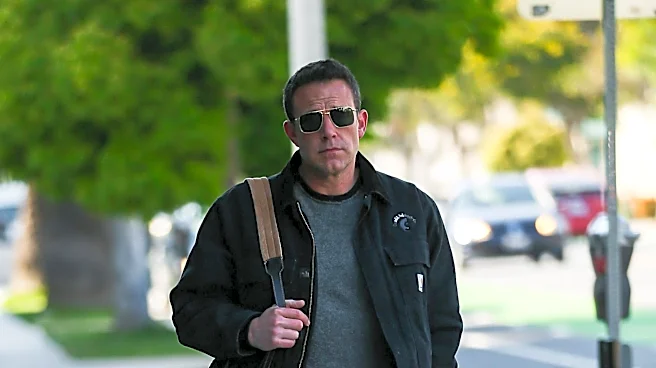
Actor Ben Affleck was recently observed at a McDonald's drive-thru in Los Angeles, marking a notable departure from his frequent public association with Dunkin'. Dressed in a suit and driving a black Cadillac, Affleck was seen making a purchase at the
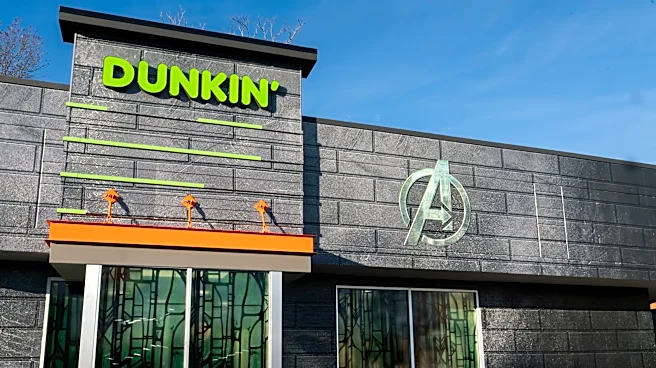
fast-food establishment. This sighting occurred as he appeared to be alone, maintaining a low profile while acquiring food and a beverage. Affleck has long been recognized for his numerous viral appearances with Dunkin' products, often being photographed with their coffee and donuts. The shift to McDonald's in Los Angeles suggests a potential adaptation to the local availability of fast-food options, as Dunkin' locations are less prevalent in Los Angeles compared to his native Boston.
Why It's Important?
This seemingly minor event holds a degree of cultural significance, particularly for brand perception and celebrity endorsement. Ben Affleck has become an unofficial, yet highly visible, ambassador for Dunkin', with his frequent sightings generating considerable organic marketing for the brand. His appearance at a McDonald's could subtly influence public perception, potentially signaling a broader appeal for other fast-food chains, or simply reflecting personal preference and convenience. For McDonald's, an unprompted visit from a high-profile celebrity like Affleck, even without an official endorsement, can provide unexpected positive exposure. Conversely, for Dunkin', it might prompt a re-evaluation of their celebrity association strategies or a consideration of market penetration in regions where their presence is less dominant. The incident underscores the power of celebrity influence, even in casual, everyday activities, on consumer behavior and brand image.
What's Next?
While this event is unlikely to trigger immediate, large-scale changes, it could lead to increased public discussion and media speculation regarding Affleck's fast-food preferences. Brands like Dunkin' and McDonald's may subtly leverage or respond to such celebrity interactions in their future marketing efforts, even if unofficially. For Dunkin', this might involve reinforcing their existing association with Affleck through new campaigns or product placements. For McDonald's, it could be a moment to capitalize on the unexpected visibility, perhaps through social media engagement or subtle nods in advertising. The incident also highlights the ongoing trend of celebrities inadvertently influencing consumer choices through their daily routines, prompting brands to remain vigilant about public sightings and their potential impact.
Beyond the Headlines
The incident subtly touches upon the evolving landscape of celebrity influence and brand loyalty in the digital age. In an era where every public appearance can go viral, celebrities, even without formal endorsement deals, become de facto brand representatives. Affleck's long-standing, organic association with Dunkin' demonstrates the power of authentic, unscripted celebrity engagement, which can often resonate more deeply with consumers than traditional advertising. His visit to McDonald's, therefore, serves as a reminder that even the most established celebrity-brand connections are subject to the whims of personal choice and geographical convenience. This dynamic encourages brands to cultivate genuine connections with public figures, recognizing that their influence extends beyond paid partnerships and into the fabric of everyday life, shaping consumer perceptions in nuanced and often unpredictable ways.