






What's Happening?
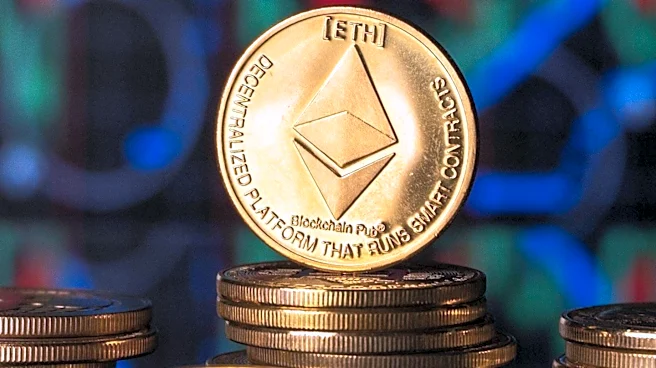
BitMine Immersion Technologies (BMNR) saw its stock close at $13.74 on Friday, November 20, marking an 8.83% decrease. This decline coincided with a 6.49% drop in ether's price, which fell to $1,639, according to market data from KuCoin News. The broader
market also experienced a downturn, with the Nasdaq losing 3.47% and bitcoin sliding to $59,712, its lowest point since July. BitMine Immersion Technologies holds a significant position as the largest corporate ether holder, possessing 6,077,745 ETH, which accounts for 4.97% of the 122.2 million ETH in circulation. The company also maintains $448 million in cash and marketable securities. Ether's value has been under pressure, having slipped below $2,000 earlier in the month for the first time since August and has not recovered since. The Motley Fool reported that BitMine has incurred a $6.3 billion loss on its ether position, with ether's value down nearly 30% since the company's initial purchase on June 30, 2025. The company's stock has fallen from a 52-week high of $42.09 to a low of $12.80.
Why It's Important?
The performance of BitMine Immersion Technologies' stock highlights the inherent volatility and risks associated with companies whose valuations are heavily tied to a single cryptocurrency. As the largest corporate holder of ether, BitMine's financial health and stock performance are directly impacted by fluctuations in ether's price. The significant drop in both ether's value and BMNR's stock price demonstrates how quickly market sentiment can shift, turning a 'premium story' into a 'price story' for investors. This situation also underscores the broader challenges faced by cryptocurrency-focused companies amid market downturns, particularly when ETF demand for ether is weakening. The substantial losses reported by BitMine on its ether holdings could raise concerns among investors about the sustainability of its strategy, even as Chairman Tom Lee describes the slide as a 'waterfall decline' defying fundamentals. The company's continued strategy of buying ether weekly, despite the declining price, contrasts with the larger outflows seen in spot ether ETFs, suggesting a potential disconnect between corporate strategy and broader market trends.
What's Next?
BitMine Immersion Technologies is expected to release its next weekly holdings update on Monday, November 23, which will reveal whether the company has continued its pattern of buying ether or if its purchasing has slowed. This update will be closely watched by investors to gauge the company's ongoing strategy amidst the declining cryptocurrency market. The company's ability to maintain investor confidence will depend on its capacity to articulate a clear path forward, especially as its stock price has significantly depreciated from its 52-week high. While BitMine has a substantial cash cushion and generates income from staking a large portion of its ETH holdings, the continued decline in ether's value could put further pressure on its stock. The market will also be observing whether the company's substantial ether treasury could eventually become a source of liquidity if market conditions worsen, although there is no public reporting of BitMine borrowing against its ETH holdings. The broader cryptocurrency market, including bitcoin and ether, will also influence BitMine's trajectory.
Beyond the Headlines
The situation with BitMine Immersion Technologies extends beyond immediate stock performance, touching upon the broader investment thesis for companies that primarily function as cryptocurrency treasuries. The rapid decline in BMNR's stock price, despite its significant ether holdings and staking income, illustrates the market's skepticism when the underlying asset experiences prolonged depreciation. This raises questions about the valuation models applied to such companies, particularly whether investors are willing to pay a premium for a stock that essentially mirrors the performance of a volatile digital asset. The comparison to other treasury companies, like Strategy, which has also seen its stock decline and has sold bitcoin to fund dividends, highlights a common squeeze faced by these entities: maintaining investor confidence and liquidity during bear markets. The long-term viability of a strategy centered on accumulating and holding a single cryptocurrency, even with staking income, will be tested if market downturns persist, potentially forcing a re-evaluation of capital allocation and risk management within the crypto investment space.