






What's Happening?
Stanley Martin Lieber, known as Stan Lee, was a pivotal figure in the comic book industry, transforming it from a niche genre into a global pop-culture phenomenon. Born in New York City in 1922 to Romanian Jewish immigrants, Lee grew up with a passion
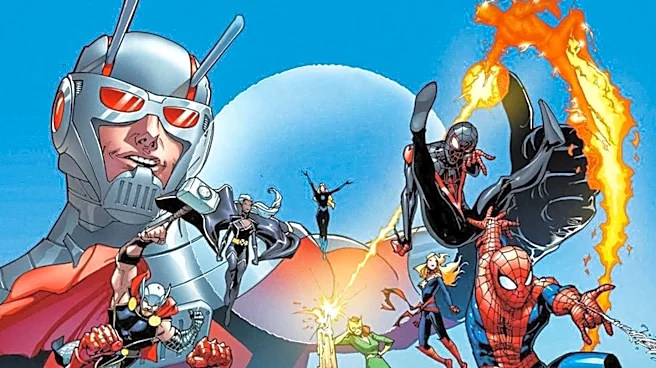
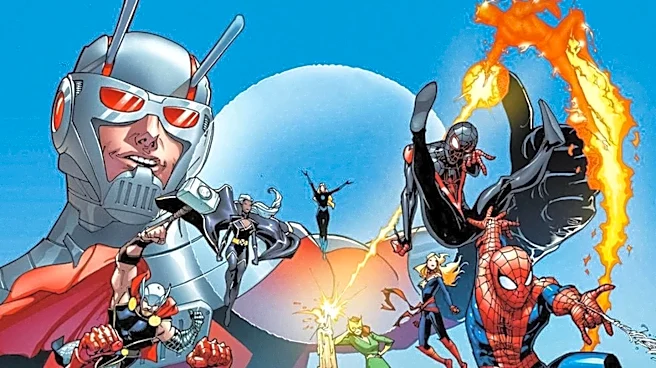
for books and films. He began his career at Timely Comics in 1939, which later became Marvel. Initially, he filled inkwells and corrected proofs, but by 1941, he published his first story under the pen name Stan Lee. He legally changed his name to Stan Lee in 1971. Lee, alongside artists like Jack Kirby and Steve Ditko, revolutionized the concept of superheroes in the 1960s, introducing characters with relatable problems and human flaws. His creations, including the Fantastic Four, Hulk, Thor, Iron Man, Spider-Man, and the X-Men, redefined the genre and laid the groundwork for the Marvel Cinematic Universe. Lee also introduced the 'Marvel Method' of storytelling, which gave artists more creative freedom, though it sometimes led to authorship disputes. He was also known for his monthly column, 'Stan's Soapbox,' where he addressed social issues like racism and bigotry.
Why It's Important?
Stan Lee's contributions are significant because he fundamentally changed the landscape of American comics and, by extension, global entertainment. His innovative approach to character development, portraying superheroes as imperfect and relatable individuals, resonated with a broad audience beyond just children. This shift from idealized demigods to characters grappling with everyday issues like financial worries and social anxiety made the genre more accessible and enduring. The 'Marvel Method' he employed, while controversial at times, fostered a collaborative environment that allowed for rapid and prolific creation, leading to a vast universe of interconnected stories. Furthermore, Lee used his platform to address social issues, promoting diversity and challenging societal norms through his characters and his 'Stan's Soapbox' column. His decision to publish a story about drug dangers without the Comics Code Authority's approval in 1971 marked a turning point, leading to reforms in censorship within the industry. The enduring popularity and financial success of the Marvel Cinematic Universe, which is largely built upon his creations, underscore the lasting impact of his vision on popular culture and the entertainment industry.
What's Next?
While Stan Lee passed away in 2018, his legacy continues to shape the future of the entertainment industry. The Marvel Cinematic Universe (MCU) is still actively expanding, with new films, television series, and characters being introduced regularly, all drawing from the foundation Lee helped establish. The concept of a shared universe, pioneered by Lee, has been widely adopted across various media, influencing how stories are told and interconnected in cinema, television, and video games. Future developments will likely see continued exploration and adaptation of his vast catalog of characters and storylines, ensuring his creative influence persists. The ongoing debate about authorship and credit within the comic book industry, a topic often associated with Lee's 'Marvel Method,' will also likely continue to be a subject of discussion and analysis, particularly as new generations engage with his work and the history of Marvel Comics. The ethical and cultural dimensions of his work, including his stance on social issues, will also remain relevant as society continues to evolve.
Beyond the Headlines
Beyond the immediate success of his creations, Stan Lee's work has deeper implications for storytelling and cultural impact. His emphasis on the 'imperfect superhero' introduced a psychological depth previously uncommon in comics, allowing for complex narratives that explored themes of identity, responsibility, and morality. This approach not only elevated the comic book medium but also influenced subsequent forms of popular culture, demonstrating that mass-market entertainment could also carry significant thematic weight. The shared universe concept, a hallmark of Marvel, fostered a sense of community among readers and viewers, creating a sprawling, interconnected world that mirrored the complexities of real life. Lee's ability to connect with his audience through direct address in his columns and his self-deprecating cameos in films also established a unique relationship between creator and consumer, blurring the lines between fiction and reality. His legacy also prompts reflection on the nature of creative collaboration and the attribution of credit in large-scale artistic endeavors, highlighting the often-complex interplay between writers, artists, and publishers in shaping cultural narratives.