



What's Happening?
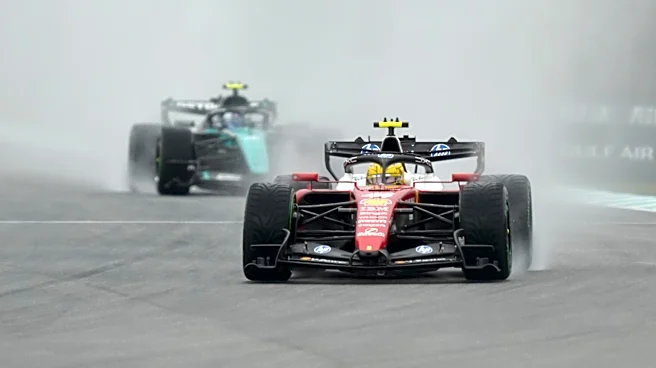
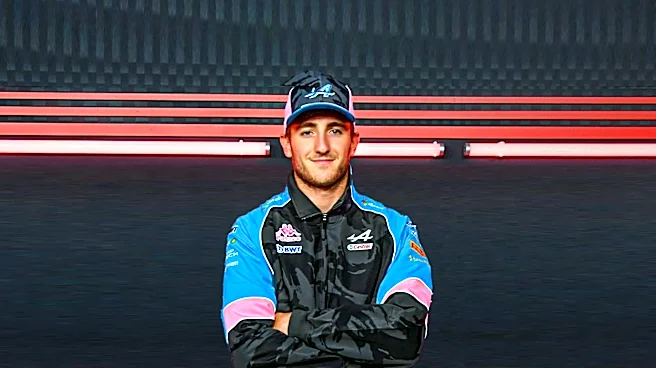
Pierre Gasly, a driver for Alpine, expressed disappointment with the team's strategy during the Bahrain Grand Prix, where a decision to start on slick tires after an interruption proved costly. Gasly explained that the team took a gamble, believing the track
had dried faster than it actually had. Despite his support for the decision at the time, the strategy resulted in significant time loss per lap. After the safety car period, Gasly reported that nothing went their way, making the race a 'very painful' experience. He also noted issues with the car's balance and strange behavior even in dry conditions, suggesting a need for further analysis beyond just the tire strategy.
Why It's Important?
This incident highlights the critical role of strategic decision-making in Formula 1 racing and its immediate impact on team performance and championship standings. For Alpine, a U.S.-backed team, such strategic missteps can affect their competitive standing, sponsor relations, and overall brand perception in a highly competitive global sport. The loss of valuable points, especially when competitors like Racing Bull gained points, can have long-term implications for the team's position in the constructors' championship and individual driver standings. This event underscores the high-stakes nature of F1, where split-second decisions under pressure can dictate outcomes and influence future race strategies and car development. It also emphasizes the need for robust data analysis and communication between drivers and strategists to optimize performance.
What's Next?
Pierre Gasly is looking ahead to the Singapore Grand Prix, where he anticipates a different challenge focused on pace on a demanding and narrow track, rather than pure straight-line speed. He remains optimistic about Alpine's potential, citing strong performances in Baku, qualifying in Bahrain, and Madrid. The team will need to conduct a thorough analysis of the car's behavior and balance issues experienced during the Bahrain Grand Prix to prevent similar problems in future races. This period will likely involve reviewing data, making adjustments to car setup, and refining communication protocols between the pit wall and the driver to improve strategic calls. The focus will be on building with the team and taking each race individually to maximize their performance.
Beyond the Headlines
The 'gamble' taken by Alpine and Pierre Gasly at the Bahrain Grand Prix reflects a common dilemma in high-performance sports: the balance between calculated risk and conservative play. This decision-making process, often influenced by real-time data, weather conditions, and competitor actions, has broader implications for risk management in various U.S. industries, from finance to technology. The incident also touches upon the psychological aspect of competition, where drivers and teams must quickly adapt to unforeseen circumstances and maintain morale despite setbacks. The transparency with which Gasly discussed the team's decision and his own support for it offers insight into team dynamics and accountability within professional sports. This event could serve as a case study for strategic planning and crisis management in high-pressure environments, emphasizing the importance of learning from failures to achieve long-term success.