








What's Happening?
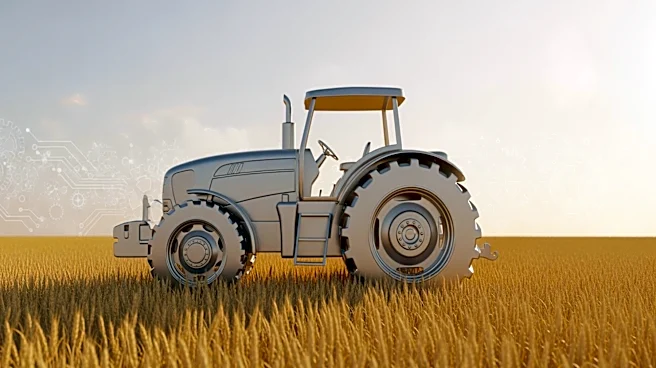
The autonomous tractors market is experiencing substantial growth, driven by advancements in smart farming technologies and the need to address labor shortages in agriculture. According to a report by The Business Research Company, the market is projected
to expand from $3.18 billion in 2025 to $8.66 billion by 2030, with a compound annual growth rate (CAGR) of 22.3%. This growth is fueled by increased mechanization, the adoption of precision agriculture technologies, and improvements in GPS and sensor technologies. Autonomous tractors, equipped with GPS navigation, sensors, artificial intelligence, and machine learning, are transforming traditional farming by automating tasks such as plowing, seeding, spraying, and harvesting. The rising cost of labor in agriculture, as reported by the U.S. Department of Agriculture’s Economic Research Service, is a significant factor driving the adoption of these technologies.
Why It's Important?
The expansion of the autonomous tractors market is crucial for the agricultural sector, particularly in addressing labor shortages and reducing operational costs. As labor expenses continue to rise, with U.S. agricultural labor costs reaching approximately $43,350 million in 2023, farmers are increasingly turning to automation to maintain productivity and efficiency. The adoption of autonomous tractors not only helps in cutting labor costs but also enhances precision in farming operations, leading to better resource utilization and increased productivity. This shift towards automation is expected to have a lasting impact on the agricultural industry, promoting sustainable farming practices and supporting the growing global demand for food.
What's Next?
The future of the autonomous tractors market looks promising, with continued investments in smart farming infrastructure and AI-based farm management tools. The market is expected to see greater use of GPS-guided autonomous equipment and advancements in machine learning-driven decision-making for agriculture. As the Asia-Pacific region is anticipated to experience the fastest growth, stakeholders in the agricultural sector may focus on expanding their presence in this region. Additionally, the development of remote monitoring and fleet management systems will likely play a significant role in the market's evolution, offering farmers enhanced control over their operations.
Beyond the Headlines
The rise of autonomous tractors also raises important ethical and social considerations. The shift towards automation in agriculture could lead to job displacement for farm workers, necessitating policies and programs to support workforce transition and retraining. Moreover, the increased reliance on technology in farming operations highlights the need for robust cybersecurity measures to protect against potential threats. As the industry evolves, stakeholders must address these challenges to ensure that the benefits of automation are equitably distributed and that the agricultural sector remains resilient and secure.