



What's Happening?
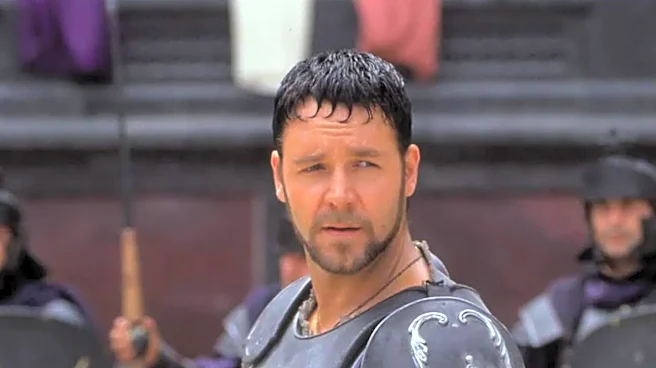
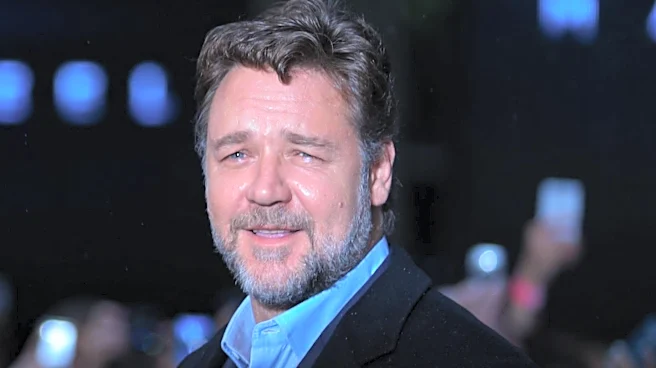
Actor Russell Crowe has revealed that he rejected an early idea for a sequel to his 2000 historical epic, 'Gladiator,' describing the proposed story as 'pretty dumb' at the time. Crowe, who starred as Maximus Decimus Meridius, noted that his opinion on sequels
has evolved over the years. While he initially held a conscious stance against sequels, believing them to be inferior versions of the original, he now acknowledges that some sequels have become iconic. He mentioned characters like Gabriel Moorth from 'The Pope's Exorcist' and Jack Aubrey from 'Master and Commander: The Far Side of the World' as roles he would have liked to explore further. The 'Gladiator' franchise eventually received a sequel in 2024, 'Gladiator II,' which continued the story with a new generation of characters and saw Ridley Scott return as director, but without Crowe's involvement.
Why It's Important?
Crowe's comments highlight a significant shift in Hollywood's approach to sequels and franchise development over the past two decades. His initial reluctance reflected a common sentiment among actors and filmmakers regarding the creative integrity of follow-up films. However, his evolved perspective acknowledges the commercial and artistic success that well-executed sequels can achieve. This evolution is crucial for the entertainment industry, as franchises increasingly dominate box office revenues and streaming content. The decision-making process behind continuing beloved stories, and the involvement (or non-involvement) of original stars, profoundly impacts audience reception and the financial viability of these projects. It also underscores the balance between creative vision and commercial pressures in film production.
What's Next?
The entertainment industry will likely continue to prioritize franchise development, with studios constantly evaluating opportunities for sequels, prequels, and spin-offs. Crowe's reflections may encourage more actors to reconsider their stance on returning to iconic roles, especially as the quality and creative ambition of sequels improve. Future discussions around 'Gladiator II' will inevitably draw comparisons to the original and the path not taken with Crowe's involvement. This ongoing dialogue will influence how studios pitch and develop future franchise extensions, potentially leading to more collaborative approaches with original cast members or clearer strategies for continuing stories without them. The success or failure of 'Gladiator II' will also serve as a case study for the viability of continuing major franchises with new leads.
Beyond the Headlines
Crowe's candid remarks touch upon the broader cultural phenomenon of nostalgia and the desire to revisit beloved narratives. The tension between preserving the integrity of a standalone classic and extending its universe for new audiences is a recurring theme in modern cinema. His personal journey from skepticism to a more open view on sequels reflects a societal shift where continuous storytelling across various media has become the norm. This also raises questions about artistic legacy versus commercial longevity. For actors, the decision to participate in a sequel can be a complex one, balancing career trajectory, creative satisfaction, and financial incentives. The 'Gladiator' example serves as a microcosm of these larger industry dynamics, where the 'what if' scenarios of rejected ideas often shape the eventual cinematic landscape.