




What's Happening?
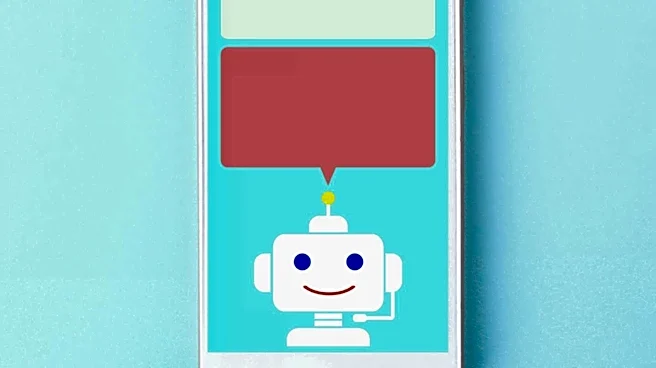
Noldus, a company specializing in scientific research solutions, has launched 'Noa,' an AI support assistant designed to provide instant answers to customer inquiries. Noa is built in-house using Noldus's own content, ensuring accuracy and privacy. The
AI assistant leverages Anthropic's Claude large language model to understand natural language questions and provide relevant responses. Noa's capabilities include answering product-related questions, providing documentation and how-to guides, assisting with technical support issues like installation and licensing, and offering pricing and quotes. Importantly, Noa is designed to connect users with a human Noldus team member when a personal touch or critical assistance is required, such as for licensing, quotes, or account changes. The system processes user messages solely to generate answers and does not use them to train the underlying AI model, emphasizing user privacy.
Why It's Important?
The introduction of Noa by Noldus signifies a growing trend in customer support, where AI-powered assistants are deployed to enhance efficiency and user experience. For Noldus customers, this means immediate access to information about products, documentation, and technical support, potentially reducing wait times and improving problem resolution. This can be particularly beneficial for researchers and scientists who often require quick answers to complex technical questions to maintain the continuity of their work. The emphasis on privacy, with messages not being used for model training, addresses a key concern for users interacting with AI systems. By grounding Noa in Noldus's own content, the company aims to ensure the accuracy and relevance of the information provided, which is critical in specialized scientific fields. The ability to seamlessly transition to human support for complex issues ensures that AI augments, rather than replaces, personalized customer service.
What's Next?
The implementation of Noa is likely to evolve as Noldus gathers user feedback and refines the AI's capabilities. Future developments could include expanding Noa's knowledge base to cover an even wider range of products and services, potentially integrating with other Noldus systems to provide more personalized support. The company may also explore further enhancements to the natural language processing capabilities of Noa, making interactions even more intuitive. As AI technology advances, Noldus might investigate incorporating more proactive support features, such as anticipating user needs based on past interactions or product usage. The success of Noa could also influence other companies in the scientific instrumentation and software sector to adopt similar AI-driven support solutions, further standardizing AI's role in customer service within specialized industries.
Beyond the Headlines
Noldus's adoption of an AI support assistant like Noa reflects a broader shift in how specialized industries are leveraging artificial intelligence to manage complex information and provide support. This move highlights the increasing reliance on AI to democratize access to technical knowledge, making it more readily available to a global user base. The design choice to build Noa on Noldus's own content and prioritize privacy sets a precedent for responsible AI deployment in sectors where data sensitivity and accuracy are paramount. This approach could influence best practices for AI development in other scientific and technical fields, emphasizing the importance of domain-specific knowledge and ethical data handling. Ultimately, Noa represents a step towards a future where AI tools not only streamline operations but also empower users with immediate, reliable access to the information they need to drive innovation and discovery.