





What's Happening?
American Airlines has unveiled a comprehensive upgrade plan for its narrowbody fleet, focusing on enhancing the in-flight experience for passengers. The airline will install state-of-the-art seatback entertainment screens at every seat on all new Airbus
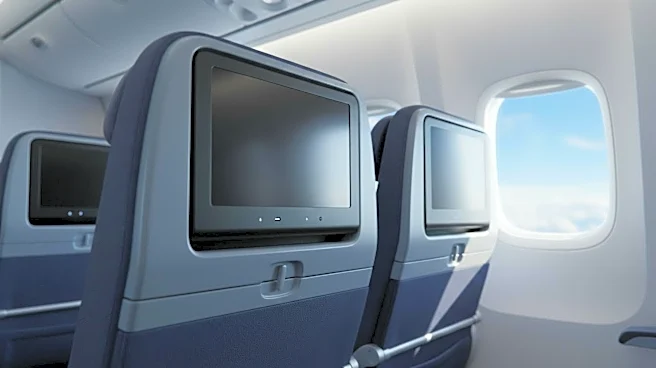
and Boeing aircraft deliveries starting in 2028, and on retrofitted aircraft. This initiative builds upon the existing 140 long-haul aircraft already equipped with seatback screens. Additionally, American Airlines is significantly increasing its premium and Main Cabin Extra seating options across its narrowbody fleet. This involves retrofitting existing aircraft and configuring new deliveries with more premium seats. Currently, premium seating accounts for approximately 25% of seats on narrowbody departures, a figure projected to rise to about 40% in the coming years. The upgrades also include refreshed interiors with more storage, redesigned seats, and enhanced lighting. The new seatback entertainment system will feature industry-leading screen sizes, 4K technology, expanded content, personalized recommendations, USB-C fast charging ports, and Bluetooth audio connectivity. The full fleet installation of these new displays is expected to be completed by the early part of the next decade.
Why It's Important?
This significant investment by American Airlines underscores a broader trend in the U.S. airline industry to differentiate services and attract passengers through enhanced comfort and technology. By offering seatback entertainment and more premium seating, American Airlines aims to cater to evolving customer expectations for a more personalized and connected travel experience. The increase in premium seating, from 25% to 40% of narrowbody departures, indicates a strategic move to capture a larger share of the lucrative business and leisure traveler segments willing to pay for extra amenities and space. This could lead to increased revenue per passenger and improved customer loyalty. The integration of high-speed Starlink Wi-Fi, alongside the new entertainment systems, positions American Airlines to compete more effectively with other carriers that have already invested in similar onboard technologies. This move could also influence competitors to accelerate their own upgrade plans, fostering a more competitive environment for passenger amenities in the U.S. domestic and short-haul international markets.
What's Next?
American Airlines will begin rolling out these new displays and retrofitting aircraft as quickly as possible, with full fleet installation anticipated by the early 2030s. The airline's upcoming deliveries of Boeing 737 MAX 10 aircraft will feature 24 First Class seats, and the A321neo fleet will also be reconfigured to include additional First Class seating. Passengers can expect to see these enhancements gradually introduced across the narrowbody fleet over the next several years. The airline will also continue its broader commitment to modernizing the end-to-end travel experience, which includes investments in lounge facilities, premium dining and beverage offerings, and digital upgrades to streamline the travel journey. The success of these upgrades will likely be measured by customer satisfaction, increased premium cabin bookings, and overall revenue growth, potentially influencing future investment decisions in the airline industry.
Beyond the Headlines
This fleet-wide upgrade by American Airlines reflects a deeper understanding of the modern traveler's desire for a more integrated and comfortable journey, moving beyond basic transportation to a more experiential model. The emphasis on personalized entertainment and connectivity, coupled with increased premium seating, suggests a strategic pivot towards a 'premiumization' of the travel experience, even on shorter flights. This could lead to a re-evaluation of what constitutes a 'standard' offering in air travel, potentially raising the bar for other U.S. carriers. The investment in 4K technology and Bluetooth audio connectivity also highlights the airline's recognition of consumer technology trends and the expectation for seamless integration of personal devices. This could foster a new era of in-flight entertainment where passengers have greater control and choice, ultimately reshaping passenger expectations and potentially influencing aircraft design and cabin configurations in the long term.