




What's Happening?
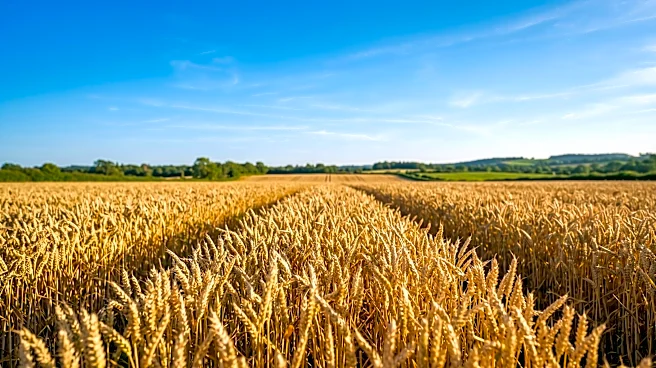
Kellogg's is launching a new five-year regenerative agriculture program to provide financial and agronomic support to British wheat farmers, aiming to cover 100% of its UK wheat supply on a mass-balance basis. This initiative involves working with agricultural
specialist Soil Capital and 25 wheat growers across nearly 4,000 hectares in the UK. Kellogg's, which annually sources over 20,000 tonnes of British wheat for cereals like Special K, intends to promote farming practices focused on soil health, water management, and biodiversity. The program will also enhance the resilience of the company's agricultural supply chain. Participating farmers will receive guidance, financial incentives, and access to digital tools that integrate field data, soil measurements, and satellite monitoring. This approach seeks to offer farmers a clearer understanding of how changes in farming practices impact key indicators over time, while also providing commercial motivation for adopting these changes. Initial data from the 2025 harvest indicates an increase in the adoption of regenerative practices among participating farmers, with direct drilling rising by 13.84% across their total cultivated area and by 56.06% specifically for wheat.
Why It's Important?
This program is significant as agriculture accounts for approximately two-thirds of Kellogg's Scope 3 greenhouse gas emissions, making sustainable farming practices central to its efforts to reduce value-chain emissions. By investing in on-farm practices, Kellogg's aims to achieve emissions reductions within its agricultural supply chain while simultaneously supporting farmers in adopting more sustainable production methods. The initiative addresses the challenges faced by UK farmers, including unpredictable weather and pressure to maintain productivity and manage input costs. This partnership helps mitigate procurement risks and costs for food manufacturers that rely on domestic agricultural commodities, as disruptions to yields, soil degradation, and weather volatility can impact the supply chain. The collaboration with Soil Capital signifies a broader shift in corporate sustainability programs, moving beyond mere commitments and targets to implement mechanisms that directly change farming practices at the field level. This model could serve as a blueprint for other food manufacturers seeking to balance environmental objectives with the practical realities of farming.
What's Next?
Kellogg's will continue to monitor the progress of the program through agreed-upon data and indicators, with its climate-related objectives guiding the approach. The five-year duration of the program suggests a sustained effort to embed regenerative practices within its supply chain. The success of this initiative could lead to its expansion or replication in other regions and for different crops, potentially influencing broader agricultural practices within the food industry. Farmers involved will likely continue to assess and implement changes tailored to their specific farm conditions, leveraging the financial support and technical guidance provided. The ongoing collection and analysis of data on soil health, water management, and biodiversity will be crucial in demonstrating the program's effectiveness and informing future strategies. The partnership's focus on providing commercial incentives alongside environmental benefits aims to ensure long-term adoption and sustainability of these practices.
Beyond the Headlines
This initiative highlights a growing trend where major food corporations are taking direct responsibility for the environmental impact of their supply chains, moving beyond traditional corporate social responsibility to active intervention in agricultural practices. It underscores the recognition that the resilience of food systems is intrinsically linked to ecological health and farmer livelihoods. The program's emphasis on balancing environmental objectives with commercial viability reflects a pragmatic approach to sustainability, acknowledging that farmers need tangible benefits to adopt new methods. This could foster a more collaborative relationship between food manufacturers and growers, shifting from a purely transactional model to one based on shared goals and mutual support. Furthermore, the use of digital tools for monitoring and data collection signifies the increasing role of technology in modern agriculture, enabling more precise and evidence-based decision-making for sustainable farming. This integrated approach could set new standards for supply chain management and environmental stewardship in the food industry.