

What's Happening?
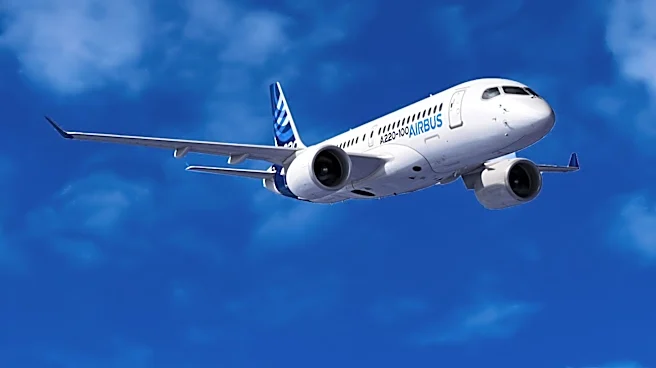
Airbus is planning to make strategic decisions in 2027 regarding stretched versions of its A220 and A350 aircraft, potentially introducing two new models to its commercial aircraft lineup. Lars Wagner, CEO of Airbus Commercial Aircraft, highlighted these
projects as key priorities for the upcoming year during a meeting with French aerospace journalists. These proposed aircraft are unofficially referred to as the A220-500 and A350-2000, though formal designations have not been adopted. Both remain in the pre-launch phase, awaiting a final decision to proceed with development. The larger A220 variant would bring its passenger capacity closer to the A320neo, potentially creating some overlap within Airbus's existing portfolio. The proposed A350-2000, a stretched widebody, aims to compete directly with Boeing's 777X, specifically the 777-9 model. This aircraft is expected to accommodate over 400 passengers in certain configurations, allowing Airbus to re-enter a capacity segment it largely ceded to Boeing after discontinuing A380 production. Concurrently, Airbus is exploring the establishment of a second final assembly line for its widebody aircraft due to current production capacity limitations at its Toulouse facility, which can produce a maximum of about 12 aircraft per month.
Why It's Important?
These potential new aircraft variants represent a significant strategic move for Airbus in the highly competitive global aerospace market. The introduction of a larger A220 could enhance Airbus's offerings in the regional jet segment, potentially capturing a broader market share by providing increased capacity and operational flexibility for airlines. The A350-2000 is crucial for Airbus to directly challenge Boeing's dominance in the very large twin-engine passenger aircraft market, particularly against the 777X. This move could intensify competition between the two aerospace giants, influencing future aircraft development, pricing strategies, and airline purchasing decisions globally. Furthermore, the consideration of a second final assembly line underscores the growing demand for widebody aircraft and Airbus's commitment to scaling up production to meet market needs. This expansion could lead to increased manufacturing jobs and economic activity in the regions where such facilities are established, while also ensuring Airbus can maintain its delivery schedules and market position.
What's Next?
Airbus is expected to continue its internal studies and evaluations for both the A220-500 and A350-2000 variants throughout the coming year, with strategic decisions anticipated in 2027. These decisions will involve assessing market demand, technological feasibility, production capabilities, and financial viability. Concurrently, the company will be actively studying the location and organizational structure for a potential second final assembly line for its widebody aircraft. While reports have suggested Toulouse as a possible location, Airbus has stated that no decision has been made yet. The outcome of these decisions will likely influence Airbus's long-term product roadmap and industrial strategy. Airlines will be closely watching these developments as they plan their future fleet acquisitions, particularly those seeking to expand their capacity in regional and long-haul segments. Competitors, especially Boeing, will also be monitoring Airbus's moves to adjust their own strategies in response to potential new market offerings.
Beyond the Headlines
The potential introduction of larger A220 and A350 variants reflects a broader trend in the aviation industry towards optimizing aircraft families to cover a wider range of passenger capacities and operational requirements. For the A220, a larger version could blur the lines between regional jets and smaller narrow-body aircraft, potentially impacting the competitive landscape for manufacturers like Embraer. For the A350, directly challenging the 777X signifies Airbus's ambition to reclaim market share in the ultra-long-range, high-capacity segment, a space where Boeing has had a strong foothold. This strategic push also highlights the ongoing technological arms race between Airbus and Boeing, as both companies continuously innovate to offer more fuel-efficient and passenger-friendly aircraft. The decision to expand production capacity with a second assembly line also points to the long-term confidence in the growth of air travel, particularly for widebody aircraft, despite global economic fluctuations. This expansion could also lead to increased pressure on the supply chain for aerospace components and materials.