



What's Happening?
Molten Industries, an industrial manufacturing startup, has announced the commissioning and start of operations at its demonstration plant in Oakland, California. This facility marks a global first, producing battery-grade graphite from natural gas. The
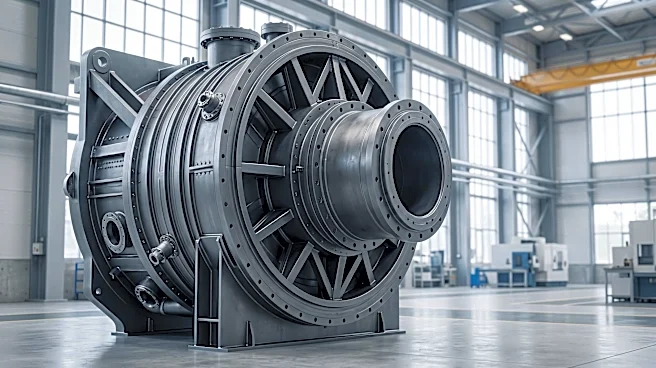
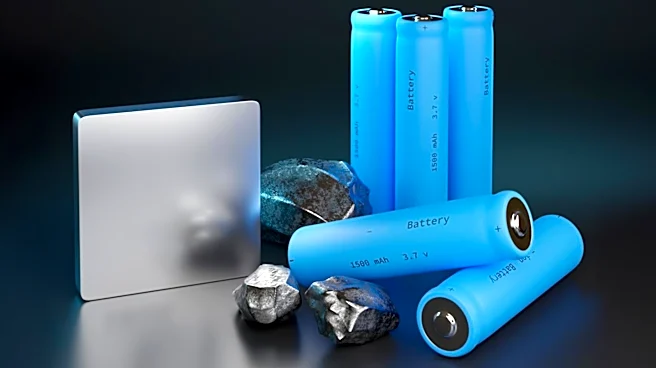
plant utilizes Molten's proprietary methane pyrolysis technology, which converts natural gas into two valuable products: battery-grade graphite and clean hydrogen. This process splits methane into its elemental components, carbon and hydrogen, without combustion, oxygen, or CO2 emissions. The Oakland plant has an annual capacity of 300 metric tons of graphite anode production, achieving natural gas-to-graphite yields above 95% using a single modular reactor. This development establishes a new domestic source for battery-grade graphite, a critical material for lithium-ion batteries, for which the United States is currently entirely dependent on foreign sources, with 96% of global processing controlled by China.
Why It's Important?
This breakthrough by Molten Industries is profoundly significant for U.S. energy independence and national security. Graphite is a fundamental component of lithium-ion batteries, essential for electric vehicles, grid storage, data centers, and various other battery applications. The U.S.'s complete reliance on foreign sources for battery-grade graphite, particularly from China, poses a substantial supply chain vulnerability. Molten's technology offers a 100% U.S.-made pathway for this critical material, leveraging abundant domestic natural gas resources. This not only strengthens the domestic supply chain but also provides a more cost-effective and environmentally cleaner production method compared to conventional synthetic graphite, using cheaper feedstock and less electricity while producing zero process emissions. The co-production of clean hydrogen further enhances the economic and environmental benefits, as hydrogen is a key ingredient in numerous industrial processes.
What's Next?
The successful commissioning of Molten Industries' Oakland plant is a critical step towards scaling this technology. The modular design of their reactors suggests that future expansion could involve deploying more of these units, potentially leading to larger-scale production facilities. The company's immediate next steps will likely involve optimizing production, securing off-take agreements with battery manufacturers, and attracting further investment to scale up operations. This domestic source of battery-grade graphite could significantly alter the U.S. battery manufacturing landscape, reducing reliance on imports and fostering a more resilient domestic EV and energy storage industry. The availability of domestically produced, cost-effective, and environmentally friendly graphite could also spur innovation in battery design and manufacturing within the U.S., potentially leading to more competitive American-made batteries.
Beyond the Headlines
Molten Industries' innovation extends beyond mere material production; it represents a paradigm shift in how critical battery components can be sourced and manufactured. The methane pyrolysis process, by splitting natural gas into carbon and hydrogen without combustion, addresses both the need for domestic material supply and the imperative for cleaner industrial processes. This technology could mitigate environmental concerns associated with traditional graphite production, which often involves high energy consumption and significant emissions. Furthermore, the ability to produce clean hydrogen as a byproduct aligns with broader decarbonization goals, offering a sustainable source for various industries. This development could also stimulate further research and investment into methane pyrolysis and other advanced material science techniques, positioning the U.S. at the forefront of sustainable manufacturing and critical mineral independence, thereby enhancing its strategic competitiveness in the global clean energy transition.