



What's Happening?
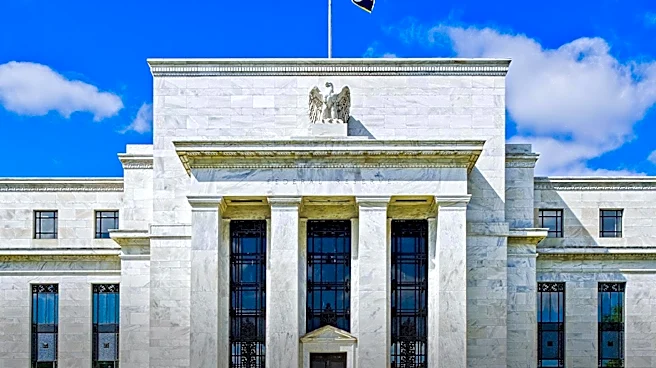
Stubbornly high inflation is prompting the Federal Reserve to consider accelerating the pace of interest rate hikes, according to analyses from Wall Street economists. The latest Consumer Price Index revealed that inflation rose more than expected in October,
climbing 0.4%. This marks the third consecutive month that prices have increased faster than anticipated, driven by supply constraints and robust economic demand. EY-Parthenon chief economist Gregory Daco and analysts from BofA Global Research and TD Securities are now forecasting multiple quarter-point rate hikes in the coming months. Specifically, Daco is penciling in rate hikes for December and January, while BofA Global Research and TD Securities expect three straight quarter-point hikes in December, January, and March. Fed Governor Christopher Waller has even suggested considering a 0.50 percentage-point increase in December to maintain the Fed's credibility in achieving its 2% annual inflation target.
Why It's Important?
The persistent rise in inflation and the Federal Reserve's potential response have significant implications for the U.S. economy and its citizens. A series of aggressive interest rate hikes will lead to a higher cost of borrowing across the board, impacting consumer loans, credit cards, and potentially long-term interest rates like mortgages. This increased cost of capital could dampen consumer spending and business investment, potentially slowing economic growth. For households, higher borrowing costs will reduce purchasing power, especially for those with variable-rate loans or those planning major purchases. Businesses, particularly those reliant on borrowing for expansion or operations, will face increased financial burdens. The Fed's credibility in managing inflation is also at stake; failure to bring inflation under control could erode public trust and lead to more entrenched inflationary expectations, making future policy interventions even more challenging. The ongoing high energy prices and corporate spending on AI infrastructure are identified as key factors contributing to this sustained inflationary pressure, suggesting that these forces could keep inflation elevated into 2027.
What's Next?
Interest rate traders are already anticipating a quarter-point hike at the Fed's next meeting in December, with nearly 90% odds, and a better-than-even chance of another hike in January. This indicates that financial markets are largely pricing in a more aggressive tightening cycle. Consumers and businesses should prepare for a continued environment of higher borrowing costs. For individuals, this means re-evaluating debt, considering fixed-rate options where available, and adjusting spending habits. Businesses may need to re-assess investment plans and operational costs in light of more expensive financing. The Federal Reserve's upcoming meetings will be closely watched for further signals on the pace and magnitude of future rate hikes. The central bank's ability to balance inflation control with maintaining economic stability will be a critical challenge, with potential implications for employment and overall economic growth. The ongoing impact of high energy prices and AI-related corporate spending on inflation will also be key factors to monitor.
Beyond the Headlines
The current inflationary environment and the Federal Reserve's anticipated response highlight a complex economic challenge that extends beyond mere numbers. The broadening of price pressures, as noted by TD Securities, suggests that inflation is not confined to a few sectors but is becoming more pervasive throughout the economy. This could indicate a shift in inflationary psychology, where consumers and businesses begin to expect higher prices, leading to a self-fulfilling prophecy. The debate among Fed officials regarding the size of rate hikes—whether 0.25 or 0.50 percentage points—underscores the delicate balance between curbing inflation and avoiding an economic downturn. Aggressive hikes risk triggering a recession, while insufficient action could allow inflation to become entrenched. The role of high energy prices and corporate AI spending as drivers of inflation also points to structural shifts in the economy, suggesting that some inflationary pressures may be more persistent and less amenable to traditional monetary policy tools. This situation could lead to a prolonged period of economic adjustment, impacting long-term investment strategies and consumer behavior.