




What's Happening?
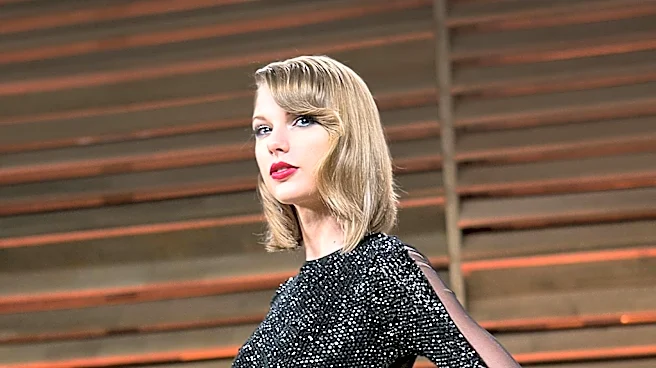
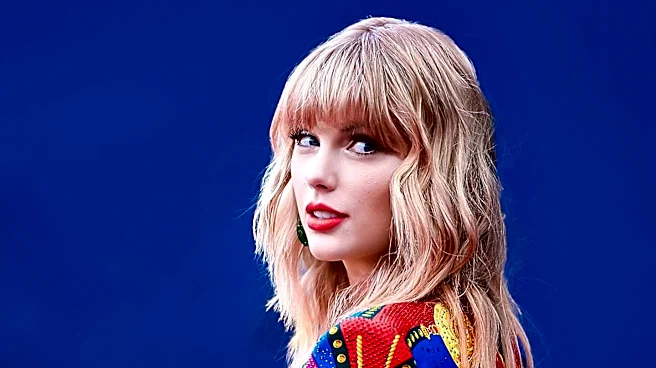
A biographer has provided insights into a recent Vanity Fair article, described by many as a 'hit piece,' which focuses on an unnamed 'Star' widely understood to be Taylor Swift. The article's writer, May Jeong, reportedly interviewed over 100 individuals
to compile the story. The biographer, who has experience writing about public figures like Anna Wintour and Gwyneth Paltrow, noted the difficulty in getting sources to speak about stars who prefer not to be discussed. Jeong's reporting indicated that sources were reluctant to speak on the record, even to offer positive comments, and one lawyer communicated only through an intermediary. This behavior, according to the biographer, is typical for stars of such high stature, contrasting sharply with the 'puff pieces' often seen in magazines like Vanity Fair and Vogue.
Why It's Important?
This analysis by a seasoned biographer sheds light on the intricate dynamics between mega-stars, the media, and public perception. It highlights how celebrities often exert significant control over their narratives, leading to a prevalence of highly curated and positive portrayals in mainstream media. The 'hit piece' format, while controversial, serves an important function by attempting to present a more unvarnished view of a star's psyche and the realities of fame. This approach can challenge the carefully constructed public images of celebrities, offering a more complex understanding of their personalities and the mechanisms of their fame. For the public, such articles can provide a more realistic perspective on the lives of those they admire, potentially fostering a more critical engagement with celebrity culture. For the media, it underscores the challenges and ethical considerations involved in reporting on powerful public figures.
What's Next?
The publication of such an article, and the subsequent discussion it generates, could influence future journalistic approaches to celebrity profiling. It might encourage more in-depth, investigative reporting on high-profile individuals, moving away from purely promotional content. This could lead to a greater demand for transparency and accountability from celebrities and their public relations teams. For the unnamed star, the article and its reception could prompt a re-evaluation of their public image management strategies. It may also spark further debate within the entertainment industry about the balance between a celebrity's right to privacy and the public's interest in a comprehensive understanding of influential figures. The ongoing conversation could also empower other journalists to pursue more challenging narratives, even when faced with resistance from powerful individuals.
Beyond the Headlines
The biographer's perspective delves into the less obvious implications of celebrity culture, particularly the psychological impact of immense fame and the mechanisms stars employ to maintain their desired image. The observation that many stars 'can’t handle being talked about any other way' than positively reveals a potential fragility beneath the facade of power and control. This dynamic is often reinforced by an ecosystem of individuals who benefit from and contribute to the star's carefully managed persona. The article, therefore, touches upon the ethical dimensions of celebrity journalism, questioning whether the media has a responsibility to present a more balanced, even critical, view of public figures, despite potential backlash. It also highlights the societal conditioning that drives the pursuit of fame, and the often-unseen consequences of living under constant public scrutiny and the pressure to maintain an idealized image.