





What's Happening?
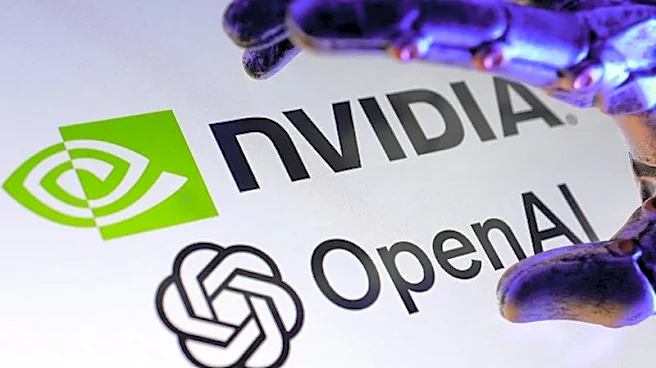
Nvidia CEO Jensen Huang has addressed concerns regarding the company's financial support for OpenAI's large-scale AI data center in Ohio, specifically refuting the 'circular financing' label. Huang clarified that OpenAI will be responsible for paying
the lease for the facility. Nvidia's involvement includes providing up to $105 billion in financing, which will backstop defined portions of lease and power payments, rather than covering the full cost of the project. Additionally, Nvidia is investing $1.5 billion in SB Energy, a SoftBank subsidiary that will build, own, and operate the physical infrastructure. The Ohio data center is projected to be one of the world's largest, with an estimated 8 gigawatts of computing capacity over a 20-year deal. Huang estimates that OpenAI's broader infrastructure plans could generate approximately $600 billion in compute revenue for Nvidia through 2030, emphasizing that this figure represents the overall opportunity, not a single signed contract.
Why It's Important?
This development is significant as it highlights Nvidia's evolving strategy in the AI sector, moving beyond just chip manufacturing to actively securing and financing AI infrastructure. By providing financial backing and exclusive chip supply for OpenAI's massive data center, Nvidia is solidifying its position as a critical enabler of advanced AI development. The projected $600 billion revenue opportunity underscores the immense economic potential Nvidia sees in long-term AI compute infrastructure. This approach also addresses the challenge faced by frontier AI labs, which are growing rapidly but often outpace their balance sheets and credit profiles. For the U.S. economy, the Ohio data center project is expected to create 35,000 construction jobs over six years and 2,500 long-term operating jobs, contributing significantly to local employment and technological advancement. The deal also sets a precedent for how major tech companies might collaborate to build the extensive infrastructure required for future AI capabilities.
What's Next?
The Ohio data center project is slated for a six-year buildout through 2032, with the first 800 megawatts of compute capacity expected to be operational by 2028. OpenAI will continue to fund its lease commitments through revenue, cash flow, and investor capital. Nvidia will serve as the exclusive computer chip provider for the facility, ensuring a steady demand for its hardware. The project's progress will be closely monitored by Wall Street, particularly concerning the substantial investments by AI firms and the potential for soaring costs. Future developments will likely involve further details on the energy demands of such large-scale AI operations and how these costs will be managed and potentially passed on. The success of this model could influence similar partnerships and financing structures in the rapidly expanding AI infrastructure landscape.
Beyond the Headlines
Beyond the immediate financial and infrastructural implications, this partnership between Nvidia and OpenAI highlights a deeper trend in the AI industry: the increasing vertical integration and strategic alliances necessary to sustain rapid technological advancement. Nvidia's move to secure long-lived infrastructure for its compute capabilities suggests a recognition that the future of AI is not just about hardware innovation but also about controlling the ecosystem in which that hardware operates. This could lead to a more consolidated AI infrastructure market, where a few key players dominate the provision of both chips and data center resources. Furthermore, the substantial energy requirements of these massive AI data centers raise critical environmental and sustainability questions. The long-term societal impact of such powerful AI factories, from job creation to ethical considerations of advanced AI, will continue to be a subject of public and regulatory scrutiny.