




What's Happening?
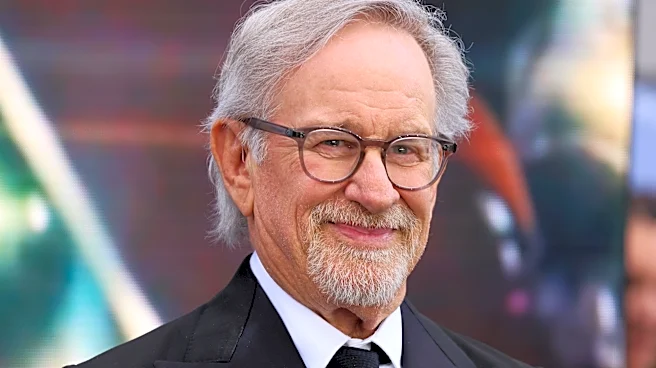
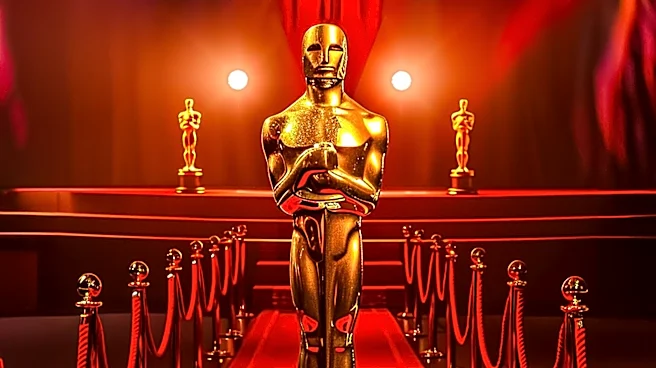
Steven Spielberg's film 'Lincoln,' which earned Daniel Day-Lewis an Oscar for Best Actor, is being highlighted for its faithful portrayal of the political efforts to pass the 13th Amendment. The movie focuses on the final months of the American Civil
War, depicting President Abraham Lincoln's strategic work to secure enough congressional support to abolish slavery. The film showcases the meetings, negotiations, and political clashes among politicians, emphasizing the complex process required to turn this historic decision into reality. While some minor adjustments were made for cinematic flow, the core events and political context are historically grounded, avoiding an overly simplified or idealized narrative.
Why It's Important?
The film 'Lincoln's' commitment to historical accuracy in depicting the passage of the 13th Amendment is crucial for public understanding of a pivotal moment in U.S. history. By illustrating the intricate political maneuvering and compromises involved, the movie provides a more nuanced view of President Lincoln's leadership and the legislative process. This portrayal helps to educate audiences on the challenges faced in abolishing slavery, moving beyond a simplistic narrative of moral triumph. For the entertainment industry, it underscores the value of historical biopics that prioritize factual integrity, potentially influencing future productions to adopt similar rigorous approaches to historical events. It also reinforces the idea that compelling drama can be derived from real-world political struggles without significant fictionalization.
What's Next?
The continued recognition of 'Lincoln' for its historical accuracy may encourage further academic and public discourse on the period of the Civil War and Reconstruction. It could also inspire new generations of filmmakers to tackle complex historical subjects with a similar dedication to factual representation. For educational institutions, the film remains a valuable resource for teaching about the 13th Amendment and the political landscape of the 1860s. The ongoing discussion about the film's accuracy also serves as a benchmark for evaluating other historical dramas, prompting audiences and critics to scrutinize the balance between dramatic license and historical truth in cinematic adaptations.
Beyond the Headlines
Beyond its immediate historical narrative, 'Lincoln' offers deeper insights into the nature of political leadership and the mechanics of legislative change. The film demonstrates that even deeply moral objectives often require pragmatic and sometimes ethically ambiguous political strategies to achieve. It highlights the importance of negotiation, persuasion, and compromise in a democratic system, even when dealing with fundamental human rights issues. This portrayal can foster a more sophisticated understanding of governance, showing that progress is often a result of persistent effort and strategic engagement rather than just moral conviction. The film also subtly explores the personal toll of such leadership, as President Lincoln navigates immense pressure and moral dilemmas to steer the nation through its greatest crisis.