





What's Happening?
Central banks are increasingly re-evaluating their gold reserves and showing a nascent interest in Bitcoin, driven by geopolitical uncertainties and a desire for assets independent of traditional financial intermediaries. A report based on discussions
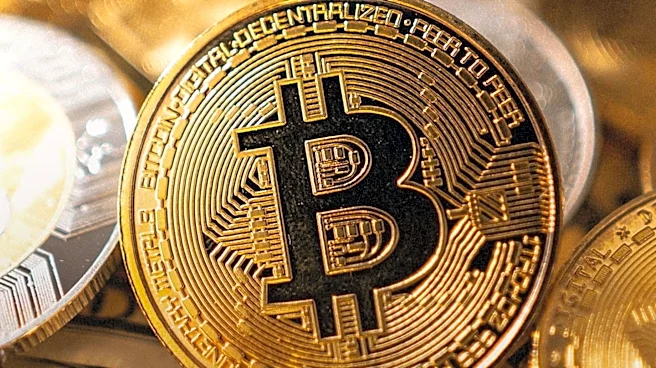
by the Official Monetary and Financial Institutions Forum (OMFIF) highlights that central banks are becoming more aware that assets held in foreign vaults are vulnerable, a lesson learned after Russia's reserves were frozen in 2022. Consequently, some European central banks are moving gold closer to home, with one unnamed European central bank considering relocating gold from London and another keeping half its gold domestically. The Dutch central bank, for instance, moved 86 tonnes of gold from New York and Ottawa to London in September, citing increasing geopolitical unrest. While central banks largely dismiss tokenized gold due to its reliance on third parties, one central bank, the Czech National Bank, has invested in a $1 million test portfolio of Bitcoin, a dollar stablecoin, and a tokenized deposit, held outside its official reserves. This indicates a cautious but growing exploration of digital assets as alternatives.
Why It's Important?
This shift in central bank asset management has significant implications for global finance and U.S. economic policy. The re-evaluation of gold's location and the emerging interest in Bitcoin reflect a broader concern among international financial institutions about the security and utility of reserves in an increasingly volatile geopolitical landscape. The perception of the U.S. dollar as less of a 'neutral asset' and more within a 'geopolitical risk framework' by some European central banks could gradually diminish its global dominance if more nations seek alternatives. For the U.S., this could mean a reduced demand for dollar-denominated assets and potentially impact the Federal Reserve's influence on global monetary policy. The growing interest in Bitcoin, even if currently small, suggests a potential long-term shift in how central banks view reserve assets, moving towards those that offer direct ownership and are less susceptible to external control. This could also influence the debate around the independence of institutions like the Federal Reserve, as some research suggests Bitcoin's price rises when the odds of Federal Reserve chair removal increase, implying it could act as a hedge against a loss of central bank independence.
What's Next?
The trend of central banks repatriating gold and exploring digital assets is likely to continue, driven by ongoing geopolitical tensions and a desire for greater financial autonomy. More central banks may follow the Czech National Bank's lead in cautiously investing in Bitcoin or other digital assets as test portfolios, potentially leading to a gradual increase in their allocation to these assets over the next decade. The OMFIF's 2026 survey indicates that 13% of central banks expect to increase their unspecified digital asset allocations over the next 10 years, up from 10% a year earlier. This could prompt further discussions and policy developments regarding the regulatory frameworks for digital assets at an international level. The U.S. Federal Reserve and Treasury Department will likely monitor these developments closely, as a significant shift in global reserve asset preferences could necessitate adjustments in U.S. monetary and foreign policy strategies to maintain economic stability and influence. The ongoing debate about the role of gold and Bitcoin as 'safe havens' during crises will also continue to evolve, influencing future investment decisions by both central banks and private investors.
Beyond the Headlines
The underlying implications of central banks' evolving asset strategies extend beyond immediate financial concerns, touching upon fundamental questions of sovereignty, trust, and the future of global economic power. The 'not your keys, not your coins' philosophy, long advocated by Bitcoin proponents, is now resonating with central banks regarding their gold reserves, highlighting a deeper distrust in third-party custodianship. This shift could lead to a more fragmented global financial system where nations prioritize direct control over their assets, potentially reducing the effectiveness of international sanctions and financial leverage. Furthermore, the exploration of Bitcoin by central banks, despite its volatility and cybersecurity risks, signals a recognition of its potential as a censorship-resistant and globally accessible asset. This could accelerate the development of central bank digital currencies (CBDCs) and other digital financial innovations, reshaping the very nature of money and financial transactions. The ethical dimension of holding assets that can circumvent traditional financial controls also raises questions about transparency, illicit finance, and the balance between national security and financial freedom in a digital age.