




What's Happening?
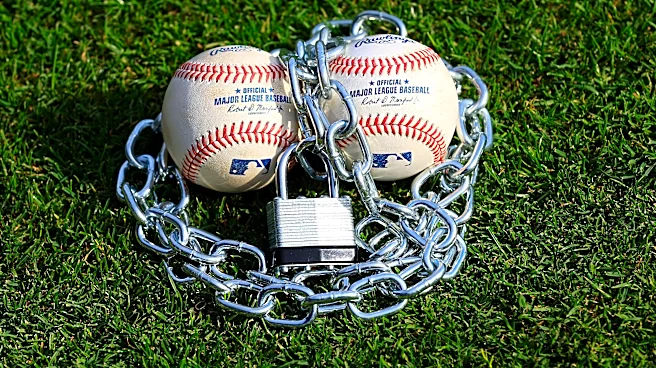
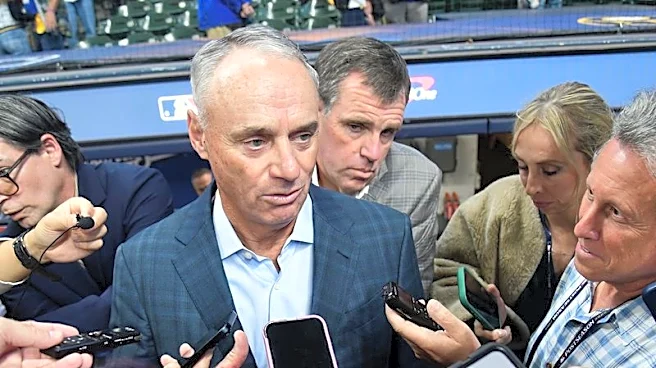
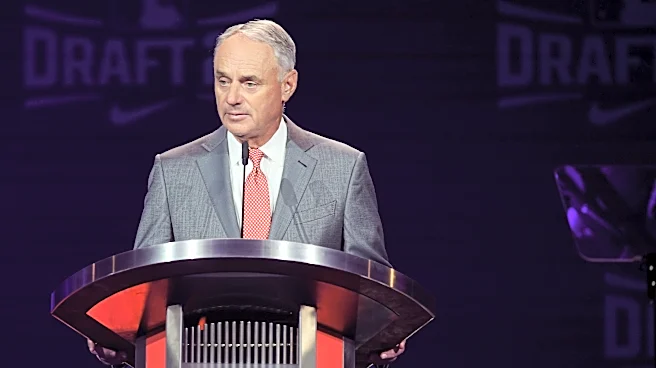
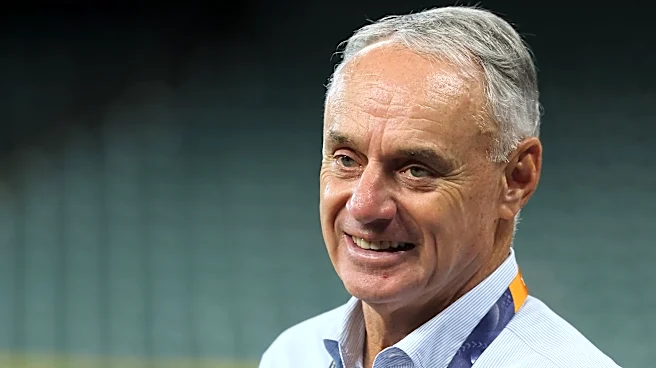
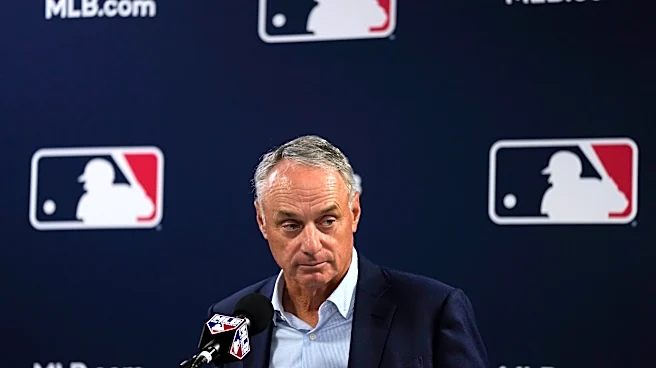
Major League Baseball owners recently concluded meetings in New York, with discussions largely overshadowed by impending labor negotiations. Commissioner Rob Manfred indicated that owners are unwilling to ratify a new collective bargaining agreement (CBA)
without the inclusion of a salary cap. Conversely, the Players Association has firmly stated its refusal to negotiate if a salary cap is on the table. Manfred even suggested the possibility of bringing the union before the National Labor Relations Board for 'refusing to bargain,' hinting at a favorable political climate for ownership. This impasse signals a high likelihood of a lockout when the current CBA expires in early December, potentially delaying the start of the baseball season. The league has not experienced game cancellations due to a labor dispute in over 30 years, since the 1994 World Series strike.
Why It's Important?
The current standoff between MLB owners and the Players Association carries significant implications for the sport's economic model and its stakeholders. A lockout would halt all baseball operations, impacting player salaries, team revenues, and the livelihoods of countless individuals associated with the league, from stadium staff to concession workers. For fans, it means a potential disruption to the baseball season, which could lead to decreased engagement and long-term damage to the sport's popularity. The owners' push for a salary cap aims to control player costs and potentially create more competitive balance, while the players' resistance is rooted in protecting their earning potential and free-market rights. The outcome of these negotiations will redefine the financial landscape of MLB for years to come, affecting player movement, team valuations, and the overall fan experience.
What's Next?
With the collective bargaining agreement set to expire in early December, a lockout appears increasingly probable. In the immediate future, a 'feeding frenzy' of transactions is anticipated as teams and players attempt to finalize deals before the work stoppage. Free agents like Tarik Skubal are expected to sign soon, potentially triggering movement among other players. Once the lockout begins, all major league business and baseball operations will cease, including free agent signings and trades. The next critical step will be whether either side softens its stance on the salary cap issue, or if external mediation becomes necessary. The threat of legal action before the lockout even begins suggests a contentious period ahead, with the potential for a prolonged dispute that could extend well into the new year and jeopardize the start of the 2027 MLB season.
Beyond the Headlines
The current labor dispute in MLB extends beyond immediate financial disagreements, touching upon fundamental philosophical differences regarding the sport's economic structure. The owners' insistence on a salary cap reflects a desire for greater cost certainty and potentially a more equitable distribution of talent across teams, aiming to address perceived competitive imbalances. However, the Players Association views a salary cap as a direct assault on player freedom and earning potential, arguing it would suppress salaries and limit opportunities for top talent. This conflict highlights the ongoing tension between labor and management in professional sports, where the balance of power often shifts. A prolonged lockout could also have broader implications for other professional sports leagues, potentially influencing future collective bargaining negotiations and labor relations across the industry. The dispute also raises questions about the role of the National Labor Relations Board in mediating such high-stakes conflicts.