

What's Happening?
Tesla held onto a majority share of the U.S. electric vehicle (EV) market in the second quarter, accounting for 50.5% of sales, according to Cox Automotive. This figure is a slight decrease from the 54.2% share in the first quarter but marks the first time
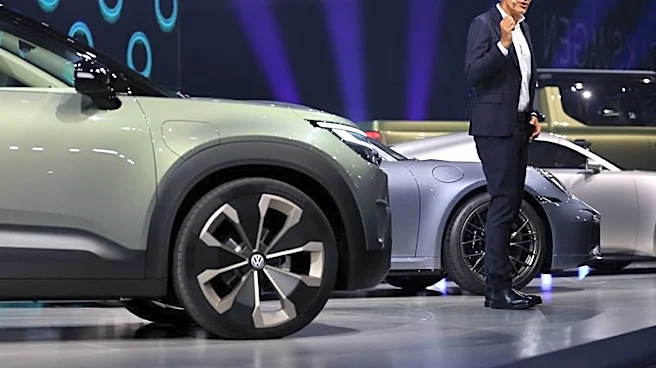
since 2023 that Tesla has reclaimed and maintained an industry-wide majority. Despite this market share advantage, the overall U.S. EV sales experienced a 20% decline during the second quarter. Tesla's own unit sales also fell by 13%, from 143,535 automobiles in Q2 of the previous year to 124,800 units in Q2 of the current year. The company's market share lead is attributed to its domestic rivals experiencing even larger sales setbacks. Globally, Tesla's second-quarter deliveries improved by 25% year-over-year, reaching 480,126 automobiles, but the company is losing market share in Europe and China to competitors like BYD, Geely, Changan, and Volkswagen.
Why It's Important?
Tesla's continued dominance in the U.S. EV market, even amidst a general downturn in sales, highlights its strong brand loyalty and established infrastructure within the country. However, the overall 20% drop in U.S. EV sales suggests a potential cooling in demand or increased market saturation, which could impact the growth trajectories of all EV manufacturers. The loss of market share in key international markets like Europe and China indicates intensifying global competition, particularly from Chinese automakers who are rapidly advancing in EV technology and production. This shift could force Tesla to innovate further or adjust its strategies to maintain its global standing. The broader implications for the U.S. automotive industry include a potential re-evaluation of EV production targets and investment strategies, as domestic manufacturers face challenges in scaling up and competing effectively against both Tesla and international players.
What's Next?
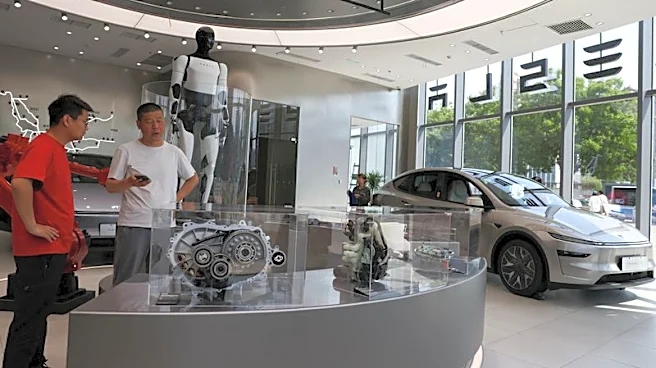
Tesla is continuing to develop AI-powered humanoid robots, with CEO Elon Musk suggesting commercial production could begin before the end of next year. This indicates a potential diversification of Tesla's business beyond electric vehicles, which could become a secondary focus. For the EV market, the coming quarters will reveal whether the Q2 sales decline is a temporary blip or a more sustained trend. Automakers, including Tesla, will likely continue to introduce new models and technologies, such as improved battery efficiency and charging infrastructure, to attract consumers and address concerns like 'range anxiety.' The competitive landscape, especially in international markets, will likely intensify, pushing companies to innovate in areas like pricing, fuel efficiency, and in-car technology. The performance of domestic rivals in the U.S. will also be crucial in determining if Tesla can maintain its majority market share in the long term.
Beyond the Headlines
The narrative surrounding Tesla's market share in the U.S. reveals a deeper trend in the automotive industry: the increasing complexity and interconnectedness of global markets. While Tesla maintains a strong position domestically, its struggles in Europe and China underscore the diverse consumer preferences, regulatory environments, and competitive pressures that vary significantly across regions. The rise of Chinese automakers, not just in EVs but also in full-hybrid technology, signals a potential shift in global automotive leadership and innovation. This could lead to a more fragmented global market where different regions are dominated by different players, challenging the traditional dominance of established Western and Japanese brands. Furthermore, Tesla's venture into AI-powered humanoid robots suggests a long-term vision that extends beyond transportation, potentially positioning the company as a broader technology and AI leader, which could have profound implications for various industries and the future of work.