

What's Happening?
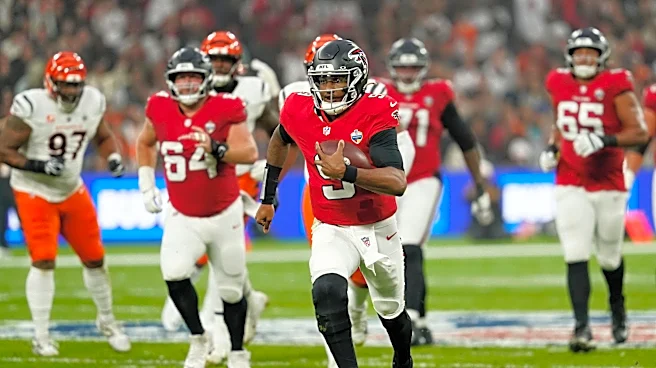
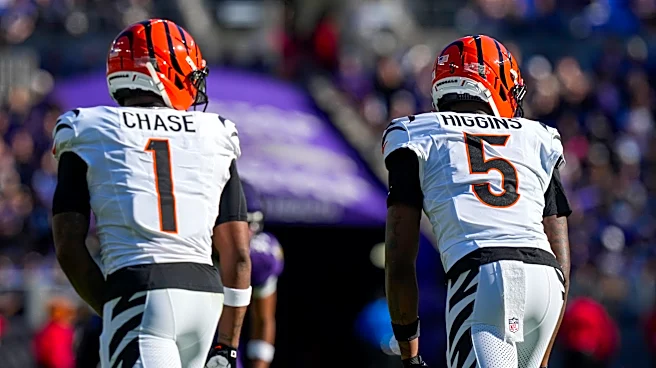
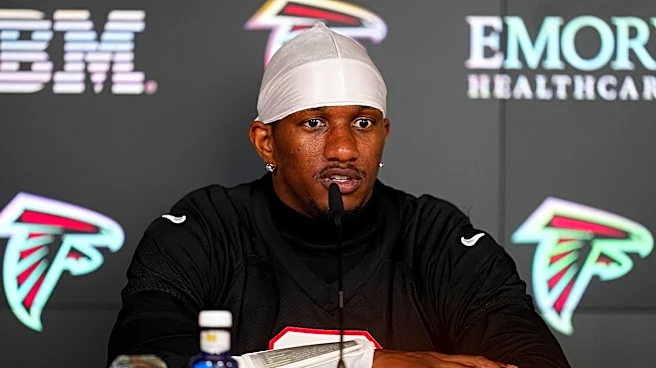
Atlanta Falcons quarterback Michael Penix Jr. showcased a new dimension to his game, demonstrating significant mobility during the team's 34-17 loss to the Cincinnati Bengals in Week 9. While his passing statistics were modest, completing 20 of 31 attempts
for 162 yards with one touchdown and one interception, Penix Jr. recorded a career-high 50 rushing yards on three carries. This included a notable 23-yard run in the first quarter, more than doubling his previous career best of 21 rushing yards. This display of mobility is a departure from his usual play style, which has primarily focused on his arm talent, and comes after a history of injuries that limited his running in the NFL. Despite this individual performance, the Falcons are on track for their ninth consecutive losing season, with coach Kevin Stefanski citing 'self-inflicted' errors, such as pre-snap penalties, as contributing factors to the team's struggles. Penix Jr.'s performance under pressure remains a concern, as he completed only one of nine passes for -3 yards and an interception when pressured against the Bengals, marking an 18% completion rate under pressure, the lowest by a qualified quarterback since ESPN began tracking such data in 2009.
Why It's Important?
Michael Penix Jr.'s increased mobility is a significant development for the Atlanta Falcons as they evaluate his long-term viability as their franchise quarterback. His ability to extend plays and gain yards with his legs could mitigate some of his struggles under pressure, an area where he has historically performed poorly. For a team facing a potential ninth straight losing season, identifying a clear path forward with their quarterback is crucial. This newfound mobility could influence offensive play-calling, potentially leading to more designed runs or scrambles, which could also alleviate pressure on other offensive players, such as running back Bijan Robinson, especially with Brian Robinson Jr. on injured reserve. The Falcons have a decision looming regarding Penix Jr.'s contract extension and his fifth-year option, making every aspect of his performance critical. His ability to adapt and add new elements to his game could impact the team's strategic direction and future roster construction, as well as his market value in upcoming contract negotiations.
What's Next?
The Atlanta Falcons will continue to evaluate Michael Penix Jr.'s performance in the coming weeks, with his enhanced mobility likely becoming a more prominent factor in their assessment. The team's coaching staff may explore incorporating more plays that leverage his running ability to create offensive opportunities and reduce the impact of defensive pressure. Decisions regarding his contract extension and the activation of his fifth-year option are on the horizon, and his continued development, particularly in handling pressure and maintaining consistency, will heavily influence these choices. The Falcons' overall team performance, especially their ability to minimize 'self-inflicted' mistakes, will also play a role in how Penix Jr.'s individual contributions are perceived. If he can consistently integrate his mobility while improving his passing efficiency under duress, it could solidify his position as the team's long-term starter. Conversely, a regression or continued struggles in other areas might lead the team to explore other quarterback options in the offseason.
Beyond the Headlines
Michael Penix Jr.'s demonstration of increased mobility could signal a strategic shift in how the Falcons view and utilize their quarterback, moving towards a more dynamic, dual-threat approach. This evolution in his game could have broader implications for quarterback development in the NFL, particularly for players with a history of injuries who might initially be pigeonholed as pocket passers. The emphasis on mobility as a counter to pressure highlights a growing trend in the league where quarterbacks are increasingly expected to make plays outside the pocket. For Penix Jr., this could be a pivotal moment in his career, potentially transforming perceptions of his durability and versatility. The long-term success of this adaptation will depend on his ability to stay healthy and consistently execute, but it opens up new possibilities for his role within the Falcons' offense and could influence how future draft prospects with similar profiles are evaluated by NFL teams.