


What's Happening?
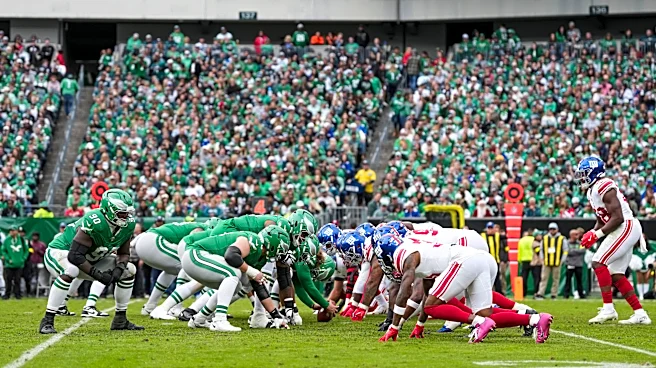
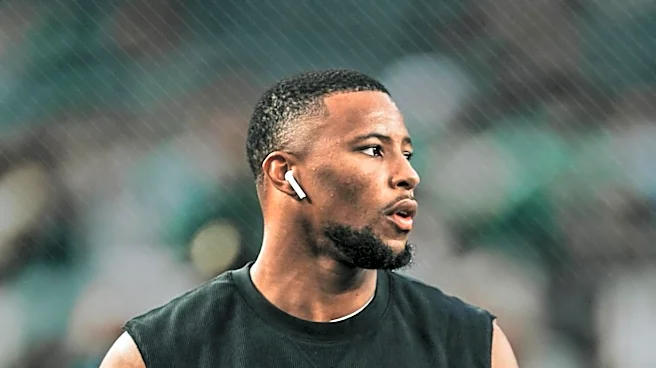
Philadelphia Eagles running back Saquon Barkley has been upgraded to limited participation in practice, according to the team's second official injury report ahead of their Week 9 game against the New York Giants. This upgrade follows Barkley not practicing
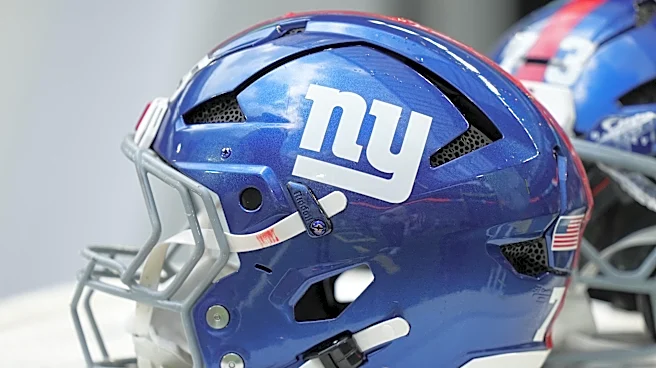
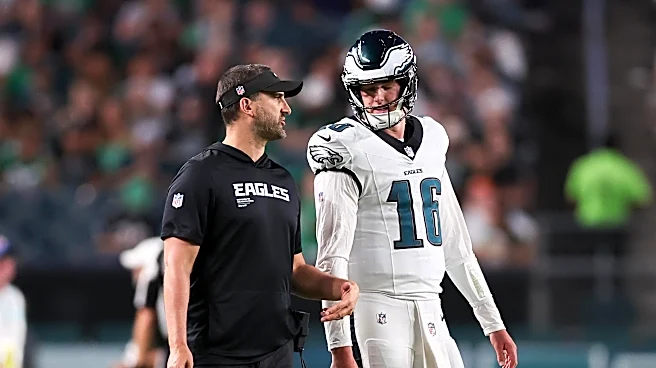
on Wednesday due to hamstring and back injuries. The report also details several other Eagles players' statuses, with seven players listed as 'did not participate,' including DeVonta Smith and Dontayvion Wicks, who are expected to miss their third consecutive game. Five players, including Barkley, Tanner McKee, Jake Elliott, Jalyx Hunt, and Jonathan Greenard, were listed with limited participation. McKee was downgraded from full participation due to a rib injury. Eight players, such as Jordan Mailata and Landon Dickerson, were listed with full participation. The report also provided an injury update for the New York Giants, noting that leading receiver Malik Nabers missed practice but expects to play, while leading rusher Cam Skattebo is likely to miss the game.
Why It's Important?
The limited practice status of Saquon Barkley is significant for the Philadelphia Eagles, as his performance is crucial to their offensive strategy. While an upgrade to limited participation suggests some progress, the underlying hamstring and back issues raise concerns about his long-term availability and effectiveness. The decision to play Barkley despite him being 'hampered and in pain' could impact his health and the team's overall performance, especially with a Week 10 bye approaching that could offer a two-week recovery period. The absence of key wide receivers like DeVonta Smith and Dontayvion Wicks further emphasizes the importance of Barkley's role in the offense. If Barkley's injuries persist or worsen, it could force the Eagles to rely more heavily on other offensive players or adjust their game plan, potentially affecting their competitive standing in the league. The injury status of other players, such as Tanner McKee and the defensive backfield, also highlights the team's depth challenges and the need for healthy contributors across the roster.
What's Next?
The immediate next step for Saquon Barkley and the Philadelphia Eagles will be to monitor his progress leading up to the Week 9 game against the New York Giants. The team will need to assess whether his limited participation in practice translates to sufficient readiness for game-day action. Given the upcoming Week 10 bye, the Eagles face a strategic decision regarding Barkley's playing time; resting him for the Giants game could provide a crucial two-week recovery period, potentially preventing further aggravation of his injuries. The performance of other offensive players, particularly in the wide receiver corps, will be critical if Barkley's capacity is limited. The team will also continue to evaluate the statuses of other injured players, such as DeVonta Smith and Dontayvion Wicks, to determine their return timelines. The coaching staff will likely adjust game plans based on the final injury report and the availability of key players, impacting their strategy against the Giants and in subsequent games.
Beyond the Headlines
The ongoing injury concerns surrounding Saquon Barkley, despite his upgrade to limited practice, highlight a broader issue in professional sports regarding player health and team management. The pressure to perform and the competitive nature of the NFL often lead to players competing while not fully healthy, which can have long-term consequences for their careers and the team's overall success. The Eagles' decision-making process regarding Barkley's playing status, especially with a bye week on the horizon, reflects the delicate balance between short-term game objectives and long-term player welfare. This situation also underscores the increasing reliance on sports science and medical staff to manage player loads and recovery, as teams seek to maximize performance while minimizing injury risks. The impact of key player injuries extends beyond individual games, influencing team morale, fan engagement, and even financial considerations related to player contracts and future investments. This scenario serves as a microcosm of the challenges faced by professional sports organizations in maintaining a healthy and competitive roster throughout a demanding season.