





What's Happening?
Belden Inc. has introduced its new Belden and Edge2Web Smart Factory Insights solution, built on AWS IoT SiteWise. This offering is designed to help manufacturers digitize their operations by connecting over 300 industrial protocols. The solution enables
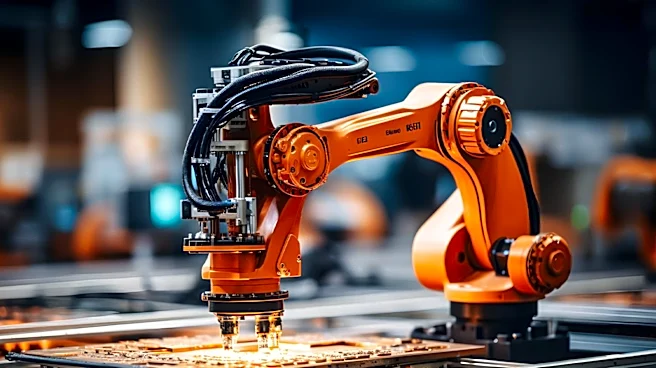
real-time tracking of key performance indicators (KPIs) such as Overall Equipment Effectiveness (OEE) and energy consumption, and it supports scalable deployments from single plants to global operations. The Smart Factory Insights solution integrates Belden Horizon Data Operations with Edge2Web Factory Insights, shifting Belden's focus further towards software, data orchestration, and no-code tools. This move directly addresses the challenges manufacturers face with fragmented control systems and limited real-time visibility on the plant floor. The launch signifies Belden's commitment to factory digitization and Physical AI, building on existing initiatives like its autonomous docking door program. This new product stack aims to enhance plant floor automation by feeding data to AI systems, thereby improving operational efficiency and decision-making.
Why It's Important?
This launch is significant for the industrial sector as it provides a comprehensive solution for manufacturers to overcome the complexities of integrating disparate industrial systems. By offering a unified platform for data collection and analysis, Belden's Smart Factory Insights can lead to more efficient production processes, reduced waste, and improved product quality. For Belden, this initiative is crucial for its investment narrative, as it aims to demonstrate a shift towards higher-value industrial and networking solutions. The success of this product could validate the company's strategy of moving further up the technology stack into multi-protocol software, Generative AI tooling, and Software-as-a-Service (SaaS) offerings. This transition, however, comes with execution risks due to intense competition and higher margin expectations in these advanced technology sectors. The ability to convert these opportunities into sustained earnings quality while managing its debt load will be a key factor for Belden's long-term financial health and shareholder value.
What's Next?
Belden's immediate focus will likely be on the successful implementation and adoption of its Smart Factory Insights solution across various manufacturing clients. The company will need to demonstrate tangible improvements in operational efficiency and profitability for its customers to solidify its position in the factory digitization market. Shareholders and analysts will closely monitor whether this shift towards higher-value industrial solutions translates into cleaner margins and improved returns on capital, addressing current concerns about flat operating margins and shrinking capital returns. The company's ability to effectively compete in the software and AI services space, which demands different operational capabilities than its traditional hardware business, will be critical. Future developments may include expanding the solution's capabilities, integrating with more industrial protocols, and potentially forming strategic partnerships to enhance its market reach and technological offerings. The market will be watching for evidence that Belden can deliver on its projected revenue growth of 17.3% and a significant increase in earnings by 2029, as outlined in current analyst forecasts.
Beyond the Headlines
The introduction of Belden's Smart Factory Insights solution highlights a broader trend in manufacturing: the increasing convergence of operational technology (OT) and information technology (IT). This convergence is essential for realizing the full potential of Industry 4.0 and smart factories, where data-driven insights are paramount. The ethical implications of extensive data collection in industrial environments, particularly concerning data privacy, security, and the potential for job displacement due to automation, will become more prominent. Legal frameworks may need to evolve to address data ownership and liability in highly interconnected factory ecosystems. Culturally, this shift requires a transformation in workforce skills, emphasizing data literacy, AI proficiency, and collaborative problem-solving. The long-term impact could see a redefinition of manufacturing roles, with a greater emphasis on human-machine collaboration and continuous learning. The success of such solutions will depend not only on technological prowess but also on effective change management and a clear understanding of the human element in increasingly automated environments.