

What's Happening?
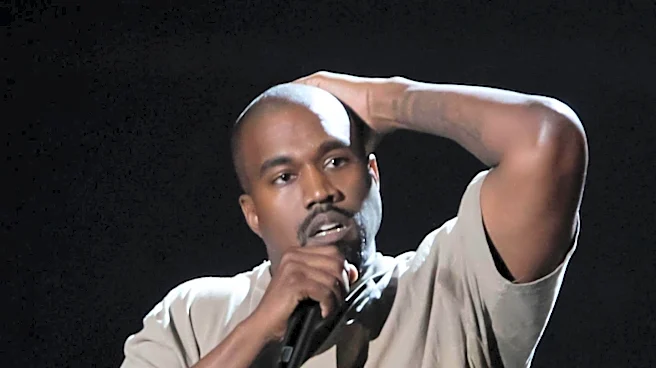
Nile Lasana, a Chicago interdisciplinary artist, performer, and educator, has expressed a significant decline in his admiration for Kanye West, now known as Ye. Lasana, who grew up in Chicago and had a personal connection through his family's friendship
with Ye's mother, Donda West, details how Ye's recent actions and statements have led to a profound disillusionment. Lasana recounts being deeply inspired by Ye's early music and persona, memorizing his songs and finding motivation in his work during his formative years. However, Ye's public support for President Trump, his controversial remarks about slavery, wearing a 'White Lives Matter' shirt, and expressing admiration for Adolf Hitler have caused Lasana's 'nearly bulletproof love' for the artist to erode. Despite acknowledging Ye's struggles with grief and mental health, Lasana emphasizes that these do not excuse the racist, hateful, and violent comments made by the artist. He notes that Ye's behavior has remained largely unchanged over the past decade, leading him to boycott Ye's music and unfollow him on all platforms.
Why It's Important?
This personal reflection from a Chicago artist highlights a broader sentiment among many former fans and the public regarding Kanye West's controversial trajectory. It underscores the tension between appreciating an artist's past creative output and condemning their present-day actions and rhetoric. The erosion of support from individuals like Lasana, who had deep personal and cultural ties to Ye's early career, signifies a significant shift in public perception. This narrative is important because it reflects how an artist's personal conduct and political stances can profoundly impact their legacy and audience loyalty, even for figures as influential as Ye. It also brings to the forefront the ongoing debate about accountability for public figures, particularly when their statements are perceived as hateful or harmful. The piece implicitly questions whether artistic genius can be separated from personal morality in the eyes of the public, especially when the latter involves bigotry and hate speech.
What's Next?
The ongoing public discourse surrounding Kanye West's actions and statements is likely to continue shaping his career and public image. As more individuals, particularly those who were once ardent supporters, vocalize their disillusionment, Ye may face further alienation from mainstream audiences and industry partners. Future projects or public appearances by Ye will likely be met with increased scrutiny and potential boycotts, as indicated by Lasana's decision not to attend Ye's Soldier Field show. This trend could lead to a further decline in his commercial viability and cultural influence, particularly among demographics that feel betrayed by his rhetoric. The music and entertainment industries may also continue to distance themselves from Ye, impacting his ability to secure collaborations, distribution deals, or performance venues. The conversation around separating the art from the artist will persist, with each new controversial statement from Ye reigniting the debate.
Beyond the Headlines
The narrative of Nile Lasana's evolving relationship with Kanye West delves into deeper implications concerning the intersection of art, identity, and social responsibility. For many, Ye represented a voice that resonated with their experiences and aspirations, particularly within the Black community and among those who appreciated his artistic innovation. His subsequent embrace of controversial ideologies and figures has forced a re-evaluation of what artists represent beyond their creative output. This situation highlights the ethical dilemma faced by consumers of art: how to reconcile admiration for past work with condemnation of present behavior. It also touches upon the psychological impact of public figures' actions on their audience, especially when those figures were once seen as role models or cultural icons. The 'fall from grace' narrative, as described by Lasana, suggests a broader cultural reckoning where audiences are increasingly demanding accountability and ethical alignment from those they admire, signaling a potential shift in how celebrity and influence are perceived and maintained in contemporary society.