






What's Happening?
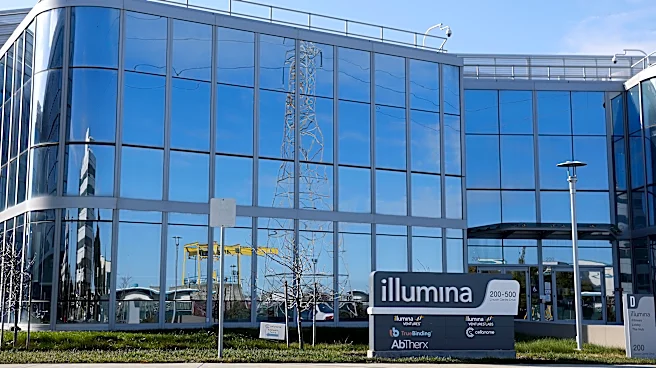
The spatial omics market is experiencing significant growth, driven by advancements in technology and increased adoption in drug discovery and precision medicine. Illumina Inc., a U.S. biotechnology leader, introduced a new spatial transcriptomics technology in February
2025. This technology offers unbiased, whole-transcriptome profiling at single-cell resolution, with a capture area nine times larger and resolution four times higher than previous methods. It integrates with Illumina's NextSeq and NovaSeq sequencers and the Illumina Connected Multiomics (ICM) platform for data visualization. Concurrently, Bruker Corporation, a U.S.-based scientific equipment manufacturer, acquired NanoString Technologies Inc. in May 2024 for approximately $392.6 million. This acquisition aims to bolster Bruker's spatial biology portfolio by incorporating NanoString's gene expression profiling and spatial transcriptomics products. The spatial omics market is projected to grow at a compound annual growth rate (CAGR) of 10.0% through 2030, reaching $0.54 billion.
Why It's Important?
These developments are crucial for the U.S. biotechnology and pharmaceutical sectors, as spatial omics techniques are vital for drug discovery and precision medicine. Illumina's new technology enhances the ability to analyze tissue and map cells with unprecedented detail, potentially accelerating the identification of disease mechanisms and therapeutic targets. Bruker's acquisition of NanoString Technologies strengthens its position in the spatial biology market, fostering innovation and competition within the industry. The projected market growth signifies a substantial economic opportunity, attracting further investment and research into advanced biological data analysis, high-resolution imaging, and data visualization tools. This will ultimately benefit patients through more targeted and effective treatments, while also creating high-value jobs and intellectual property within the U.S.
What's Next?
The spatial omics market is expected to continue its rapid expansion, with key trends including the growing use of spatial transcriptomics platforms, integration of multiple omics data types, and a deeper focus on molecular mapping at the tissue level. Further advancements in AI-based biological data analysis and the demand for spatially resolved biomarkers will likely drive future innovations. Companies like Illumina and Bruker will continue to invest in research and development to enhance their offerings and maintain competitive advantages. The increased adoption of these techniques in pharmaceutical research and development is anticipated, leading to a pipeline of new drugs and personalized medicine approaches. The market will also see continued development of computational deconvolution methods to infer cellular composition within spatial features.
Beyond the Headlines
The rapid evolution of spatial omics technology raises broader implications for the ethical considerations surrounding genetic data and personalized medicine. As the ability to map gene expression at single-cell resolution becomes more sophisticated, questions about data privacy, informed consent, and equitable access to advanced diagnostics and treatments will become increasingly prominent. The integration of AI in biological data analysis also introduces discussions about algorithmic bias and the need for robust validation of AI-driven insights. Furthermore, the increasing complexity of multiomic data necessitates the development of new educational programs and skilled professionals capable of interpreting and applying these advanced techniques, potentially reshaping the landscape of biomedical research and clinical practice.