




What's Happening?
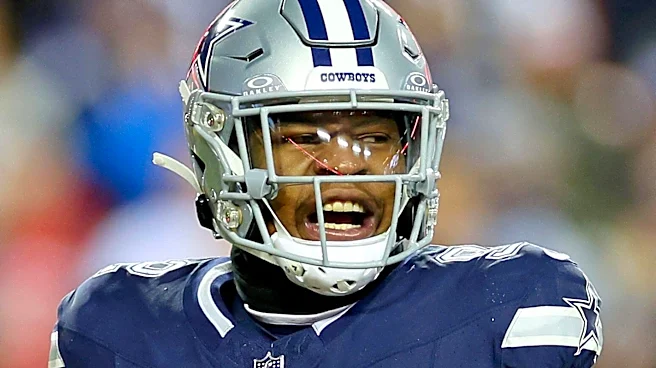
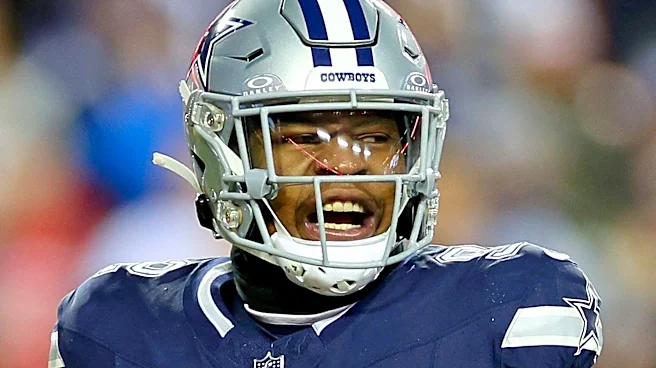
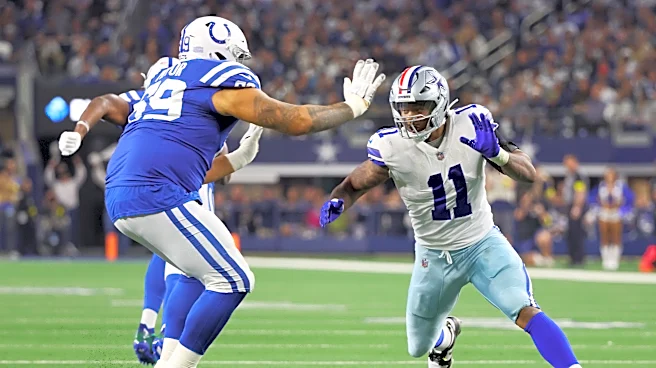
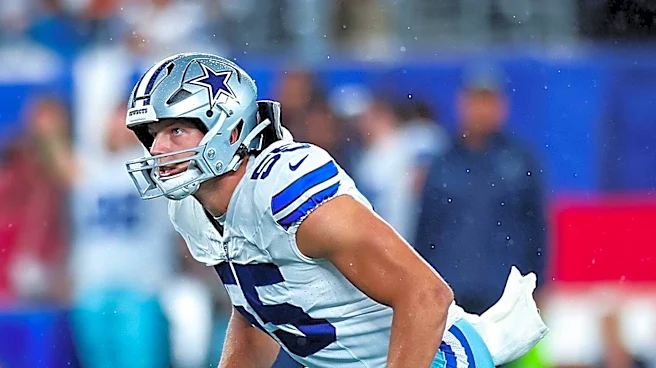
Marist Liufau, a third-year linebacker for the Dallas Cowboys, is undergoing a position switch from inside to outside linebacker as part of a new defensive scheme introduced by defensive coordinator Christian Parker. The change comes as the Cowboys transition
to a 3-4 defense, which has led to Liufau learning to rush the passer from scratch. Previously, Liufau's role diminished significantly, with his playing time reduced from 521 defensive snaps as a rookie to just 202 snaps last year. The new scheme aims to utilize Liufau's strengths, such as his length and ability to disrupt the ball.
Why It's Important?
The position switch is a critical moment in Liufau's career, as it could determine his future with the Cowboys. The new defensive scheme offers him an opportunity to revitalize his role on the team, potentially increasing his impact on the field. However, the transition also poses challenges, as Liufau must adapt to a new position with little prior experience. The success of this switch could influence the Cowboys' defensive performance and their overall strategy in the upcoming season. It also highlights the broader trend of NFL teams adapting their defensive strategies to maximize player strengths.
What's Next?
Liufau will need to add weight to compete effectively against NFL tackles, as he is currently listed at 6-foot-2, 239 pounds. The Cowboys will monitor his progress closely during training camps and preseason games to assess his fit in the new role. If successful, Liufau could become a key component of the Cowboys' pass rush, pairing with other young talents to form a formidable defensive line. However, if he struggles to adapt, he may face increased competition for his roster spot, making him a potential cut candidate before the final roster decisions.
Beyond the Headlines
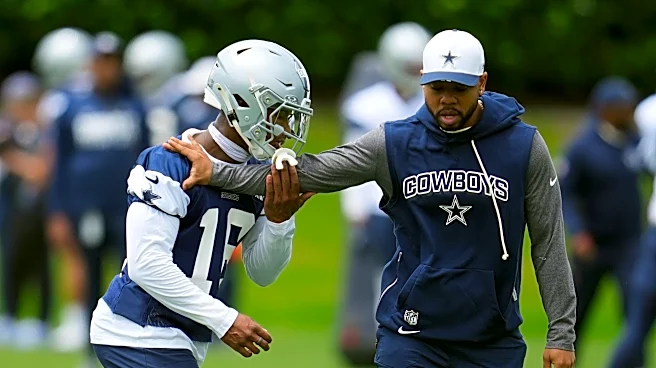
The position switch underscores the dynamic nature of NFL careers, where players must continuously adapt to new roles and strategies. It also reflects the evolving nature of defensive schemes in the league, as teams seek to optimize their rosters by leveraging player versatility. This development may prompt other teams to consider similar adjustments, emphasizing the importance of flexibility and adaptability in professional sports. Additionally, it highlights the role of coaching in player development, as effective guidance can significantly impact a player's career trajectory.