

What's Happening?
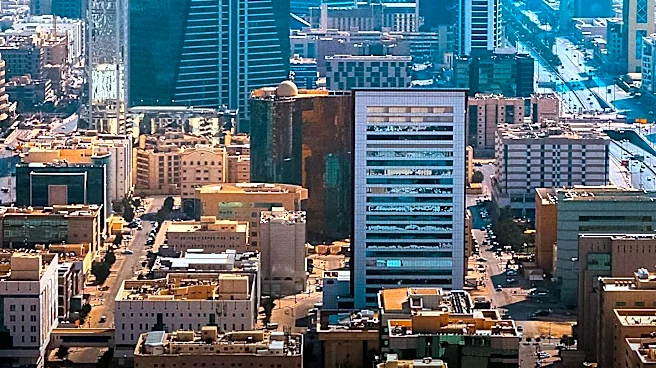
Saudi Arabia is shifting its economic diversification strategy, Vision 2030, from "spending and delivery at any cost" to "spending and delivery at the right cost," according to Economy Minister Faisal Alibrahim. This adjustment comes as the Kingdom faces
economic pressures and ongoing attacks by Iran-backed Houthis in Yemen, which have targeted critical infrastructure. Launched in 2016 by Crown Prince Mohammed bin Salman, Vision 2030 aims to reduce Saudi Arabia's reliance on oil revenue by expanding sectors such as tourism, entertainment, technology, and manufacturing, and attracting foreign investment. To achieve these goals, the Kingdom has undertaken several multibillion-dollar megaprojects, including NEOM, The Line, and Qiddiya, many of which are backed by the Public Investment Fund (PIF). However, Saudi Arabia has begun reviewing the financial viability of several high-profile ventures, including NEOM's The Line, and has suspended work on projects like the Mukaab skyscraper in Riyadh. The security threats have also led to the cancellation of the international investor conference, "Davos in the Desert."
Why It's Important?
This shift in Saudi Arabia's Vision 2030 spending strategy has significant implications for global investors and the international business community. The Kingdom's previous approach of extensive government spending led to numerous opportunities for foreign companies in construction, technology, and tourism. The new emphasis on "spending and delivering at the right cost" suggests a more selective investment environment, where projects with stronger commercial prospects and immediate economic returns will be prioritized. This could lead to a re-evaluation of existing partnerships and a more cautious approach from international firms considering new ventures in Saudi Arabia. For U.S. businesses, particularly those in infrastructure development, technology, and entertainment, this means a need for greater scrutiny of project viability and a focus on demonstrating clear financial returns. The ongoing Houthi attacks also highlight geopolitical risks that could impact the stability of investments and supply chains in the region, potentially affecting global energy markets and trade routes.
What's Next?
Saudi Arabia is expected to continue prioritizing developments with stronger commercial prospects and immediate economic returns under Vision 2030, while delaying, redesigning, or scaling down more ambitious ventures. Projects like Qiddiya and Diriyah are anticipated to continue receiving attention, indicating a strategic focus on certain sectors. The Kingdom is also moving towards a policy-first approach in many areas, aiming to align its regulatory environment with international laws to create a clearer business environment. This suggests that future investment opportunities will likely be accompanied by more stringent financial viability assessments and a greater emphasis on private-sector participation and foreign capital attraction. The ongoing security situation with Houthi attacks will also remain a critical factor, potentially influencing investor confidence and the pace of project development. The Saudi government's commitment to long-term sustainable stability in the region will be crucial in mitigating these risks.
Beyond the Headlines
The recalibration of Vision 2030 extends beyond mere financial adjustments; it reflects a deeper strategic evolution in Saudi Arabia's approach to economic transformation. The initial phase of Vision 2030 was characterized by a rapid, government-led spending spree to kickstart diversification. The current shift indicates a maturation of this strategy, moving towards a more sustainable and market-driven model. This transition could foster a more robust and resilient private sector, reducing dependence on state-backed initiatives. Ethically, the focus on "right cost" could lead to more rigorous environmental and social impact assessments for megaprojects, potentially addressing concerns raised by international human rights organizations regarding labor practices and displacement. Culturally, the emphasis on tourism and entertainment, while still present, may be refined to ensure projects are not only commercially viable but also culturally sensitive and sustainable. This strategic pivot could ultimately lead to a more diversified and globally integrated Saudi Arabian economy, albeit at a more measured pace.