
What's Happening?
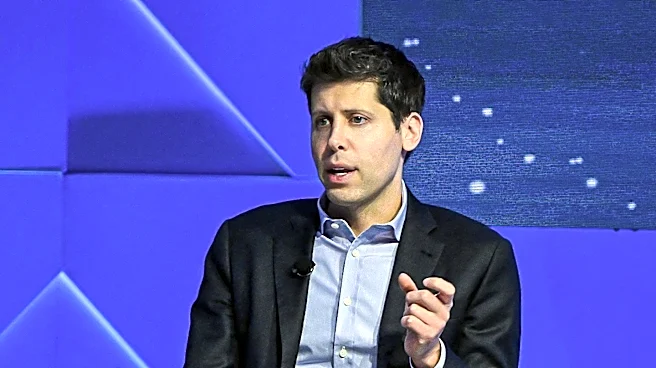
Sam Altman, CEO of OpenAI, has expressed concerns about the potential for a small number of companies to control artificial intelligence (AI), which he believes could lead to 'AI authoritarianism.' Altman's
comments come in the wake of a debate in Silicon Valley and Washington regarding the transparency of AI model architectures. While many leading tech companies, including Microsoft, Meta, and Google, have advocated for open-source AI, OpenAI remains proprietary. The release of Moonshot AI's Kimi K3, a Chinese open-source model, has intensified discussions about restricting access to such models, with some U.S. officials calling for limitations. Altman argues for empowering society to use AI technology freely, warning against the concentration of power.
Why It's Important?
The debate over AI control and transparency has significant implications for global competition and innovation. If a few companies dominate AI technology, it could stifle competition and limit the diversity of AI applications. This concentration of power could also lead to ethical and regulatory challenges, as decisions about AI deployment would be made by a select few. The U.S. government's role in regulating AI exports and access to advanced computing resources further complicates the landscape, potentially affecting international relations and economic dynamics. Altman's stance highlights the need for a balanced approach that fosters innovation while preventing monopolistic control.
What's Next?
The ongoing discussions in Washington and Silicon Valley are likely to influence future regulatory frameworks for AI. As the debate continues, stakeholders, including tech companies, policymakers, and civil society groups, will need to navigate the complexities of AI governance. The outcome could shape the direction of AI development and its integration into various sectors. Additionally, the response from companies like Anthropic, which advocates for stronger safeguards, may impact industry standards and practices. The evolving landscape will require careful consideration of both innovation and ethical implications.