
What's Happening?
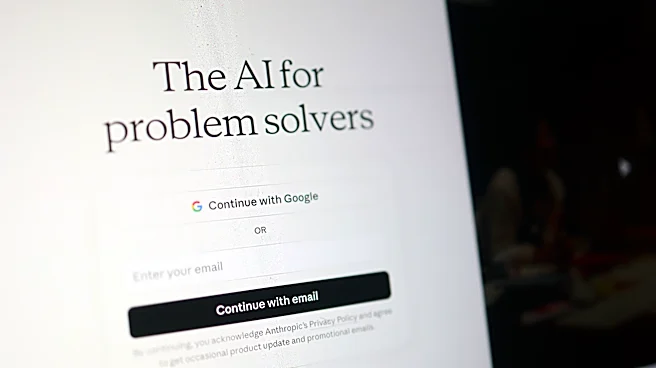
Anthropic, an AI frontier company, recently launched its Initial Public Offering (IPO) on Nasdaq, achieving a valuation exceeding $2 trillion. This milestone occurred less than six years after its founding
by Dario Amodei, CEO, and Daniela Amodei, President, along with five co-founders who departed OpenAI in December 2020. The company framed its foundation as a 'public benefit corporation' with an independent 'Long-Term Benefit Trust' to ensure its adherence to a moral mission and humanity's interests. Anthropic has positioned itself as an ethical alternative in the AI industry, notably refusing a $200 million deal with the Pentagon in late 2025 due to concerns about using its Claude large language model for autonomous weapons or mass surveillance. This refusal led to President Trump denouncing Anthropic as a 'RADICAL LEFT, WOKE company' on Truth Social. Despite this, the company's public image benefited, with Claude topping app rankings. Anthropic also withheld its Claude Mythos Preview model from public release in April, citing potential vulnerabilities. The company's leadership, including Dario Amodei, has publicly expressed concerns about AI's potential to 'destroy humanity,' with Amodei citing a 25-30% risk, and alignment science lead Evan Hubinger stating a >10% risk within the next decade.
Why It's Important?
Anthropic's rapid ascent and substantial IPO valuation highlight the immense financial and technological stakes in the AI sector. Its self-proclaimed ethical stance, particularly its refusal to engage with military applications and its public warnings about AI's existential risks, sets it apart from other tech giants. This approach could influence corporate responsibility standards within the burgeoning AI industry, potentially encouraging other companies to consider the broader societal implications of their technologies. The company's ties to the Effective Altruism movement, with significant philanthropic pledges from founders and employees, demonstrate a unique model of integrating social impact with corporate success. However, the tension between accelerating AI development and mitigating its risks, as articulated by Anthropic's leaders, underscores a critical dilemma facing the U.S. and global technology landscape. The debate over AI's potential for both transformative good and catastrophic harm is becoming central to public discourse, impacting regulatory discussions and national security strategies, especially in the context of competition with other global powers.
What's Next?
The future trajectory of Anthropic and the broader AI industry will likely involve continued scrutiny of ethical guidelines and regulatory frameworks. The U.S. government, as evidenced by President Trump's hosting of Amodei at a private dinner and a White House AI summit, is grappling with how to manage AI development. President Trump's executive order banning state-level AI restrictions and his support for 'tremendous self-regulation' suggest a preference for industry-led solutions, though this approach is met with skepticism. Congressional efforts, such as the formation of an AI Safety and Innovation Caucus and proposed legislation like the SAFE AI Act, indicate a growing push for mandatory safety testing and government oversight. The upcoming 2028 presidential election is expected to feature AI as a top-tier issue, with candidates like Senator Jon Ossoff emphasizing the need for safeguards. The ongoing tension between rapid technological advancement and the implementation of robust safety measures will define the regulatory landscape, potentially leading to new laws that could significantly impact AI companies' operations and their ability to deploy advanced models.
Beyond the Headlines
The narrative surrounding Anthropic extends beyond typical business and policy discussions, delving into profound philosophical and ethical questions. The company's internal culture, influenced by the Effective Altruism movement, frames moral dilemmas as statistical challenges, leading to controversial calculations regarding the value of human life versus other entities. This utilitarian approach, while aiming for maximal good, raises concerns about the dehumanization of ethical decision-making. The public pronouncements by Anthropic's leaders about AI's potential to 'destroy humanity' while simultaneously accelerating its development present a paradox that challenges conventional notions of corporate responsibility and scientific ethics. The comparison of current AI development to the Manhattan Project, with its inherent risks and moral quandaries, highlights a deep-seated anxiety about humanity's control over its creations. The perceived 'moral childishness' and limited cultural hinterland of some AI elites, as noted by critics, suggest a potential disconnect between technological prowess and a comprehensive understanding of societal implications, raising questions about who should govern and guide the development of such powerful technologies.