


What's Happening?
7 For All Mankind has unveiled a newly redesigned store in SoHo, New York, reflecting a significant revamp of the brand's aesthetic. Creative director Nicola Brognano and global president Sacha Gomez de Zamora Ford have steered the brand towards a nostalgic
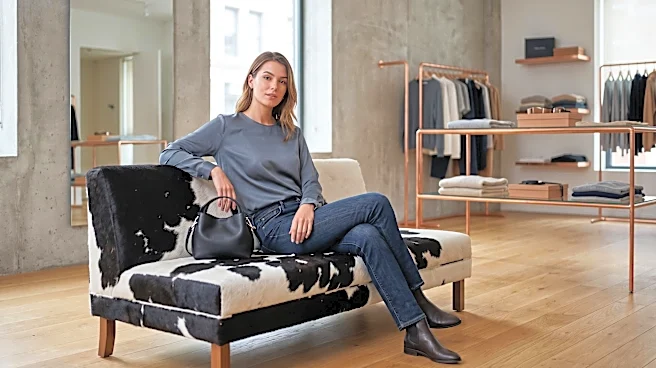
'It girl' style, drawing inspiration from the Y2K and Tumblr eras. This new direction is evident in their latest collection and campaign, which features Chloë Sevigny. The SoHo store's redesign, developed in collaboration with Los Angeles-based Perron Studios, incorporates elements like a bold cowhide couch, over-the-top mirrors, and a gallery wall showcasing neatly organized denim. The design emphasizes modular, sculptural displays decked in copper, aiming to elevate denim in a gallery-like space and use materials that age similarly to denim. This 18-month process is part of a broader strategy to evolve 7 For All Mankind from a denim brand into a contemporary fashion brand, with further renovations planned for flagship stores in Hong Kong and London by the end of the year.
Why It's Important?
This strategic redesign by 7 For All Mankind signifies a notable shift in the U.S. fashion retail landscape, particularly within the denim sector. By embracing Y2K and Tumblr era nostalgia, the brand is tapping into a powerful consumer trend that resonates with both those who experienced these eras and younger generations discovering them. This move could influence other denim and contemporary fashion brands to re-evaluate their aesthetics and retail experiences, potentially leading to a broader resurgence of early 2000s fashion elements. The emphasis on creating a 'gallery-like space' for denim also highlights a growing trend in retail to offer immersive and experiential shopping environments, moving beyond traditional product displays. This approach aims to enhance customer engagement and perception of denim as a premium, fashion-forward item, rather than just a basic commodity. The brand's ambition to evolve into a 'fashion contemporary brand' could also intensify competition within the broader fashion market, pushing other brands to innovate their product lines and brand identities.
What's Next?
Following the SoHo store's redesign, 7 For All Mankind plans to continue its global retail transformation with renovations scheduled for its flagship stores in Hong Kong and London by the end of the year. Creative director Nicola Brognano is also finalizing a new collection, which will be revealed at New York Fashion Week, focusing on translating menswear concepts into women's fashion. This upcoming collection will further solidify the brand's new aesthetic direction and its ambition to be recognized as a contemporary fashion brand. The success of these initiatives will likely be closely watched by industry analysts and competitors, as it could set a precedent for how established denim brands adapt to evolving consumer tastes and market demands. The brand's continued emphasis on 'wild reboot around the denim' suggests ongoing efforts to innovate within its core product category while expanding its overall fashion appeal.
Beyond the Headlines
The strategic pivot by 7 For All Mankind towards Y2K and Tumblr era aesthetics, coupled with a gallery-like retail experience, reflects a deeper cultural phenomenon of cyclical fashion trends and the power of nostalgia in consumer behavior. This move is not merely about selling jeans but about selling an identity and a curated experience that harks back to a specific cultural moment. The use of materials like copper that 'age through time' in the store design subtly reinforces the idea of denim's enduring quality and personal evolution, linking the product to a more profound sense of authenticity and longevity. This approach could influence how brands communicate value beyond mere functionality, emphasizing emotional connections and storytelling. Furthermore, the brand's aspiration to transition from a denim specialist to a broader 'fashion contemporary brand' highlights the increasing pressure on niche brands to diversify and adapt in a rapidly changing retail landscape, blurring the lines between different fashion categories and challenging traditional brand identities.