
What's Happening?
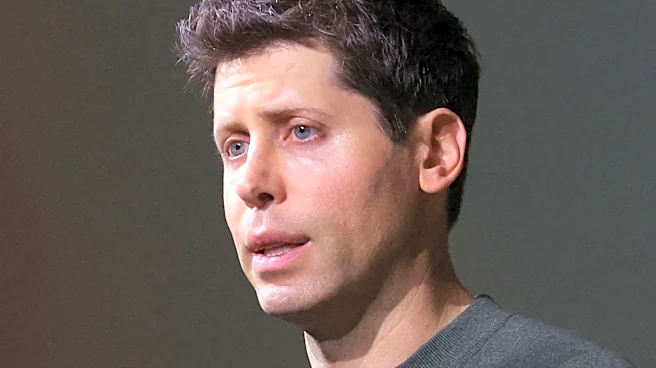
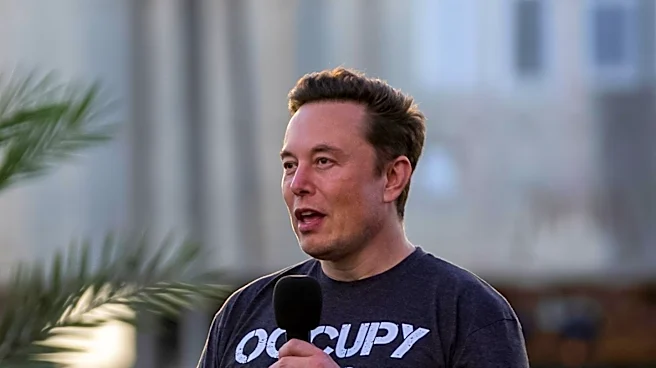
Elon Musk has stated that SpaceX is operating under the assumption of "zero sales to OpenAI," a direct response to OpenAI CEO Sam Altman's warning about chipmakers overestimating demand from AI companies.
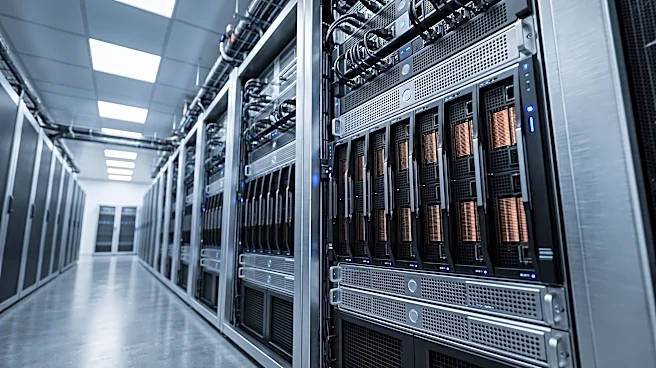
Musk's comment, made on X, suggests that while SpaceX's Super Intelligence segment is experiencing significant growth from other customers, suppliers like Advanced Micro Devices (AMD) and Oracle are heavily reliant on OpenAI's projected demand. AMD, for instance, has a deal with OpenAI covering up to 6 gigawatts of GPUs, and its revenue projections for 2027 largely depend on this partnership. Oracle has also invested heavily in data center capacity for OpenAI, with S&P estimating that OpenAI constitutes about half of Oracle's backlog. This situation highlights a potential overestimation of OpenAI's purchasing power by its suppliers, especially given OpenAI's reported adjusted operating loss of $10.9 billion in the third quarter.
Why It's Important?
This development is significant because it exposes potential vulnerabilities in the supply chains of major technology companies like AMD and Oracle, which have made substantial investments based on anticipated demand from OpenAI. If OpenAI's demand does not materialize as expected, these companies could face significant financial repercussions, impacting their revenue forecasts and stock performance. The situation also sheds light on the competitive landscape within the AI industry, with Musk implicitly questioning the strength of OpenAI's products if its demand isn't rapidly increasing. Furthermore, it underscores the financial health disparities among AI labs; while OpenAI reports substantial losses, SpaceX's primary AI customer, Anthropic, appears to be in a much stronger financial position, making it a more reliable partner for long-term contracts.
What's Next?
The immediate next steps will involve close scrutiny of AMD's fourth-quarter report early next year, which will indicate whether its 2027 consensus of $95.9 billion in revenue remains viable. Similarly, SpaceX's fourth-quarter results will reveal if its reliance on a single large customer, reportedly Anthropic, continues to account for a significant portion of its revenue. The financial performance of OpenAI in the coming quarters will also be critical, as its ability to secure further funding and generate revenue will directly impact its commitments to suppliers like AMD and Oracle. Any adjustments to these companies' forecasts based on OpenAI's actual demand could trigger market reactions and shifts in investment strategies within the tech sector.
Beyond the Headlines
Beyond the immediate financial implications, this scenario highlights a broader trend of speculative investment and rapid expansion within the AI industry, where projections of future demand can outpace current realities. It raises questions about due diligence and risk assessment by suppliers when engaging with fast-growing but financially volatile AI startups. The public exchange between Musk and Altman also underscores the intense rivalry and strategic positioning among key players in the AI ecosystem. This dynamic could lead to a more cautious approach from investors and suppliers in the future, potentially slowing down the rapid build-out of AI infrastructure if the financial sustainability of AI labs becomes a more prominent concern. It also hints at the potential for consolidation or strategic realignments within the AI hardware and software sectors.