






What's Happening?
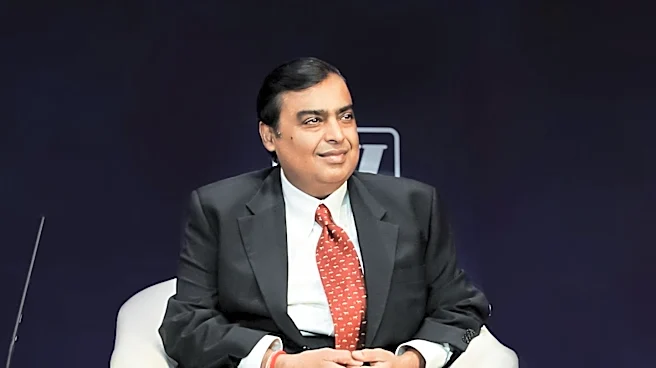
Mukesh Ambani, Chairman and Managing Director of Reliance Industries Limited (RIL), stated that 'money can do very little' in achieving lasting business success. This sentiment, expressed in a June 2008 interview with The New York Times, highlights his belief
that genuine influence and long-term success stem from building trust and relationships rather than relying solely on financial capital. Ambani, who is recognized as the richest person in Asia and India with an estimated net worth of approximately ₹9.8 lakh crore ($110-120 billion) as of April 2026, made these remarks while discussing how Reliance Industries navigates government bureaucracy and regulations. He argued that transactional payments or bribes are ultimately ineffective, emphasizing that credibility and mutual trust are more reliable for overcoming obstacles and achieving goals. Ambani dropped out of an MBA program at Stanford University in 1980 to join his father in building the family business, which has since grown into India’s largest private-sector conglomerate with diverse interests.
Why It's Important?
Ambani's perspective is significant as it challenges the conventional view that financial power is the sole determinant of business success, particularly in complex regulatory environments. For U.S. businesses operating internationally or engaging with foreign governments, this philosophy underscores the importance of cultivating strong, ethical relationships and building credibility. It suggests that a long-term strategy focused on trust and genuine connections can be more effective than short-term financial leverage. This approach can influence how U.S. companies structure their international engagement, emphasizing corporate social responsibility and transparent dealings. Furthermore, it highlights a potential cultural difference in business philosophy, where relational capital may be valued as highly as financial capital in certain markets, impacting partnership strategies and market entry approaches for American firms.
What's Next?
While Ambani's statement was made in 2008, its underlying philosophy continues to shape Reliance Industries' strategic approach, particularly as it expands into new sectors like AI and renewable energy. The company's commitment to a ₹10 trillion investment in India’s AI ecosystem, focusing on sovereign computing and AI data centers, suggests a long-term vision that likely incorporates these principles of trust and sustained engagement. Future developments may see Reliance continuing to prioritize strategic partnerships, such as those with Meta, Google, and NVIDIA, which are built on mutual trust and shared objectives rather than purely transactional terms. This could serve as a model for other global corporations, including those in the U.S., looking to establish deep roots and achieve sustainable growth in emerging markets by fostering strong stakeholder relationships.
Beyond the Headlines
Ambani's emphasis on trust over money delves into the ethical and cultural dimensions of business leadership. It suggests that true influence is not merely transactional but is built on a foundation of integrity and long-term commitment. This perspective has broader implications for corporate governance and ethical business practices globally. In an era where corporate scandals and short-term profit motives often dominate headlines, Ambani's statement serves as a reminder of the enduring value of reputation and relational capital. For U.S. businesses, this could prompt a re-evaluation of their engagement strategies in international markets, encouraging a shift towards more sustainable and ethically grounded approaches that prioritize building genuine partnerships and community trust, rather than solely focusing on financial returns. This philosophy could also influence discussions around corporate social responsibility and stakeholder capitalism.