



What's Happening?
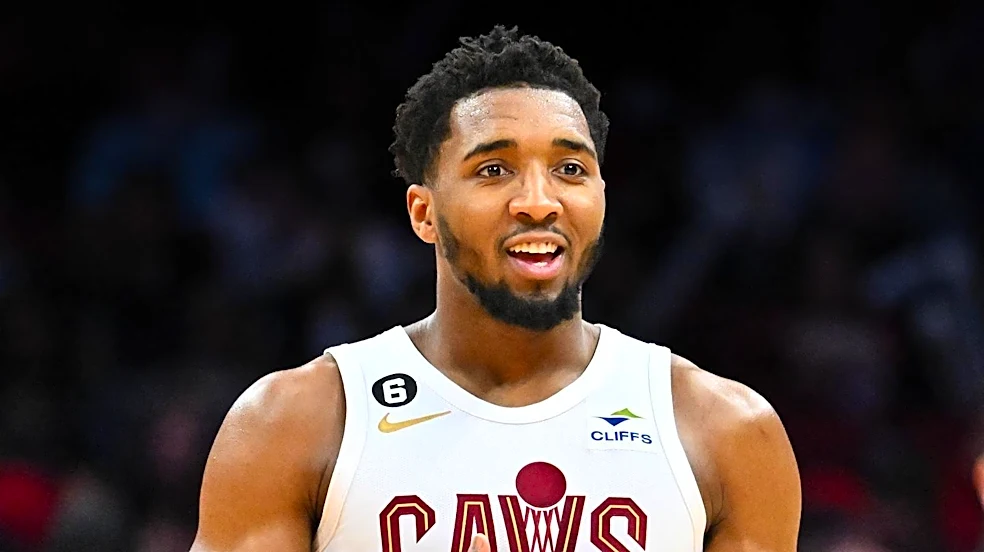
Cleveland Cavaliers star Donovan Mitchell was recently seen at an ALCS Game 3 for the Cleveland Guardians with duct tape covering the Nike swoosh on his jersey. This action immediately drew attention and sparked debate among fans on social media. Mitchell is a prominent
Adidas athlete, having signed a multi-year contract extension with the brand, and his relationship with Adidas dates back to his college days. His D.O.N. signature sneaker line is also set to continue with its ninth and tenth editions. Many fans speculated that the duct tape was a direct consequence of his endorsement deal with Adidas, aiming to avoid prominently displaying a rival brand's logo. Some fans questioned the effectiveness of the tape, noting that the Nike logo was still visible underneath, while others found the act unprofessional or unnecessary. The incident highlights the complexities of athlete endorsement contracts and brand visibility in public appearances.
Why It's Important?
This incident underscores the significant influence of endorsement deals on professional athletes' public conduct and appearance. For brands like Adidas and Nike, securing high-profile athletes like Donovan Mitchell is a substantial investment, and they expect exclusivity and brand promotion in return. Mitchell's decision to cover the Nike logo, likely due to contractual obligations with Adidas, illustrates the strict terms often embedded in these agreements. This event also highlights the constant scrutiny athletes face from fans and media, where even a minor detail like a covered logo can become a widely discussed topic. It reflects the broader commercial landscape of professional sports, where athletes are not just players but also brand ambassadors, and their actions can have implications for their personal brand and their sponsors.
What's Next?
While this specific incident is likely to fade as a talking point, it serves as a reminder for athletes and their management to be acutely aware of their contractual obligations, especially regarding brand visibility. Future public appearances by Donovan Mitchell and other athletes with competing endorsements will likely be scrutinized for similar actions. This event may also prompt sports leagues and teams to review their policies regarding athletes wearing non-team-sponsored apparel or modifying team gear during public events, particularly when rival brands are involved. It could lead to clearer guidelines or more explicit clauses in endorsement contracts to prevent such situations from arising, ensuring that brand representation aligns with contractual agreements.
Beyond the Headlines
Beyond the immediate fan reactions, this situation touches upon the intricate legal and ethical considerations within sports marketing. The tension between an athlete's personal brand, team affiliations, and individual endorsement deals creates a complex web of loyalties and obligations. This incident could be viewed as a subtle form of brand warfare, where athletes become the battleground for competing sportswear giants. It also raises questions about authenticity versus commercialism in sports; while fans appreciate genuine support for local teams, they are also aware of the pervasive influence of corporate sponsorships. The lack of a perfectly matching red tape, as noted by some fans, adds a touch of human element to an otherwise corporate-driven decision, making it a relatable moment for many.