








What's Happening?
Colossal Biosciences, a startup focused on de-extinction technology, is reportedly in discussions to raise new capital, aiming for a valuation between $20 billion and $30 billion. This marks a significant increase from its previous valuation of $10.2
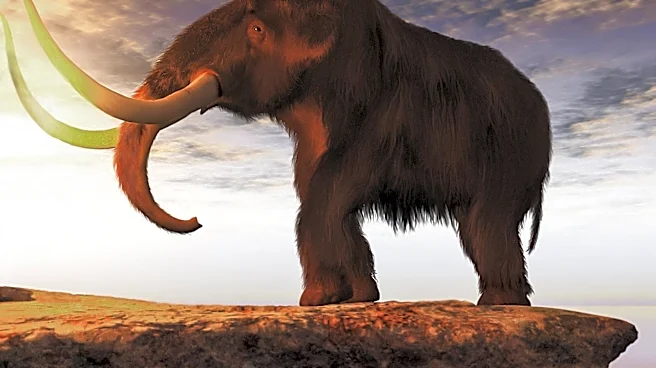
billion. The company, co-founded by Ben Lamm, has been developing technologies to potentially resurrect extinct species such as the dire wolf, woolly mammoth, and dodo bird. Colossal has also spun off several startups, including Breaking, Form Bio, and Astromech, which focus on various technological applications. The company has begun generating revenue and has offered its conservation technology to entities like the U.S. government and the UAE, the latter having invested $60 million. Additionally, Colossal is working on artificial womb technology, which could have implications for human fertility treatments.
Why It's Important?
The potential success of Colossal Biosciences' de-extinction efforts could have profound implications for biodiversity and conservation strategies. By reintroducing extinct species, the company could contribute to ecological restoration and balance. Moreover, the development of artificial womb technology could revolutionize fertility treatments, offering new possibilities for human reproduction. The company's growth and technological advancements also highlight the increasing interest and investment in deep-tech sectors, such as longevity tech and alternative energy. This trend reflects a broader shift towards innovative solutions to global challenges, potentially influencing policy and economic strategies.
What's Next?
Colossal Biosciences' next steps involve securing the new round of funding and advancing its de-extinction projects. The company plans to continue developing its artificial womb technology, with expectations for readiness within a year. As the company progresses, it may face ethical and regulatory challenges related to de-extinction and biotechnology applications. Stakeholders, including environmental groups and regulatory bodies, will likely scrutinize the implications of reintroducing extinct species. Additionally, the company's success in raising capital could influence other startups in the deep-tech sector, potentially leading to increased investment and innovation.