









What's Happening?
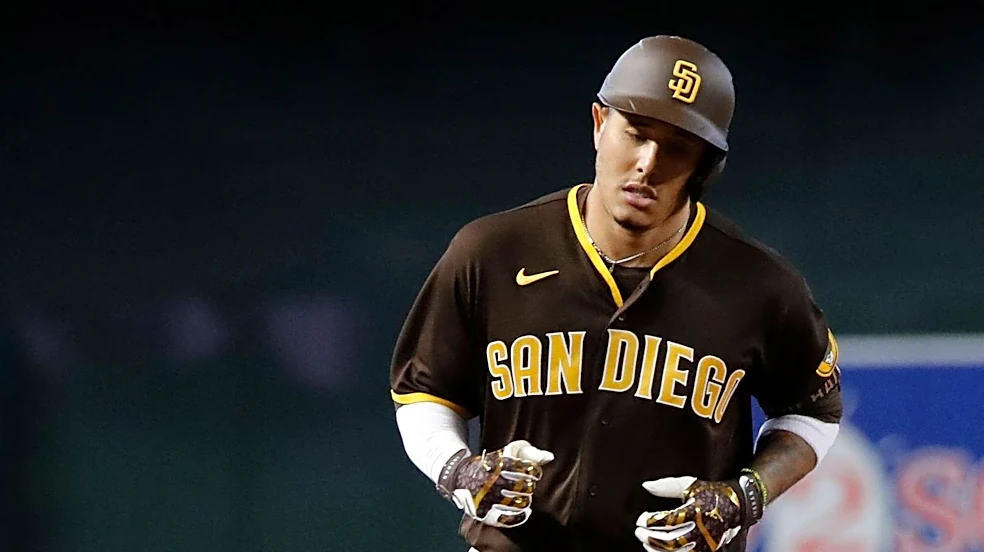
San Diego Padres third baseman Manny Machado, despite leading all MLB third basemen with +10 Outs Above Average (OAA) and +8 Fielding Run Value (FRV), was not named a finalist for the National League Gold Glove award. This decision has sparked controversy,
particularly as Max Muncy, who finished with -1 OAA and 0 FRV, was included among the finalists. The other finalists, Alex Bregman and Javier Sanoja, had strong defensive metrics, with Bregman posting 9 OAA and 7 FRV, and Sanoja achieving 6 OAA and 5 FRV in fewer innings. Machado also recorded the fewest errors (3) among qualified third basemen. The Gold Glove selection process involves 75% voting by managers and coaches (who cannot vote for their own players) and 25% from the SABR Defensive Index (SDI). The most recent public SDI update in August showed Muncy ahead of Machado, which may have influenced the outcome despite Machado's superior end-of-season Statcast numbers.
Why It's Important?
This situation highlights a significant discrepancy between advanced defensive metrics and traditional voting processes in professional baseball awards. While Statcast data, such as OAA and FRV, increasingly provides objective measures of defensive performance, the continued reliance on manager and coach votes introduces a subjective element that can overlook statistically superior players. For players like Machado, who have a strong defensive season by modern metrics but are not recognized, it can impact their career accolades and potentially future contract negotiations. The inclusion of a player with negative defensive metrics over one leading in key categories raises questions about the transparency and effectiveness of the award selection criteria. This could lead to further debate within the baseball community regarding the balance between statistical analysis and human perception in evaluating player performance, potentially influencing how future awards are determined and how defensive excellence is valued.
What's Next?
The winners of the Gold Glove awards will be announced on November 1. Alex Bregman is widely anticipated to win the National League third base award, a decision that is generally considered well-deserved based on his strong performance. However, the controversy surrounding Machado's exclusion and Muncy's inclusion is likely to continue to be a talking point among fans and analysts. This event may prompt further discussion within MLB and the Baseball Writers' Association of America (BBWAA) about refining the Gold Glove selection process to better align with comprehensive defensive metrics. It could also lead to increased scrutiny of the SABR Defensive Index's weighting and its public update schedule, especially if its mid-season data significantly diverges from end-of-season advanced metrics. For Machado, this marks another year without a Gold Glove since 2015, and he will have to wait until the next season for another opportunity to be recognized for his defensive contributions.
Beyond the Headlines
The disparity in the Gold Glove selection process, where a player with leading defensive statistics is overlooked, points to a broader issue in sports: the tension between traditional recognition and data-driven evaluation. This isn't merely about one award; it reflects a cultural lag in fully embracing advanced analytics that provide a more nuanced understanding of player value. The 'eye test' and reputation, often influenced by past performances or even personality, can still outweigh objective data. This situation could fuel a push for greater transparency and potentially a re-evaluation of how much weight is given to subjective voting versus comprehensive statistical models in all sports awards. It also raises questions about how players are perceived and valued, especially those who might not be 'fan favorites' but consistently deliver elite performance according to advanced metrics. The ongoing debate could ultimately lead to a more data-informed approach to player evaluation, not just for awards but also in team building and strategic decision-making.