





What's Happening?
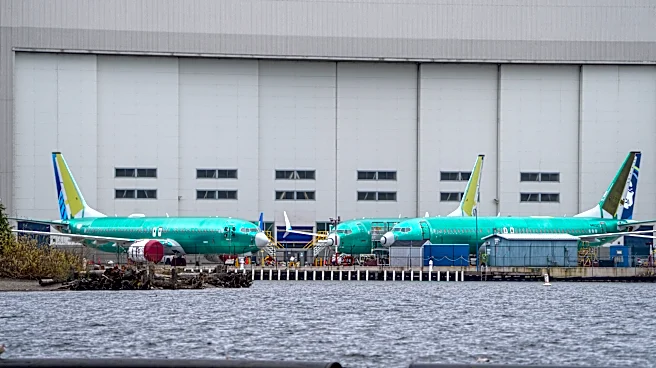
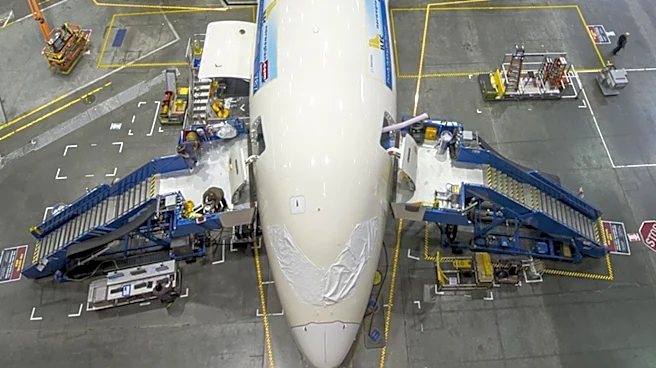
Boeing has announced a delay in reaching its production target of 47 737 jets per month, now expecting to achieve this goal in early 2027, a shift from the previously planned summer of the same year. This adjustment comes as the company faces challenges
in increasing the output of its 737 MAX jet, a key revenue generator. In early November, Boeing revealed plans to reduce its commercial airplanes division workforce by 5%, affecting approximately 2,500 of its 50,000 employees through attrition and layoffs. The Society of Engineering Employees in Aerospace (SPEEA), representing about 17,000 Boeing members, was informed by management that employment at all Boeing Commercial Airplanes sites is under review. However, management declined to confirm if further layoffs would occur after an upcoming round scheduled for next month, stating they 'didn’t know.' These layoffs are described as targeted, focusing on specific work statements that are concluding or can be terminated, rather than being across-the-board cuts. There will be no voluntary layoffs or buy-outs.
Why It's Important?
This development is significant for several reasons. The delay in reaching production targets for the 737 MAX jet could impact Boeing's financial performance and its ability to meet customer demand, potentially affecting airline delivery schedules and market share. The ongoing review of employment and the possibility of further layoffs create uncertainty for Boeing's workforce and could affect employee morale and productivity. For the aerospace industry, Boeing's production challenges highlight broader supply chain issues and the complexities of scaling manufacturing operations. The targeted nature of the layoffs suggests a strategic effort to streamline operations and align staffing with current production realities, which could lead to a more efficient but smaller workforce. The situation also underscores the delicate balance between maintaining a skilled labor force and adapting to production fluctuations in a highly competitive global market.
What's Next?
Boeing is expected to proceed with the announced layoffs in the coming month, with notices potentially issued around December 9. The company will continue its review of employment across all Boeing Commercial Airplanes sites, which could lead to further workforce adjustments. Stakeholders, including unions like SPEEA, will likely monitor these developments closely for any additional layoff announcements or changes in employment strategy. Investors will be watching for updates on production rates and any revised financial forecasts from Boeing. The company will also need to communicate clearly with its customers regarding the revised delivery timelines for the 737 jets. The focus will remain on how Boeing manages its production ramp-up and workforce adjustments to stabilize its operations and meet its long-term goals.
Beyond the Headlines
The situation at Boeing extends beyond immediate production delays and layoffs, touching upon broader themes of industrial capacity, labor relations, and global supply chain resilience. The challenges in increasing 737 MAX output suggest potential systemic issues within Boeing's manufacturing processes or its supply chain, which could have long-term implications for its competitive standing against rivals. The ongoing dialogue with unions, particularly regarding the possibility of further layoffs after a new contract was approved, highlights the complexities of managing labor relations during periods of operational adjustment. This scenario could influence future contract negotiations and employee trust. Furthermore, the targeted nature of the layoffs indicates a strategic shift towards optimizing specific work statements, potentially signaling a more agile and specialized workforce model for the future of aerospace manufacturing. The company's ability to navigate these internal and external pressures will be crucial for its sustained success and its role in the global aviation industry.