



What's Happening?
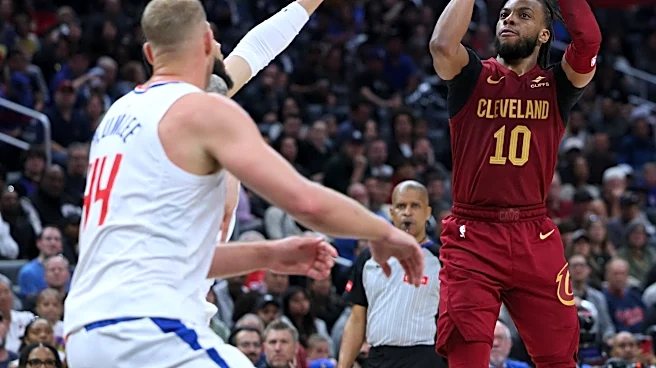
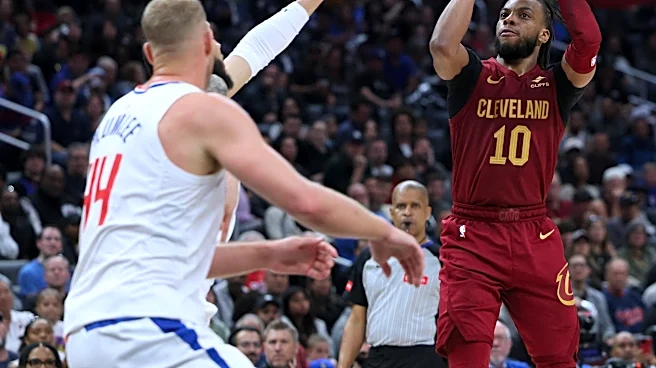
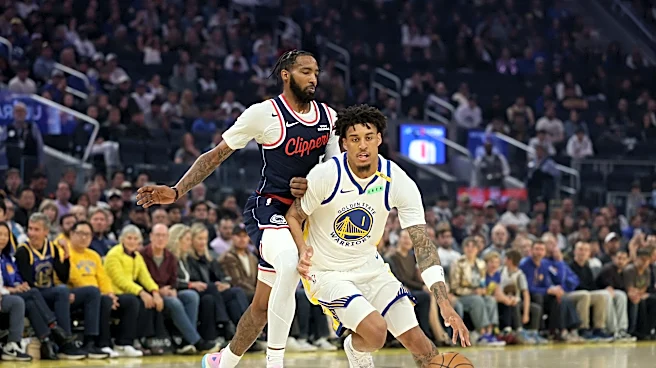
Darius Garland, point guard for the Los Angeles Clippers, is facing significant scrutiny due to his performance during the team's challenging 1-6 start to the season. While he is averaging 6.6 assists per game, he is also committing 5.4 turnovers, a ratio
described as 'obviously not great.' Garland's struggles are attributed to his elevated role as the primary offensive engine, resulting in a career-high 30.2% usage rate through seven games. This increased responsibility forces him to consistently face the opponent's best defender, leading to difficulties against heightened attention and physicality. The team's overall poor performance has placed a spotlight on individual players, with Garland's turnover rate and fourth-quarter struggles being particularly highlighted, including a game against the Raptors where his play may have contributed to a loss. The Clippers are currently lacking secondary and tertiary playmakers, which exacerbates Garland's burden on offense.
Why It's Important?
Garland's performance is crucial for the Los Angeles Clippers, as he is tasked with leading their offense. His current struggles, particularly with turnovers, directly impact the team's ability to secure wins and establish a competitive standing in the Western Conference. The high usage rate indicates a significant reliance on him for offensive creation, meaning his efficiency directly correlates with the team's offensive output. If Garland continues to struggle, it could hinder the Clippers' playoff aspirations and potentially lead to strategic adjustments in player roles or future roster decisions. The situation also highlights the broader challenge for NBA teams when key players are sidelined, forcing others into roles they may not be fully equipped for, thus affecting team dynamics and overall performance. The pressure on Garland is immense, and his ability to adapt and improve will be a key factor in the Clippers' season trajectory.
What's Next?
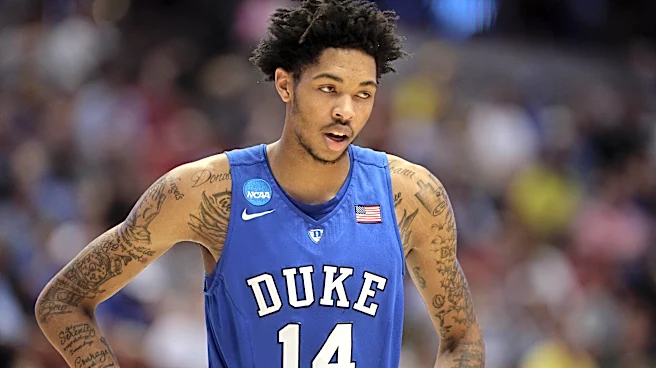
The immediate future for Darius Garland and the Los Angeles Clippers hinges on the return of key injured players, specifically Brandon Ingram and Bradley Beal. Their reintroduction to the lineup is expected to alleviate some of the offensive burden currently placed on Garland, providing him with more secondary and tertiary playmakers. This could lead to a reduction in his usage rate and potentially decrease his turnover numbers as defensive attention is spread more evenly. Until these players return, Garland is likely to continue facing intense defensive pressure and a high offensive workload. The team's coaching staff will need to strategize ways to support Garland and mitigate his current struggles, possibly through different offensive schemes or by empowering other available players to contribute more. The Clippers' overall record will largely depend on how Garland adapts and how quickly the team can integrate its returning stars.
Beyond the Headlines
The situation with Darius Garland extends beyond mere statistics, touching upon the psychological pressures faced by young athletes thrust into primary roles on struggling teams. The narrative often focuses on individual shortcomings, but the context of team injuries and lack of supporting talent plays a significant role. This scenario highlights the developmental challenges for players who are forced to carry a disproportionate offensive load early in their careers. It also underscores the importance of a balanced roster with multiple playmaking options to prevent over-reliance on a single player, which can lead to burnout or inefficiency. The Clippers' current predicament serves as a case study in how team construction and injury management can profoundly impact individual player performance and overall team success, emphasizing that 'blame' is often a complex, multi-faceted issue rather than solely attributable to one player.