


What's Happening?
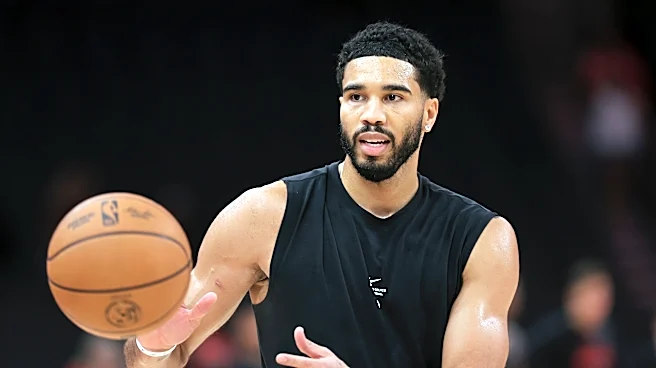
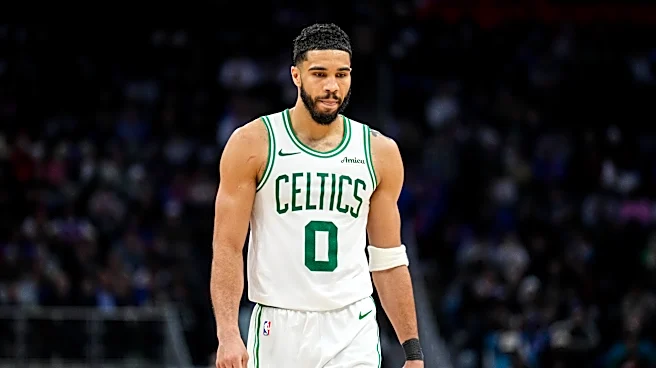
Boston Celtics head coach Joe Mazzulla has publicly lauded Jayson Tatum's emotional stability and intelligence following a game against the Philadelphia 76ers. According to Mazzulla, Tatum's quiet demeanor is often misinterpreted as aloofness or disinterest,
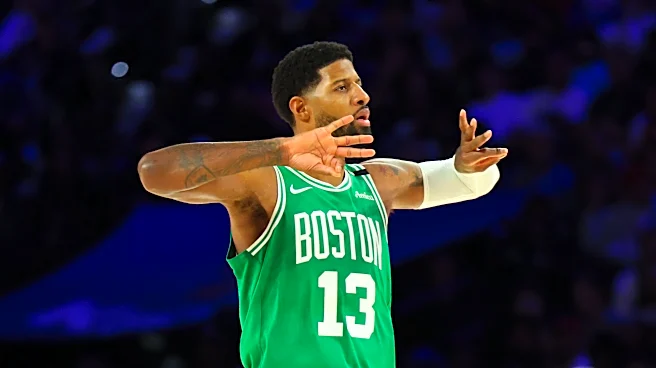
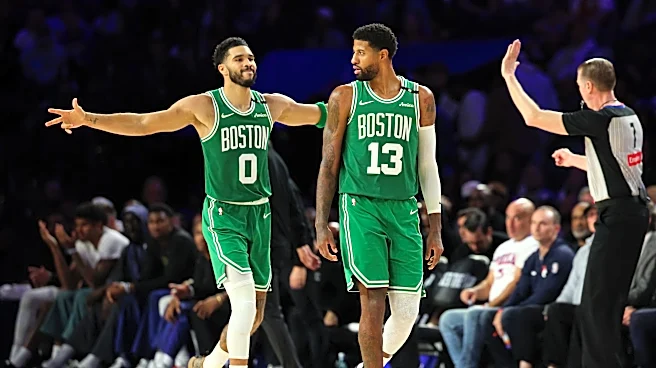
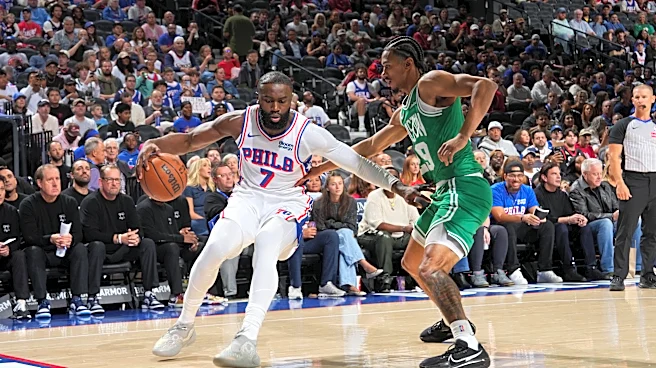
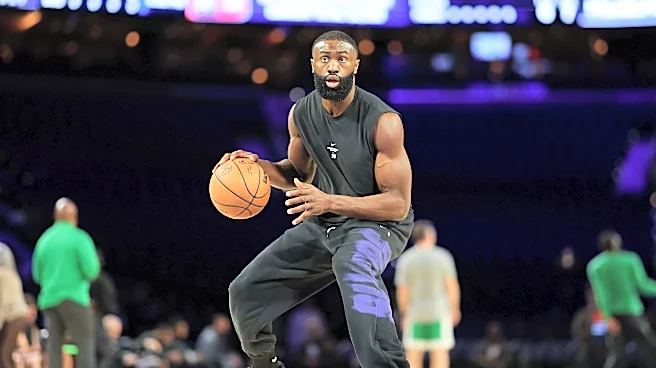
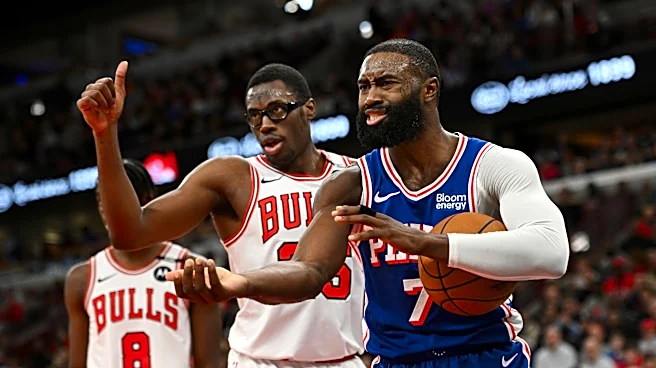
when in fact, it reflects a high degree of emotional intelligence and focus on what he can control. This commendation came after a game where Tatum faced significant external noise regarding his reported strained relationship with teammate Jaylen Brown, who had been traded to the 76ers. Despite the personal tension and a less-than-stellar individual scoring performance of 21 points, six rebounds, and four assists, Tatum's composure was highlighted as a key factor in the Celtics' dominant 123-101 victory over the 76ers. Mazzulla emphasized that Tatum's ability to remain focused on being a great teammate and winning allows him to navigate such challenging situations effectively.
Why It's Important?
This public endorsement from Coach Mazzulla underscores the critical role of emotional intelligence and leadership, even in high-pressure professional sports environments. For the Boston Celtics, Tatum's ability to maintain composure amidst rumors of internal conflict, particularly with a former star teammate, is vital for team cohesion and performance. It suggests that the team's overall 'even-keeled' identity, as noted by some observers, is significantly influenced by Tatum's mature approach. This narrative is important for the team's morale and public perception, especially as they navigate a competitive NBA season. The focus on emotional stability over raw statistical output in a specific game also highlights a shift in how leadership and value are perceived within a team, emphasizing mental fortitude as much as physical prowess.
What's Next?
The Celtics will continue their NBA season, with Tatum's leadership and emotional stability likely to be a recurring theme, especially if further challenges or internal dynamics emerge. The team's performance in upcoming games will be watched closely to see if this praised composure translates into consistent success. The dynamic between Tatum and Brown, now on opposing teams, will also be a point of interest in future matchups, potentially testing Tatum's ability to maintain his focus under renewed scrutiny. Mazzulla's comments could set a precedent for how the team addresses and manages player relationships and external pressures moving forward, potentially influencing team culture and player development strategies.
Beyond the Headlines
Beyond the immediate impact on the Celtics' season, Mazzulla's remarks about Tatum's emotional intelligence touch upon broader themes of leadership and resilience in public life. In an era where athletes are constantly under scrutiny, the ability to manage emotions and external narratives is a valuable, often underrated, skill. This situation could serve as a case study for how professional organizations foster and recognize emotional maturity in their leaders. It also subtly challenges the conventional focus on purely statistical performance, suggesting that psychological attributes are equally, if not more, crucial for sustained success and team harmony. The emphasis on 'emotional stability' could influence how young athletes are mentored and how leadership qualities are defined in sports and other high-stakes professions.