







What's Happening?
A growing trend among billionaires in exclusive Florida enclaves like Palm Beach and Manalapan involves purchasing multi-million dollar mansions only to demolish them. The primary motivation is to acquire prime, scarce oceanfront land rather than the existing
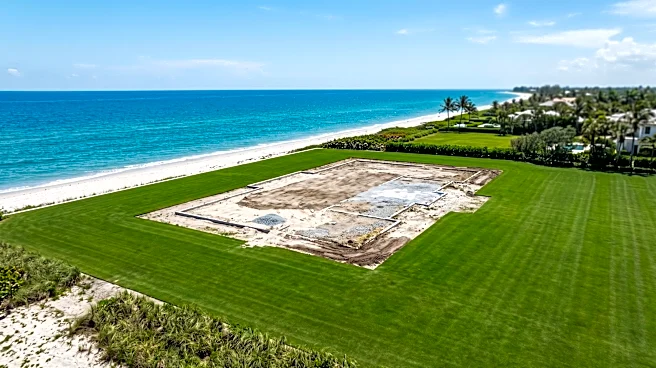
structures. For instance, cosmetics billionaire William Lauder bought Rush Limbaugh’s $155 million estate in Palm Beach and razed it four months later. He had previously demolished two other oceanfront homes, one only six years old. Similarly, WeatherTech founder David MacNeil has repeatedly bought and demolished luxury properties in Manalapan, combining lots to create larger oceanfront parcels. He recently demolished a $36 million home to replace it with a fitness center and green space. This practice is also observed in other affluent areas like Houston’s Bunker Hill Village and Pimmit Hills, Virginia, where a significant percentage of listings are marketed as teardown opportunities.
Why It's Important?
This trend highlights the extreme value placed on land in ultra-exclusive real estate markets, where the underlying property is considered far more valuable than any existing structure, regardless of its luxury or age. It signifies a shift in the luxury real estate market, where even modern, lavish homes are viewed as disposable obstacles to creating bespoke dream properties. This practice has significant economic implications, driving up land values in these enclaves and making them even more inaccessible. It also impacts the construction and demolition industries, creating demand for specialized services. Furthermore, it raises questions about the environmental cost of treating luxury homes as disposable assets. The carbon footprint of demolishing and rebuilding large mansions is substantial, comparable to powering hundreds of average U.S. homes for a year, prompting concerns about sustainability in high-end development.
What's Next?
The trend of demolishing luxury mansions for land acquisition is likely to continue in highly desirable, land-scarce enclaves. This will further inflate property values in these areas and intensify competition for prime locations. Real estate agents may increasingly market properties based on their land value and redevelopment potential rather than the existing structures. We might see more instances of billionaires consolidating multiple adjacent lots to create expansive estates. This practice could also spur innovation in sustainable demolition and construction, with contractors focusing on recycling and reusing materials to mitigate environmental impact. However, without stricter regulations, the environmental concerns related to the carbon footprint of these teardowns will persist, potentially leading to public debate and calls for more eco-conscious development practices in the luxury market.
Beyond the Headlines
The phenomenon of billionaires demolishing multi-million dollar mansions for land reveals deeper societal and ethical implications. It underscores extreme wealth disparity, where resources are allocated to create hyper-customized living spaces at significant environmental cost, while broader societal needs remain unmet. Ethically, it challenges notions of sustainability and responsible consumption, as perfectly functional, high-value assets are discarded. Legally, it may prompt discussions about zoning laws and environmental regulations in exclusive communities, particularly concerning demolition waste and carbon emissions. Culturally, it reflects an ultimate expression of individualism and control over one's environment, where even existing architectural masterpieces are deemed insufficient. This trend highlights a tension between personal luxury and collective environmental responsibility, pushing the boundaries of what is considered acceptable in high-end real estate development.