



What's Happening?
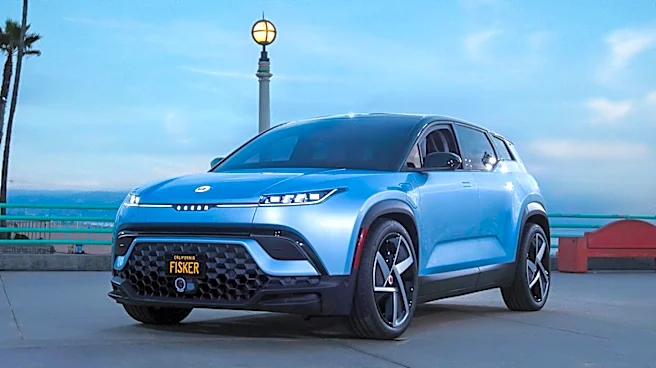
Fisker Inc., an American electric vehicle (EV) company founded in 2016 and headquartered in Los Angeles, California, filed for Chapter 11 bankruptcy in June 2024. This development followed a period marked by cash flow problems, significant production
hurdles, and unsuccessful partnership negotiations. The company, known for its all-electric Ocean SUV which premiered in 2022, had adopted a strategy of relying on contract manufacturing rather than building its own production facilities. Despite this approach, Fisker Inc. encountered substantial financial difficulties. By October 2024, the company and its creditors had reached a bankruptcy agreement. This marks the second bankruptcy for founder Henrik Fisker's automotive ventures, with his previous company, Fisker Automotive, also filing for bankruptcy in 2013 after producing approximately 2,000 Karma luxury plug-in hybrids.
Why It's Important?
The bankruptcy of Fisker Inc. underscores the significant challenges and high capital requirements inherent in the electric vehicle manufacturing sector, even for companies led by experienced designers like Henrik Fisker. This event highlights the intense competition and operational complexities faced by newer entrants in an industry dominated by established automotive giants and well-funded EV leaders. For the U.S. automotive market, Fisker Inc.'s struggles could be seen as a cautionary tale for other EV startups, emphasizing the need for robust financial planning, efficient production scaling, and strategic partnerships. The failure of another EV company could also impact investor confidence in the broader EV startup ecosystem, potentially making it harder for emerging companies to secure funding. Consumers who purchased Fisker Ocean SUVs may face uncertainties regarding warranty support, servicing, and resale value, while employees of Fisker Inc. are directly affected by job losses and company restructuring.
What's Next?
Following the bankruptcy agreement reached in October 2024, the immediate next steps for Fisker Inc. will involve navigating the terms of this agreement, which typically includes asset liquidation, debt restructuring, and potential reorganization. The future of the Fisker brand and its intellectual property remains uncertain; it could be acquired by another automotive company or investor, or its assets could be sold off. For existing Fisker Ocean owners, the long-term availability of parts, service, and software updates will be a critical concern. The broader EV market will likely observe how this bankruptcy impacts consumer perception of startup EV brands and whether it leads to increased consolidation within the industry. Potential reactions from stakeholders could include other EV manufacturers reassessing their production and financial strategies, and investors becoming more scrutinizing of new automotive ventures.
Beyond the Headlines
The repeated financial difficulties of Henrik Fisker's automotive ventures, first with Fisker Automotive and now Fisker Inc., raise deeper questions about the balance between innovative design and sustainable business models in the automotive industry. While Fisker is recognized for his design prowess, the business side of his ventures has consistently faced significant hurdles. This situation highlights the ethical and practical implications for consumers who invest in vehicles from startup companies, often drawn by promises of cutting-edge technology and design, only to face uncertainty when the company falters. It also points to the broader economic reality that even with strong market demand for EVs, the path to profitability and scale is fraught with challenges, including supply chain complexities, manufacturing costs, and intense competition. The long-term shift towards electric vehicles will likely see more such shake-ups, as the market matures and only the most resilient and well-managed companies survive.