

What's Happening?
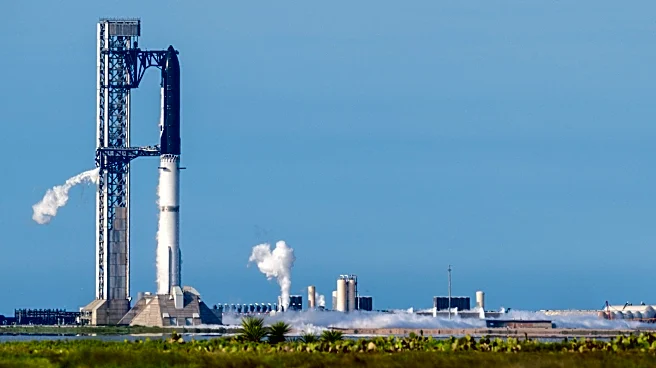
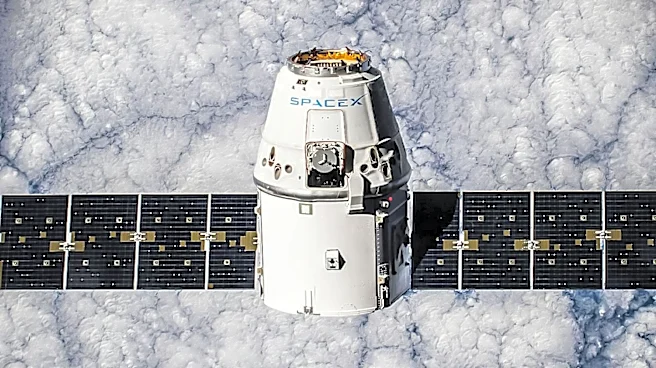
SpaceX successfully caught a Starship upper stage with its launch tower for the first time on November 14. Elon Musk, CEO of SpaceX, described this achievement as "the last major piece of the puzzle." This milestone is primarily significant for its potential
to enable cost-effective deployment of AI computing power in orbit. While the company's shares saw a slight dip and then a rise following the announcement, financial media linked the increase to CFO Bret Johnsen's comments on AI computing in orbit rather than solely the rocket's reusability. Analysts project a substantial increase in SpaceX's revenue, from $49.0 billion in 2026 to $338 billion in 2028, with the 'Super Intelligence' segment already contributing significantly to its third-quarter revenue. This segment, which includes ground-based data centers, brought in $7.56 billion of the company's $14.6 billion third-quarter revenue.
Why It's Important?
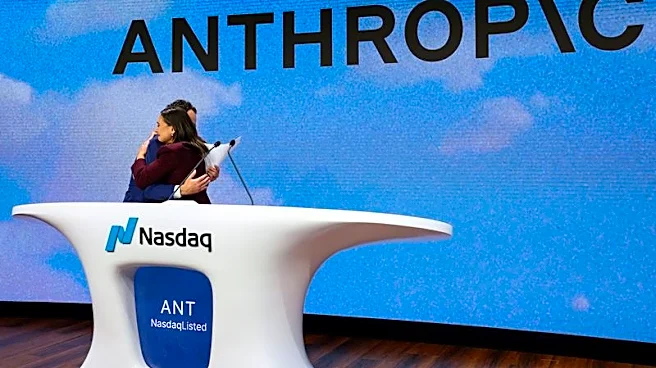
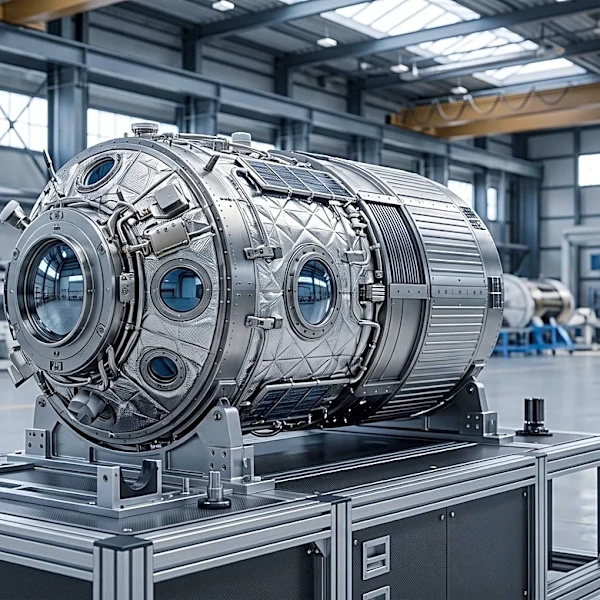
The successful Starship catch is crucial for SpaceX's long-term strategy, particularly its ambition to establish orbital AI computing. This capability could drastically reduce the cost of launching and recovering spacecraft, making it economically viable to place powerful AI data centers in space. This development has significant implications for the U.S. technology and space industries, potentially shifting the paradigm of high-performance computing. If successful, it could create a new frontier for AI development and data processing, offering advantages such as lower latency for certain applications and enhanced security. However, the current revenue from SpaceX's 'Super Intelligence' segment largely depends on ground-based data centers, with Anthropic being a major customer. This reliance on a single large client, who also has options to rent compute from competitors like Amazon, highlights a potential vulnerability for SpaceX's immediate financial outlook. The ability to deploy AI computing in orbit cheaply could diversify and strengthen SpaceX's revenue streams in the future.
What's Next?
SpaceX's immediate focus will likely be on further testing and refining the Starship's reusability, including subsequent flights and catches. The company has not yet announced a date for the next flight of the caught Starship. Financially, the next significant event for SpaceX shareholders will be the fourth-quarter report in early 2027. This report will provide insights into whether the company can meet its management's annualized revenue goal of $100 billion, which would require approximately $8.3 billion in December revenue. The agreements with Anthropic, which are currently a major source of compute revenue, have initial non-cancelable periods ending in January and March 2027. The continuation and expansion of these agreements will be critical for SpaceX's revenue in the near term, especially as orbital compute capabilities are still years away from full realization. The company is also investing heavily in capital expenditures, particularly in its Super Intelligence segment, to build out its computing infrastructure.
Beyond the Headlines
The successful Starship catch and SpaceX's vision for orbital AI computing represent a profound shift in how we might conceive and utilize computational resources. Beyond the immediate financial implications, this development could trigger a new space race for data processing capabilities, with potential ethical and regulatory challenges. The concept of placing "almost all inference compute" in space, as suggested by Sequoia Capital partner Shaun Maguire and affirmed by Elon Musk, raises questions about data sovereignty, security, and the environmental impact of launching and maintaining such extensive orbital infrastructure. It could also lead to a significant redistribution of economic power, as companies capable of leveraging space-based computing gain a competitive edge. The long-term implications extend to national security, scientific research, and the very nature of global connectivity, potentially creating a new layer of digital infrastructure beyond terrestrial limitations.