




What's Happening?
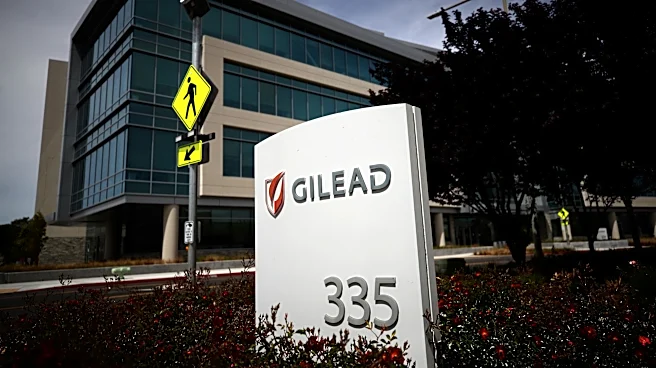
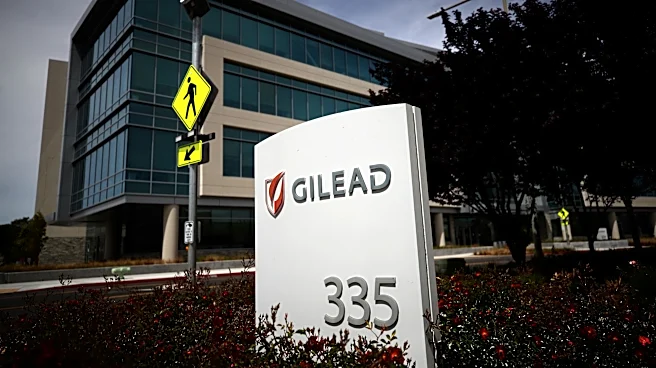
Gilead Sciences, a biopharmaceutical company, has demonstrated significant financial performance, with its shares increasing by 4.46% in November and 46.08% year-to-date. The company's third-quarter base business sales rose 16% year-over-year to $8.2
billion, and non-GAAP earnings per share of $2.55 surpassed the $2.17 consensus. This growth is largely attributed to its dominant HIV franchise, which saw sales reach $6.2 billion, an 18% increase year-over-year, marking its strongest HIV growth since the fourth quarter of 2018. Key products like Biktarvy achieved a 53% share of the U.S. treatment market, generating $4.1 billion in sales, up 10% year-over-year. Yeztugo, a twice-yearly prevention injection, delivered $305 million, a 31% sequential increase, and along with Descovy, commands 50% of the PrEP market with a $4 billion annual run rate. Despite a full-year loss due to approximately $12.9 billion in acquired research and development charges, the underlying business shows robust expansion.
Why It's Important?
Gilead's strong performance in the HIV market is crucial for its financial stability and ability to fund a broader pipeline, including oncology. The company's market-share leadership in HIV treatment and prevention provides predictable cash flow and pricing power, which are vital in the volatile biotech sector. The success of Biktarvy and Yeztugo highlights the ongoing demand for effective HIV therapies and prevention methods in the U.S. The significant growth in prevention sales, nearly doubling, indicates a substantial unmet need and opportunity, especially given that only about 30% of the 2.2 million eligible Americans are currently on prevention. However, a key concern is the anticipated $1.5 billion revenue cut in 2028 due to Biktarvy’s Medicare negotiated price, which could impact future earnings and dividend growth. This situation underscores the ongoing tension between pharmaceutical innovation and drug pricing regulations in the U.S. healthcare system.
What's Next?
Gilead Sciences faces the challenge of sustaining its growth trajectory beyond the anticipated 2028 Biktarvy price cut. The company's strategy will likely focus on the continued launch and adoption of lenacapavir (Yeztugo) to offset potential revenue losses from Biktarvy. The 'Gilead Sciences Pro Research Report' is analyzing how effectively lenacapavir's launch can carry the franchise past this period. Additionally, Gilead's diversification efforts, evidenced by the strong sales growth of Trodelvy (up 42% to $506 million) and Livdelzi (up 93% to $203 million), will be critical. Management has raised full-year product sales guidance to $31 billion to $31.3 billion, indicating confidence in its current portfolio and pipeline. Investors will be closely watching the company's ability to navigate drug pricing pressures and leverage its oncology and other therapeutic areas for future growth.
Beyond the Headlines
The financial success of Gilead's HIV franchise, particularly in prevention, has broader implications for public health and healthcare policy in the U.S. The high persistence rate of Yeztugo and the increasing adoption of PrEP medications demonstrate a significant shift towards proactive HIV prevention. This trend could lead to a reduction in new HIV infections, easing the burden on the healthcare system in the long term. However, the impending Medicare negotiated price cut for Biktarvy highlights the ongoing debate about drug affordability and the role of government intervention in pharmaceutical pricing. This could set a precedent for other high-cost, high-demand drugs, potentially impacting pharmaceutical companies' research and development investments and their ability to bring new therapies to market. The balance between incentivizing innovation and ensuring equitable access to life-saving medications remains a critical challenge.