








What's Happening?
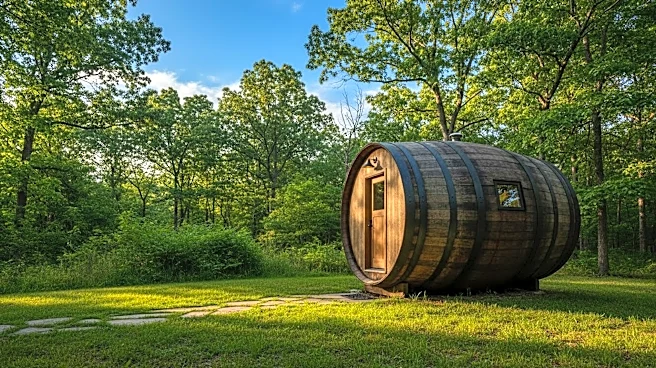
Hidden Creek Estates, a family-owned property located in Northern Illinois, has gained attention for its unique accommodation offering—wine barrel tiny homes. These distinctive lodgings have been highlighted in Forbes Magazine, marking a significant achievement
for the estate. The wine barrel homes provide guests with a nature-focused retreat, featuring private backyards and an infrared sauna, enhancing the overall guest experience. This innovative approach to hospitality aims to attract visitors seeking a unique and immersive getaway, blending rustic charm with modern amenities.
Why It's Important?
The introduction of wine barrel tiny homes at Hidden Creek Estates represents a growing trend in the hospitality industry towards unique and experiential accommodations. By offering such distinctive lodging options, the estate not only differentiates itself in a competitive market but also taps into the increasing demand for personalized and memorable travel experiences. This move could potentially boost local tourism, drawing visitors to Northern Illinois and contributing to the regional economy. Additionally, the recognition from a prestigious publication like Forbes can enhance the estate's reputation, attracting a broader audience and setting a precedent for other hospitality businesses to innovate.
What's Next?
Following the positive reception and media attention, Hidden Creek Estates may consider expanding its offerings or enhancing its current facilities to accommodate a growing number of guests. The estate could explore partnerships with local businesses to provide additional services or experiences, further enriching the guest experience. As the trend of unique accommodations continues to rise, other hospitality providers might look to Hidden Creek Estates as a model for innovation, potentially leading to a wider adoption of similar concepts in the industry.
Beyond the Headlines
The success of Hidden Creek Estates' wine barrel homes highlights a broader shift in consumer preferences towards sustainable and eco-friendly travel options. By repurposing wine barrels into living spaces, the estate not only offers a novel experience but also promotes environmental consciousness. This approach aligns with the increasing awareness and demand for sustainable tourism practices, which could influence future developments in the hospitality sector. As travelers become more environmentally conscious, businesses that prioritize sustainability may gain a competitive edge.