



What's Happening?
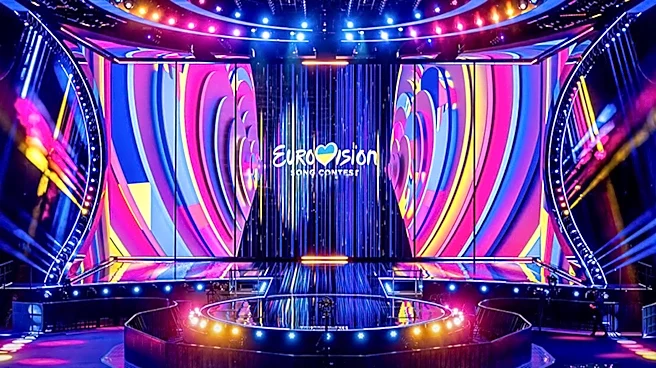
The Eurovision Song Contest experienced a significant decline in its 2026 viewing figures, dropping by 35 million from the previous year. This decrease is attributed to a boycott by five countries, including Ireland, protesting Israel's participation
in the event. The contest, which celebrated its 70th birthday, has a history of political controversies, such as protests against Franco-ruled Spain in the 1960s and Russia's exclusion in 2022 following its invasion of Ukraine. Despite these challenges, Eurovision is expanding its reach, with an inaugural Asia edition taking place in Bangkok and Canada set to join next year. The event continues to be a cultural phenomenon known for its eclectic music and elaborate staging.
Why It's Important?
The substantial drop in Eurovision's viewership highlights the increasing impact of geopolitical issues on international cultural events. The boycott over Israel's participation demonstrates how political stances can directly influence public engagement and the commercial success of global entertainment platforms. For the U.S., while not a direct participant in the main Eurovision contest, the trend of politically motivated boycotts affecting viewership and revenue in international events could set a precedent. It underscores the challenges faced by organizers in balancing artistic freedom and political neutrality, especially when dealing with sensitive global conflicts. This situation could influence how U.S.-based entertainment companies approach international collaborations and manage potential political backlashes.
What's Next?
The ongoing political tensions surrounding Israel's participation suggest that future Eurovision contests may continue to face similar boycotts or protests, potentially impacting viewership and participation from certain countries. Organizers will likely need to navigate these geopolitical complexities carefully to maintain the contest's broad appeal and financial viability. The success or failure of the new Asia edition, which is organized by commercial broadcasters, could also influence future expansion plans and how the brand manages its global image amidst diverse political landscapes. Discussions around inclusivity and political neutrality are expected to persist, shaping the future direction of the contest.
Beyond the Headlines
The Eurovision controversy extends beyond mere viewership numbers, touching upon deeper questions of cultural diplomacy and the role of entertainment in global politics. The event, originally conceived as a way to foster European integration, has increasingly become a platform for political expression and protest. This situation reflects a broader global trend where cultural events are scrutinized for their political affiliations and participants are pressured to take stances on international conflicts. It raises ethical considerations for artists and organizers regarding their responsibility to address or remain neutral on political issues, and how these decisions affect their audience and brand integrity. The incident also highlights the power of collective action and boycotts in influencing large-scale international events.