


What's Happening?
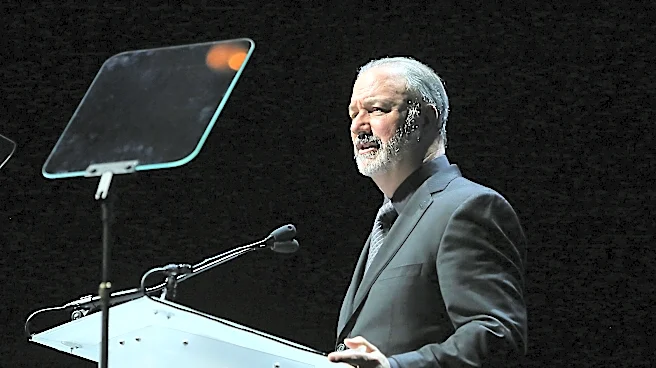
Director Rian Johnson is advocating for a more nuanced understanding of artificial intelligence in Hollywood, urging the industry to differentiate between AI as a technical tool and AI as a replacement for human creativity. Speaking at the Marrakech International
Film Festival, Johnson supported initiatives like the one led by former Lucasfilm president Kathleen Kennedy and American Film Institute dean Susan Ruskin, which aim to establish guidelines for AI use in filmmaking. He highlighted the distinction between AI assisting with tasks like visual effects or de-grading tools and attempts to replace writers, actors, and artists. Johnson expressed concern over what he perceives as an 'AI witch hunt,' citing instances where filmmakers, such as Martin Scorsese, faced criticism for using AI-powered tools. He argues that not all forms of AI integration are detrimental and that a blanket demonization of the technology is counterproductive.
Why It's Important?
Johnson's perspective is significant because it comes from a prominent filmmaker and addresses a central tension within Hollywood: how to embrace technological advancement without compromising human artistry and employment. His call for a more informed debate reflects the complex challenges the industry faces as AI capabilities expand. The distinction between AI as a tool versus a replacement is crucial for shaping future policies, union negotiations, and creative practices. If the industry fails to make this distinction, it risks either stifling innovation or inadvertently devaluing human creative contributions. The ongoing discussions and initiatives to establish AI guidelines are vital for navigating this evolving landscape, ensuring that AI serves to enhance, rather than diminish, the human element of filmmaking.
What's Next?
The debate surrounding AI in Hollywood is expected to continue, with ongoing efforts to define its appropriate use. Initiatives like those led by Kathleen Kennedy will likely play a key role in shaping industry standards and practices. Filmmakers, studio executives, and technology leaders will need to collaborate to develop frameworks that address both the creative and economic implications of AI. This will involve distinguishing between AI applications that streamline technical processes and those that could potentially displace human talent. The industry will also need to consider how to educate the public and its own members about the varying roles of AI to prevent misinformed backlash against beneficial technological advancements. The development of new legal and ethical guidelines will be critical as AI becomes more integrated into the creative process.
Beyond the Headlines
Beyond the immediate practicalities, Johnson's argument touches on a deeper philosophical question about the nature of creativity and the role of 'friction' in the artistic process. He contends that removing all 'drudge work' through AI might inadvertently hinder creativity, as everyday experiences and challenges often serve as the wellspring for artistic inspiration. This perspective challenges the Silicon Valley narrative that technology should eliminate all inconvenience, suggesting that some friction is essential for human-centric art. The ethical considerations also extend to the potential for AI to homogenize creative output or perpetuate biases if not carefully managed. The industry's response to AI will not only redefine production workflows but also influence the cultural understanding of authorship, originality, and the value of human experience in storytelling.