




What's Happening?
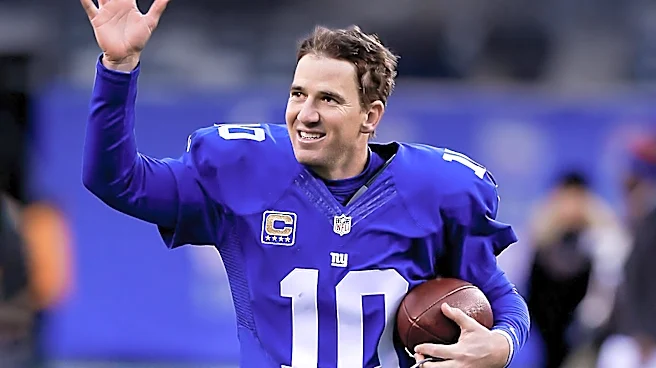
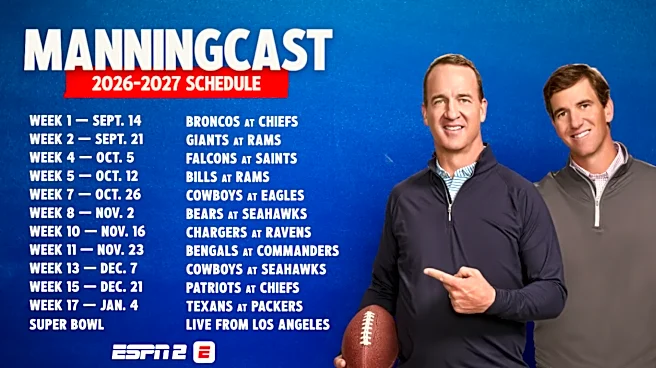
Former New York Giants quarterback Eli Manning has stated that he would choose his two Super Bowl championships over a career of 16 straight winning seasons. During an appearance on the 'Pardon My Take' podcast, Manning was posed with the hypothetical
choice and quickly affirmed the value of his two Super Bowl rings. Manning spent his entire 16-season NFL career with the Giants, from 2004 to 2019, accumulating a regular-season record of 117-117. Despite a .500 record, he led the Giants to two Super Bowl victories against the New England Patriots, earning Super Bowl MVP honors in both Super Bowl XLII (2007 season) and Super Bowl XLVI (2011 season). These were the only two playoff runs where the Giants won games during his tenure. Giants president and chief executive officer John Mara, upon Manning's retirement in 2020, acknowledged him as the franchise's only two-time Super Bowl MVP and one of its best players.
Why It's Important?
Manning's declaration highlights a significant debate in professional sports regarding the ultimate measure of a player's legacy: consistent performance versus championship success. For many athletes and fans, Super Bowl victories are the pinnacle of achievement, often outweighing regular-season statistics or win-loss records. Manning's career, characterized by clutch playoff performances against a dominant Patriots dynasty, exemplifies this perspective. His choice underscores the immense value placed on championship hardware within the NFL, particularly when those victories come against formidable opponents on the sport's biggest stage. This sentiment can influence how teams are built, how players are evaluated, and how legacies are cemented, often prioritizing the pursuit of a title above all else, even if it means a less consistent overall career record.
What's Next?
While Manning's playing career is over, his comments will likely fuel ongoing discussions about his Hall of Fame candidacy. Despite his two Super Bowl MVP awards and top-10 career statistics in passing yards, touchdowns, and completions at the time of his retirement, Manning was not a first-ballot Hall of Famer. His stance that the two championships were 'always the point' suggests that for him, the Hall of Fame debate is secondary to his on-field accomplishments in critical moments. This perspective may resonate with voters who prioritize championship impact, potentially influencing future considerations for his induction. The debate also continues to shape how current quarterbacks are viewed, with championship success often being a critical, if not the sole, determinant of their ultimate standing in NFL history.
Beyond the Headlines
Manning's choice delves into the psychological and cultural aspects of athletic achievement. It suggests that the narrative of overcoming adversity and achieving ultimate victory holds more personal and public weight than sustained, but ultimately unfulfilled, excellence. This perspective can influence how young athletes approach their careers, potentially prioritizing high-stakes moments and championship opportunities over statistical consistency. It also reflects a broader societal value placed on definitive wins and iconic moments, which often become more enduring in collective memory than years of solid, but unspectacular, performance. The 'rings over wins' mentality can also shape team-building philosophies, encouraging high-risk, high-reward strategies aimed at securing championships rather than merely achieving consistent competitiveness.