




What's Happening?
Rayonier Inc. (NYSE: RYN), a land resources REIT, announced its third-quarter 2026 financial results, reporting sales of $565.6 million, net income attributable to the company of $123.3 million ($0.41 per diluted share), and Adjusted EBITDA of $144.6
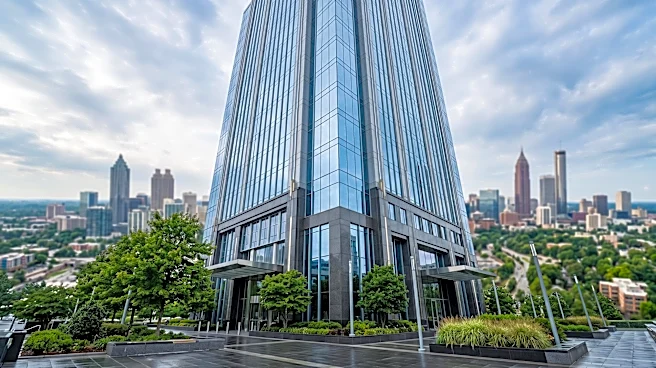
million. These figures represent the third quarter since the company completed its all-stock merger of equals with PotlatchDeltic Corporation on January 30, 2026. The merger integrated PotlatchDeltic's lumber and plywood manufacturing business into Rayonier. A significant contributor to the net income was a one-time item: a large disposition of approximately 36,000 acres of timberland in southwest Washington, sold for $145.0 million, which added $90.6 million after-tax income, or $0.30 per share. The company also increased its share repurchase authorization by $300 million. Furthermore, Rayonier has signed a 12-year lease for a future corporate headquarters in Atlanta, Georgia, which commenced in July 2026, although its principal executive office is still listed in Wildlight, Florida.
Why It's Important?
This announcement is significant for several reasons. The strong financial performance, particularly the substantial increase in sales and net income compared to the previous year, indicates a successful integration and synergy realization post-merger with PotlatchDeltic. The $300 million increase in share repurchase authorization signals management's confidence in the company's valuation and its commitment to returning value to shareholders, especially given what CEO Mark McHugh described as a 'significant disconnect between public and private timberland values.' The strategic decision to lease a future corporate headquarters in Atlanta, Georgia, marks a notable shift for the company, potentially impacting its operational footprint and regional economic ties. While the company maintains its Wildlight, Florida, presence as a major landowner and developer through its Wildlight project, the move of its corporate headquarters suggests a re-evaluation of its central operational hub, which could influence local economies and employment in both Florida and Georgia.
What's Next?
Rayonier's transition of its corporate headquarters to Atlanta is a key development to watch. The 12-year lease commenced in July 2026, indicating a gradual but definite shift from its current principal executive office in Wildlight, Florida. This move will likely involve the relocation of corporate functions and personnel, potentially impacting the economic landscape of both locations. The company's increased share repurchase authorization suggests continued efforts to manage its stock value, and investors will be observing how this impacts share price and overall market perception. Operationally, Rayonier expects full-year Southern Timber harvest of 12.2 million to 12.4 million tons and Northwest Timber harvest of 2.0 million to 2.1 million tons. The Wood Products segment anticipates approximately 1.1 billion board feet of shipments for its 11 months of contribution, with lower fourth-quarter lumber realizations. Real Estate is projected to generate fourth-quarter Adjusted EBITDA of $60 million to $70 million, indicating ongoing activity in its development projects.
Beyond the Headlines
The strategic relocation of Rayonier's corporate headquarters to Atlanta, while maintaining a significant presence in Wildlight, Florida, highlights a broader trend of corporate decentralization or strategic re-alignment in response to market dynamics and operational efficiencies. This move could be driven by factors such as access to a larger talent pool, better logistical connections, or a more favorable business environment in Atlanta. For Wildlight, Florida, while Rayonier remains a crucial developer and landowner, the shift of the corporate headquarters could alter its identity from a corporate hub to primarily a development and operational center. This could have long-term implications for regional economic development, local employment, and the types of businesses attracted to each area. The company's emphasis on share repurchases also reflects a broader corporate strategy to address perceived undervaluation in the market, a common practice among companies with strong cash flows and a desire to enhance shareholder returns.