






What's Happening?
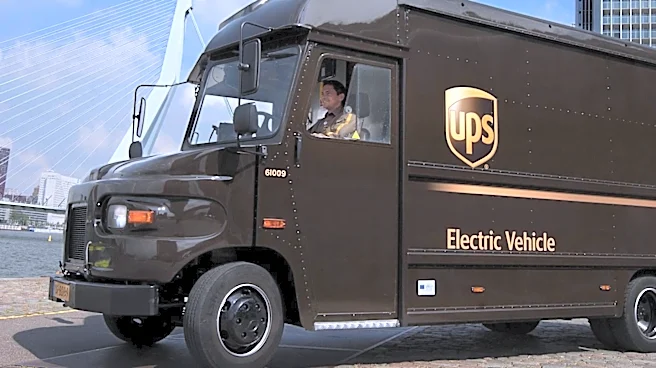
United Parcel Service (UPS) has reported stronger-than-expected second-quarter results after completing a restructuring program that eliminated 48,000 jobs. The company posted consolidated revenue of $22.8 billion and an operating profit of $930 million,
exceeding Wall Street expectations. The restructuring involved reducing low-margin business, accelerating automation, and investing in AI to improve operational efficiency. UPS aims to generate $3 billion in cost savings by the end of 2026, reflecting a strategic shift towards a leaner and more automated logistics network.
Why It's Important?
UPS's restructuring and strong financial performance highlight the impact of strategic workforce reductions and automation on business outcomes. For the logistics industry, this underscores the importance of adapting to technological advancements and changing market dynamics to remain competitive. The focus on automation and AI reflects broader industry trends towards improving efficiency and cost-effectiveness. For employees, the shift towards automation may lead to changes in job roles and skill requirements, emphasizing the need for workforce adaptability and continuous learning.
What's Next?
As UPS continues to implement its restructuring strategy, the company may focus on further enhancing its logistics network and exploring new growth opportunities. The emphasis on automation and AI suggests that UPS will continue to invest in technology to drive operational improvements and cost savings. For the logistics industry, the success of UPS's strategy may influence other companies to adopt similar approaches, potentially leading to further workforce changes and technological advancements in the sector.