
What's Happening?
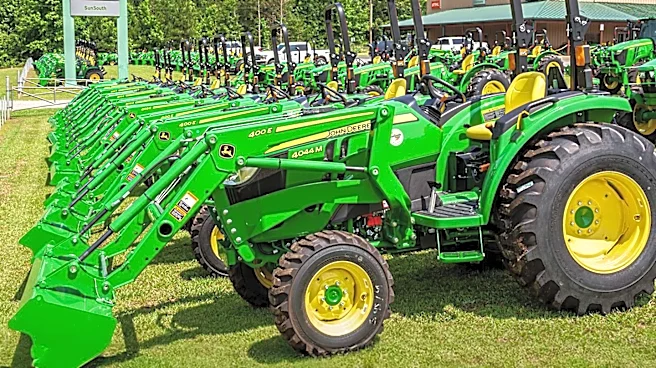
John Deere has announced the acquisition of Orchard Robotics, operating as Orchard AI, a San Francisco-based agriculture technology company specializing in crop intelligence solutions for high-value crop growers.
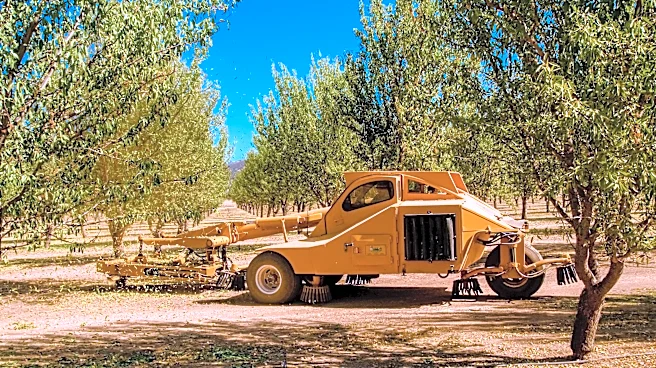
This acquisition aims to bolster Deere’s precision agriculture offerings by integrating Orchard AI’s detailed, plant-level crop insights with Deere’s existing expertise in farm technology and equipment. Orchard AI utilizes vehicle-mounted, AI-powered cameras to collect data on individual trees, vines, or plants throughout the growing season. This system analyzes hundreds of images per tree, providing growers with comprehensive data such as accurate yield estimates, precise fruit counts, fruit size and color data, and canopy measurements. The FruitScope software platform then allows growers to visualize and leverage this data for more informed farm management decisions, ultimately improving efficiency in labor, time, and input usage. The integrated AI software translates this precision data into actionable recommendations, which can be delivered to mobile devices for in-field application or directly to in-cab G5 displays.
Why It's Important?
This acquisition is significant for the U.S. agriculture industry, particularly for high-value crop growers who face narrow windows for critical decisions that impact profitability. By combining Orchard AI's granular crop intelligence with John Deere's technology, growers can make more informed decisions regarding pruning, thinning, applying crop treatments, and identifying optimal harvest times. This integration is expected to lead to increased efficiency, reduced waste, and potentially higher yields and profitability for farmers. The ability to precisely execute tasks based on real-time, plant-level data can mitigate risks associated with weather, labor constraints, and changing crop conditions. For John Deere, this move strengthens its position in the rapidly evolving precision agriculture market, allowing it to offer a more comprehensive suite of solutions that connect crop intelligence directly with in-field equipment execution. This could set a new standard for data-driven farming practices, benefiting growers by optimizing resource allocation and improving overall operational outcomes.
What's Next?
Orchard AI will continue to operate with its existing team and products as a subsidiary of John Deere. The immediate next steps involve integrating Orchard AI’s FruitScope platform with Deere’s Operations Center and variable-rate application controllers. This integration will enable growers to seamlessly transition from collecting crop intelligence to automatically acting on it in the field. An example of this is variable-rate spraying for bloom thinning in apple orchards, where Orchard AI’s cameras can monitor blossoms to generate maps for precise chemical application, which Deere’s equipment can then execute. This could lead to more precise chemical thinning and potentially reduce the need for subsequent manual thinning. The collaboration aims to expand the reach of AI-powered crop intelligence to more growers globally, with plans to push into Latin America and Australia. The focus will be on accelerating the development and deployment of these technologies to help farmers make more profitable and sustainable decisions.
Beyond the Headlines
This acquisition highlights a broader trend in agriculture towards the increasing value of actionable farm data and the integration of artificial intelligence and robotics. The deal underscores the shift from general farming practices to highly individualized, plant-by-plant management, driven by advancements in sensor technology and AI. The ethical implications revolve around data privacy and ownership, as vast amounts of crop data will be collected and processed. Long-term, this development could lead to a more sustainable agricultural system by optimizing resource use, reducing chemical applications, and minimizing environmental impact. However, it also raises questions about accessibility for smaller farms that may lack the capital to invest in such advanced technologies, potentially widening the gap between large-scale and small-scale agricultural operations. The move signifies a continued consolidation in the ag-tech sector, with major players like John Deere acquiring innovative startups to enhance their technological portfolios and offer end-to-end solutions.