





What's Happening?
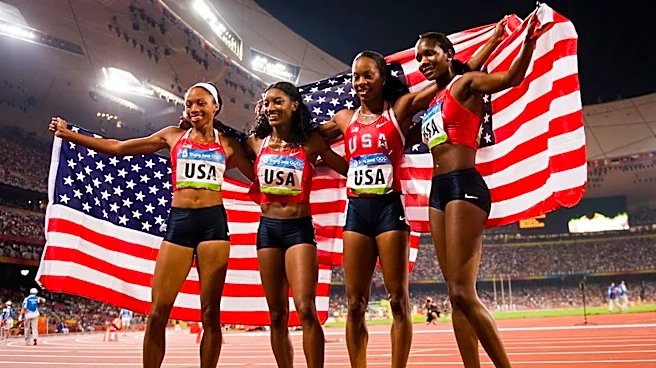
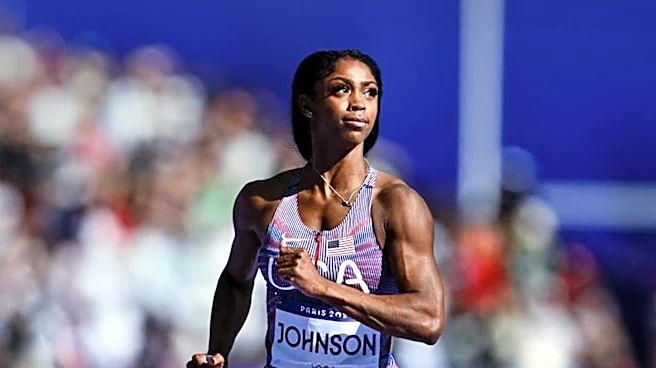
The United States mixed 4x400m relay team, featuring Arkansas alum Chris Bailey, won the inaugural World Athletics Ultimate Championship in Budapest. The American foursome, comprised of Bailey, Alexis Holmes (Kentucky), Jacory Patterson (Florida), and
Aaliyah Butler (Georgia), split a prize money tally of $80,000. Bailey initiated the race with a leading split of 44.73 seconds, establishing a lead that the U.S. team maintained throughout. Holmes followed with a 49.51 carry, Patterson covered the third leg in 44.61, and Butler anchored in 49.47. Their combined effort resulted in a time of 3:08.32, defeating Great Britain (3:09.40), the Netherlands (3:09.57), and Belgium (3:10.85). This performance marks the seventh fastest time in the history of this recently added event and the fourth fastest by an American squad. Bailey, who has previously earned Olympic and World Championship 4x400m relay gold medals, expressed his focus on performing his role and continuing the U.S.'s strong relay history. He earned a total of $45,000 in prize money from the weekend, including $25,000 from his fourth-place finish in the 400m final and $20,000 from his share of the relay victory.
Why It's Important?
This victory underscores the continued dominance of U.S. athletes in international track and field, particularly in relay events. The substantial prize money associated with the World Athletics Ultimate Championship, including the $80,000 split by the winning relay team, signifies a growing trend in professional track and field to offer more lucrative incentives for top performers. This financial aspect can attract more talent to the sport and provide greater stability for athletes, potentially enhancing the competitive landscape. The success of athletes like Chris Bailey, who has a history of Olympic and World Championship gold medals, reinforces the U.S.'s reputation as a powerhouse in athletics. Furthermore, the team's composition, featuring alums from various SEC universities, highlights the strong collegiate track and field programs in the U.S. that serve as a pipeline for international success. This win not only brings prestige to the U.S. but also inspires aspiring athletes and strengthens the sport's profile domestically.
What's Next?
Following this successful outing, the U.S. athletes will likely continue their training and competition schedules, aiming for future international events and potentially the next Olympic cycle. The prize money earned by athletes like Chris Bailey could be reinvested into their training and support systems, further enhancing their performance capabilities. The success of the mixed 4x400m relay team may also encourage other nations to invest more in developing their own mixed relay squads, intensifying competition in this relatively new event. The World Athletics Ultimate Championship, being an inaugural event, will likely be evaluated for its format and impact, with potential adjustments for future iterations. Athletes will be looking towards upcoming major championships, such as the World Championships and the Olympic Games, where they will aim to replicate and build upon their success from Budapest. The performance of these athletes will also influence their standing in global rankings and their eligibility for future high-profile competitions.
Beyond the Headlines
The success of the U.S. mixed relay team at the World Athletics Ultimate Championship extends beyond mere athletic achievement, reflecting broader trends in sports and national identity. The mixed-gender format of the relay symbolizes a progressive shift in athletics, promoting gender equality and showcasing the combined strength of male and female athletes. This format can also increase viewership and engagement by offering a unique and dynamic competition. The team's cohesion, as noted by Alexis Holmes, highlights the importance of teamwork and camaraderie in individual-centric sports. The financial incentives offered by the Ultimate Championship could reshape the career trajectories of track and field athletes, providing a more sustainable professional path and potentially reducing the reliance on traditional endorsement deals. This could lead to a more professionalized and financially viable sport, attracting a wider range of talent globally. The U.S.'s consistent performance in relays also speaks to a deep-rooted culture of athletic development and strategic coaching within the country.