



What's Happening?
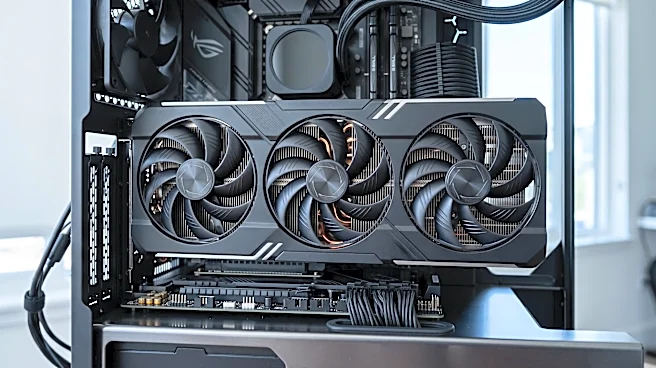
Users of NVIDIA's GeForce RTX 5090 GPU are experiencing significant issues with CUDA workloads in Windows Subsystem for Linux 2 (WSL2) after updating to driver version 621.40. Specifically, long-running PyTorch training sessions, which involve physics-informed
neural networks with numerous small kernel launches, are hanging unexpectedly. These hangs are accompanied by 'nvlddmkm Event ID 153' errors, indicating an issue on the GPU. The Python process remains active, consuming 100% of one CPU core, but the GPU utilization drops to about 1%, and no further progress is made. This necessitates manual termination of the process. Prior to the 621.40 update, the same workloads ran for extended periods without incident, with the last recorded Event 153 in mid-October. The problem appears to be triggered by sustained CUDA loads from PyTorch within WSL2, particularly with many small kernels over durations exceeding 30 minutes. A temporary solution involves rolling back to driver version 621.24 and preventing automatic updates.
Why It's Important?
This driver issue significantly impacts developers and researchers in the U.S. who rely on NVIDIA GPUs for high-performance computing tasks, particularly in artificial intelligence and machine learning. The inability to reliably run CUDA workloads in WSL2 disrupts critical training processes for neural networks, leading to lost computational time and potential delays in project timelines. For businesses and academic institutions heavily invested in AI development, such instability can translate into substantial financial losses and hinder innovation. The dependency on specific driver versions for stable operation also creates a maintenance burden, as users must actively manage driver installations to avoid disruptions. This situation underscores the critical need for robust software-hardware integration and thorough testing of driver updates, especially for specialized computing environments like WSL2, which are increasingly adopted for their flexibility and performance benefits in AI development.
What's Next?
NVIDIA is expected to address this driver instability in future updates. Users currently affected by the issue are advised to continue using driver version 621.24 as a workaround and disable automatic driver updates to prevent reoccurrence. The NVIDIA developer forums will likely serve as a primary channel for updates and community-driven solutions. Developers and researchers will be closely monitoring NVIDIA's official channels for a patch that resolves the 'nvlddmkm Event ID 153' error and restores stable CUDA operation in WSL2. The resolution of this issue is crucial for maintaining productivity and trust within the AI and high-performance computing communities that depend on NVIDIA's hardware and software ecosystem.
Beyond the Headlines
This incident highlights the complex interplay between operating systems, virtualization layers, GPU drivers, and specialized computing frameworks. The increasing adoption of WSL2 for AI development on Windows platforms introduces new layers of potential compatibility challenges. Such issues can lead to a broader re-evaluation of development environments and the reliability of driver update mechanisms. It also underscores the importance of community feedback in identifying and resolving critical software bugs that impact specialized user groups. The incident could prompt NVIDIA to enhance its testing protocols for WSL2 environments, ensuring greater stability for its professional user base and reinforcing the need for seamless integration across diverse software stacks in the rapidly evolving field of AI and machine learning.