





What's Happening?
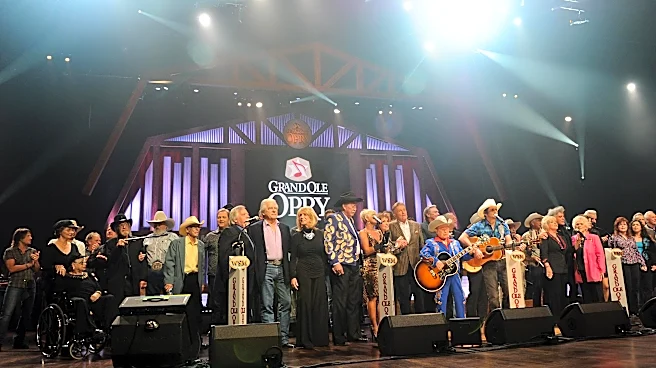
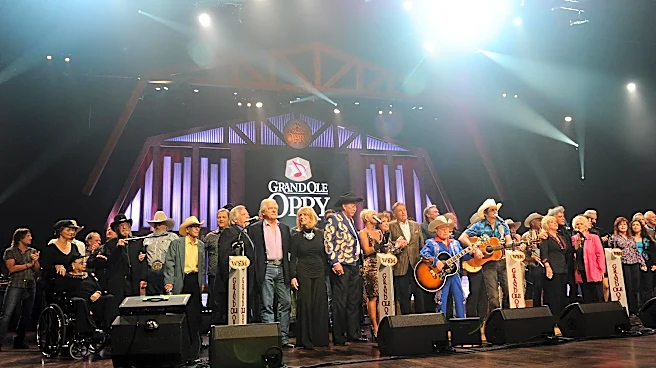
The Grand Ole Opry, a foundational institution in country music, has had a complex relationship with several legendary artists, with some being overlooked for membership or even banned. Elvis Presley performed only once in 1954, with Opry manager Jim
Denny reportedly suggesting he return to truck driving. Hank Williams, despite initial success, had his membership revoked in 1952 due to alcoholism and repeated absences. Johnny Cash was removed in 1965 after smashing stage lights while intoxicated, though he was reinstated in 1968. Skeeter Davis was suspended in 1973 for criticizing police actions during a performance. Jerry Lee Lewis was banned in 1973 for disregarding performance rules, including using profanity and playing rock-and-roll, but later returned. Additionally, major figures like Waylon Jennings, Merle Haggard, and Buck Owens, despite their significant contributions to country music, never received invitations to join the Opry.
Why It's Important?
The Grand Ole Opry's selective history with these iconic artists highlights the institution's role as both a preserver of tradition and a gatekeeper within country music. The decisions to ban or overlook certain stars reflect the Opry's historical adherence to specific behavioral and musical standards, which sometimes clashed with the evolving nature of the genre and the rebellious spirit of some of its most influential figures. This dynamic underscores the tension between artistic freedom and institutional expectations. For fans and historians, it provides a deeper understanding of the cultural forces that shaped country music, revealing how personal conduct, musical style, and regional influences (like the Bakersfield sound) could impact an artist's standing within Nashville's traditional establishment. It also emphasizes that success and legendary status in country music were not solely dependent on Opry membership.
Beyond the Headlines
The Opry's past actions reveal a broader narrative about the struggle between tradition and innovation in American music. Artists like Waylon Jennings and Merle Haggard, who pioneered the 'outlaw' and Bakersfield sounds, challenged Nashville's established norms, and their exclusion from the Opry can be seen as a reflection of this cultural clash. This dynamic illustrates how institutions, even those dedicated to preserving an art form, can sometimes resist change, inadvertently creating a counter-culture that ultimately enriches the genre. The stories of these artists, whether banned or overlooked, contribute to the rich tapestry of country music history, demonstrating that true artistic impact often transcends formal recognition and can even be forged in defiance of established norms. This ongoing tension between tradition and evolution continues to shape the genre's identity.